Acclaimed husband-and-wife duo Taka and Wanaka Teramoto have brought a dual-concept dining experience to Surry Hills, combining a casual neighbourhood sake lounge with a hidden, high-end omakase room at a single Devonshire Street location.
The venue operates two very different spaces to suit the local community. At the front, Tera Bar acts as a relaxed spot where locals can drop in for casual drinks and share plates. Tucked away in the back is Teramoto, an exclusive eight-seat chef’s table that centres around an open kitchen.
The owners designed the space with natural textures and warm tones to feel genuine and welcoming, rather than overly conceptual. Taka Teramoto noted that diners seem to prefer venues that offer authentic experiences instead of strict minimalism.
While the two rooms have different atmospheres, both share the same cooking style. The kitchen blends Japanese flavours with local seasonal produce and French cooking methods. Diners can expect dishes like fried mackerel, wagyu tartare, and spatchcock fricassée.
The culinary team also focuses heavily on dry-ageing meats. They age duck and wagyu in-house for anywhere between two weeks and eight months, with plans to make their own cured meats in the future.
Chef Taka brings serious experience to the kitchen, having worked at Michelin-starred venues in Paris and Tokyo before moving to Sydney. He previously earned a chef’s hat at Kuro Bar and Dining. He works alongside a small crew, including sous chef David Song, who often helps out behind the cocktail bar. On the drinks side, sommelier Wanaka Teramoto manages an extensive list of artisanal sake and small-batch wines from Australia, Japan, and other regions.
Tera Bar is currently serving the neighbourhood, while the hidden chef’s table will launch in July. Located at 255 Devonshire Street, the bar trades Thursday through Monday from 5:00 p.m. to 10:00 p.m., extending to 11:00 p.m. on Fridays and Saturdays. The team takes a break on Tuesdays and Wednesdays. Walk-ins are welcome at the front bar, but the exclusive omakase experience requires a booking well in advance.
Construction and property company Hickoryhas been appointed builder to transform the fire-damaged Henderson Hat Factory at 7–15 Randle Street in Surry Hills into an 11-storey, 124-key hotel, with completion targeted for May 2028.
Designed by renowned architects Tonkin Zulaikha Greer, the Randle St Hotel will feature two restaurants, two bars, and a new pedestrian link connecting directly to Central Station. Project consultancy APM Services will manage the delivery.
The fire that changed the building’s trajectory happened on 25 May 2023, when the vacant six-storey factory caught alight and collapsed in a blaze that brought the Sydney CBD to a standstill, its footage broadcast live on national television. Two 13-year-old boys were later charged over the blaze.
A building with more than a century of history behind it
Rolla Crosby Henderson established his first hat factory at Wynyard Square in 1904, and by 1912 had commissioned architect Thomas Pollard Sampson to design an imposing six-storey brick factory building on Randle Street, purpose-built for the manufacture and sale of women’s and children’s felt and straw hats.
The R C Henderson hat factory is a Federation-style factory, typical of the many warehouses that once dotted Surry Hills. The construction of Central Railway Station in 1906 and the creation of Wentworth Avenue in 1910, along with resumptions of 1850s and 1860s terraces, encouraged a wave of warehouse construction in the area.
The Randle Street factory produced women’s and children’s felt and straw hats from 1912 until 1954, when the business went into receivership. The buildings were then occupied by clothing manufacturers through the 1960s and 1970s, before being purchased by developer Hanave Investments in 1978.
In later decades, the building transitioned into commercial storage and creative spaces before sitting largely empty ahead of the 2023 fire. By 2023 it stood largely vacant, listed on the NSW State Heritage Inventory for its industrial heritage significance.
Despite the extent of the damage, the project does not start from a blank slate. Key heritage features of the original factory will be salvaged and repurposed throughout the build, including the original brickwork, ensuring the character of the historic building is preserved.
Tonkin Zulaikha Greer’s design stitches together the former factory building at 11–13 Randle Street with infill buildings on the two neighbouring lots. The heritage of the building will be exposed internally, with cutaways within ceilings of hotel rooms and corridors making original timber details visible.
Window fixtures will be replaced with period-appropriate timber fittings to reinstate the building’s original character.
The pedestrian link through the site, connecting Randle Lane to Randle Street and through to Central Station, was part of the original design concept and remains in the approved plans.
Hickory’s expanding Sydney footprint
The project marks Hickory’s continued expansion into NSW since entering the state six years ago. The builder now has a local pipeline valued at $735 million across residential and commercial sectors, with the Randle St Hotel one of five major projects currently under construction in Sydney.
Hickory NSW State Manager Michael Kouknas pointed to the company’s track record with the nearby Ace Hotel in Surry Hills as direct experience for the complexity ahead. “We’re thrilled to be appointed as builder of the Randle St Hotel, a project that plays to our deep technical expertise delivering sophisticated projects in the living and hospitality sectors,” he said.
Hickory Managing Director George Abraham said the NSW pipeline had nearly doubled in a short period, reflecting the strength of the market and confidence in Hickory’s value engineering and repurposing expertise.
The Randle St Hotel is due for completion in May 2028.
At Mishy’s in Surry Hills, the menu begins before service, shaped by owner-chef Michelle “Mishy” Powell’s regular market visits and a cooking style built around fresh produce, seasonal changes and Australian ingredients.
Mishy’s sits on Reservoir Street with the feel of a compact neighbourhood dining room rather than a large restaurant. Opened in 2022, the Surry Hills bistro is led by owner-chef Michelle “Mishy” Powell, whose food background spans more than 20 years across local and overseas kitchens, private chef work and restaurant cooking.
The restaurant’s identity is closely tied to the market floor. Powell regularly selects produce from Flemington Markets, and the menu changes according to what is fresh, local and available. That approach gives Mishy’s a clear rhythm: seasonal ingredients arrive first, and the dishes follow.
The result is a restaurant built around freshness rather than a fixed, unchanging menu. Lunch and dinner service are shaped by produce, with the kitchen leaning into simple cooking, familiar flavours and ingredients that reflect the season.
Photo Credit: Mishy’s
The Mishy’s Menu Follows The Produce
The Mishy’s menu brings together bistro-style cooking, Australian produce and native ingredients. Sydney rock oysters are served with finger lime mignonette, while kangaroo salami appears with native anise myrtle and guindilla peppers. Warrigal greens are used in spinach and ricotta ravioli, and mountain pepper appears in a mushroom adobo dish.
Vegetables also play a strong role across the menu. Dishes include zucchini flowers with goat’s curd and honey, black figs with stracciatella and pistachio, beetroot tart with golden onion and Taleggio, BBQ corn with plum and macadamia green goddess, and Dutch carrots with romesco, buffalo yoghurt and Aleppo pepper.
The larger plates keep the bistro structure in place, with Murray cod, roast chicken, pork cutlet and sirloin listed alongside seasonal sides and sauces. Desserts continue the produce-led approach, including pear tarte tatin, blueberry semifreddo, twice-baked chocolate soufflé and affogato with macadamia ice cream.
Photo Credit: Mishy’s
From Handmade Sauces To A Dining Room
Mishy’s grew from Naturally Sauced, Powell’s handmade sauce business that began across farmers markets and specialty retail spaces. That early connection to markets and handmade food carried into the restaurant, where the same focus on fresh ingredients and community-style dining remains central.
The restaurant’s food direction draws on traditional home-style cooking, with an emphasis on unfussy dishes, local sustainable produce and Australian virgin olive oil, except when frying French fries. A weekly Sunday roast also changes with the season and what is available from growers.
That background gives Mishy’s its strongest feature angle. It is not simply a Surry Hills restaurant with a changing menu; it is a dining room built from Powell’s earlier market work, her years in food, and her preference for produce-led cooking.
Photo Credit: Mishy’s
Drinks, Events And A Compact Reservoir Street Setting
Mishy’s is fully licensed, serving local and imported wines and beers, as well as cocktails including an in-house barrel-aged Negroni. The wine list includes Australian bottles from regions such as Tasmania, Margaret River, McLaren Vale, Mudgee, Orange, Coonawarra and the Barossa Valley, with imported selections from France, Italy, Spain, New Zealand and the United States.
The venue also offers private dining, events and catering, including exclusive dining experiences for up to 26 people. Its setting in Surry Hills supports the restaurant’s local focus, with lunch served Tuesday to Sunday from 11am to 3pm and dinner served Wednesday to Saturday from 5.30pm to 10pm. The restaurant is closed on Mondays.
Mishy’s story sits in the details: the market trips, the weekly changes, the native ingredients, the handmade sauce beginnings and Powell’s role in shaping the menu. On Reservoir Street, the restaurant’s identity is built around what arrives fresh, what is in season and how those ingredients are brought to the table.
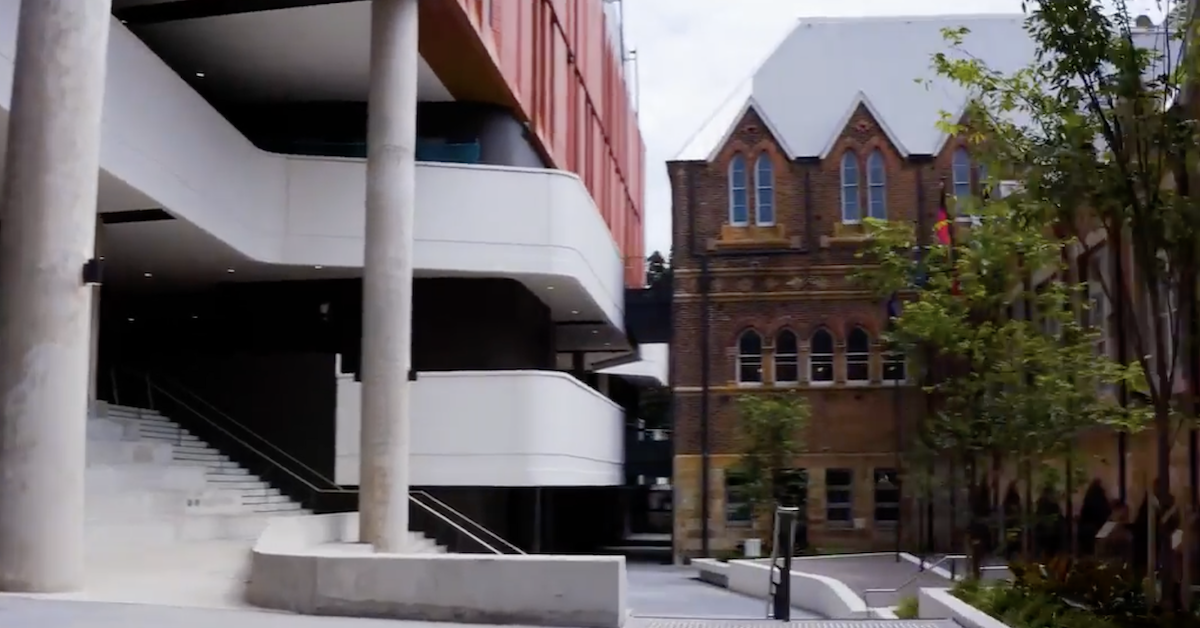
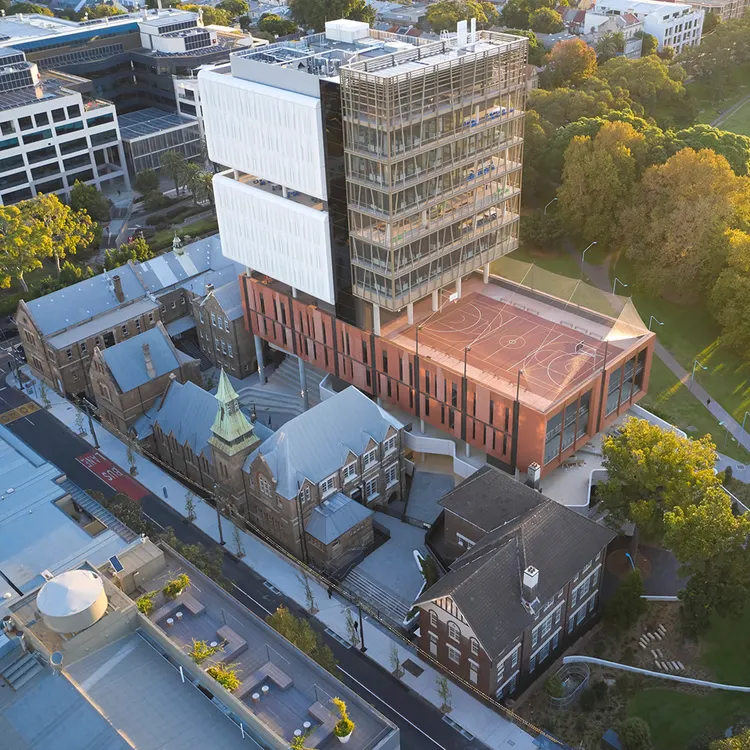
Inner Sydney High School was among 59 public schools selected for a major NSW air quality study that found some classrooms across the state were not meeting ventilation levels considered optimal for student learning.
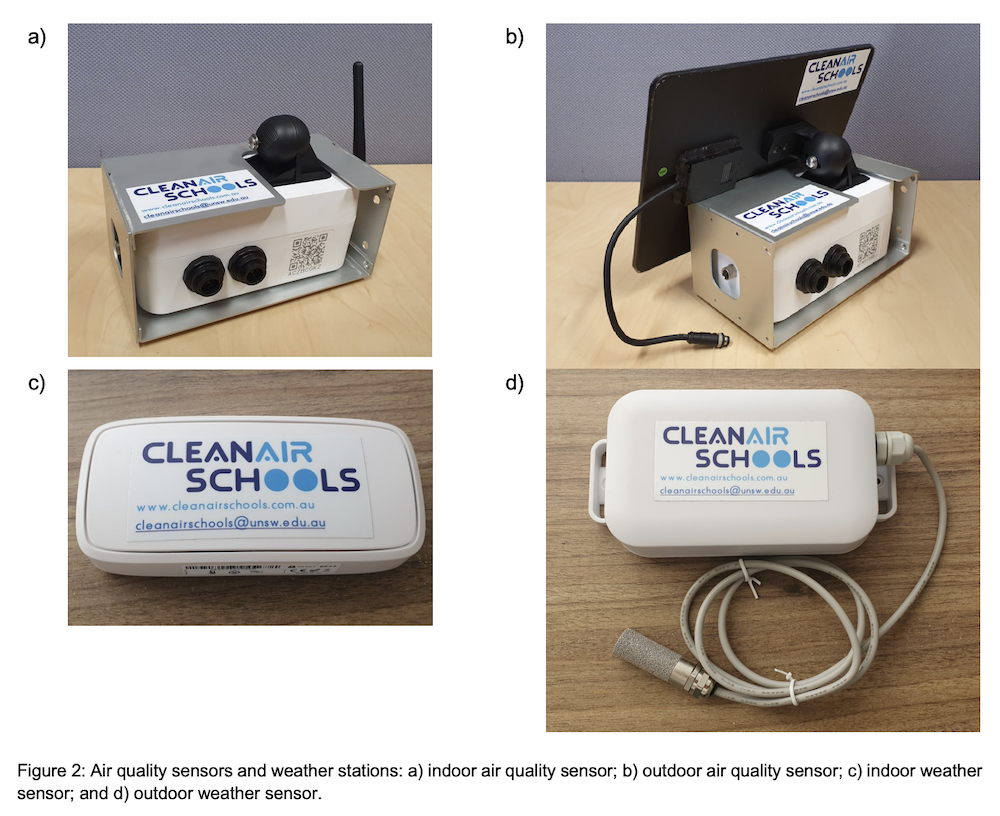
The Surry Hills campus participated in the Clean Air Schools Program, a joint initiative between the NSW Department of Education and UNSW Sydney that monitored indoor and outdoor air quality between 2023 and 2025.
The final report, released in September 2025, examined carbon dioxide (CO₂), fine particulate matter (PM2.5) and nitrogen dioxide (NO₂) levels at schools across Sydney, Newcastle and Wollongong. Researchers collected air quality data from one classroom and one outdoor area at each participating school.
While the study identified 17 schools where the monitored classroom recorded carbon dioxide levels above the recommended 850 parts per million threshold for much of the school day, individual school results have not been publicly released. As a result, it is not known whether the classroom monitored at Inner Sydney High School was among those identified by researchers.
A school in one of Sydney’s busiest urban environments
Unlike many schools included in the study, Inner Sydney High School is located in the heart of Sydney, close to Central Station and surrounded by some of the city’s busiest transport corridors. The campus sits near Cleveland Street, Elizabeth Street and Chalmers Street, an area that experiences significant commuter traffic, bus movements and ongoing development activity.
The report found outdoor nitrogen dioxide pollution around schools was often linked to highly localised sources such as traffic and industry.
While researchers did not publish individual pollution readings for Inner Sydney High School, the study highlights the importance of understanding how local environmental conditions can influence air quality in and around classrooms.
What researchers found across NSW schools
The study also found that most classrooms exceeded the recommended carbon dioxide threshold at some point during the day, although these exceedances were often short-lived.
Three schools — Condell Park High School, Hebersham Public School and Mayfield East Public School — consistently recorded carbon dioxide levels above 1000 parts per million throughout much of the school day.
Researchers concluded there was evidence that some NSW classrooms were exceeding levels considered optimal for student learning and health. Carbon dioxide is commonly used as an indicator of ventilation performance. Elevated levels do not necessarily mean a classroom is unsafe, but they can indicate that fresh air is not entering a room quickly enough.
The NSW Department of Education has stated that the report did not find that classrooms were unsafe and has begun follow-up assessments.
One classroom, one school
An important limitation of the study was that only a single classroom was monitored at each participating school. Researchers acknowledged this means the results may not be representative of conditions elsewhere on the same campus.
The report noted that understanding air quality across an entire school would require monitoring a wider range of classrooms over a longer period.
Photo Credit: UNSW
Ventilation emerged as a key finding
One of the strongest findings in the report was the role of classroom design and ventilation.
Researchers found classrooms with cross-ventilation — where windows can be opened on multiple sides of a room — generally recorded lower carbon dioxide levels than classrooms without cross-ventilation.
Schools participating in the NSW Government’s Cooler Classrooms Program also tended to record lower carbon dioxide levels than schools relying primarily on split-system air-conditioning.
The report found that classrooms without cross-ventilation and without Cooler Classrooms upgrades recorded the highest average carbon dioxide levels.
Researchers recommended accelerating the installation of mechanical filtered ventilation systems, particularly in schools identified as having consistently poor natural ventilation.
Surry Hills football supporters looking for a shared place to watch the Socceroos’ 2026 FIFA World Cup campaign will have free live site options at Darling Harbour and Sydney Olympic Park.
Free Sydney Viewing Options For Surry Hills Supporters
Surry Hills football supporters looking for a shared place to watch the Socceroos’ 2026 FIFA World Cup campaign will have free live site options at Darling Harbour and Sydney Olympic Park.
The screenings will be held at Tumbalong Park in Darling Harbour and Cathy Freeman Park at Sydney Olympic Park, where Australia’s group stage matches will be shown on large screens. Entry is free at both locations, and no tickets or registrations are required.
Darling Harbour gives inner-city supporters a central Sydney option. Sydney Olympic Park will also host group stage screenings for fans travelling from across the city.
Australia will play Türkiye, the United States and Paraguay in Group D. The first match, Australia v Türkiye, will be screened at both Darling Harbour and Sydney Olympic Park on Sunday 14 June.
Darling Harbour Live Site Runs Through The Final
Tumbalong Park at Darling Harbour will show Australia’s group stage matches before continuing with later tournament fixtures, including the quarter-finals, semi-finals, third-place play-off and final.
The Darling Harbour schedule starts with Australia v Türkiye at 2pm on Sunday 14 June. USA v Australia will screen at 5am on Saturday 20 June, followed by Paraguay v Australia at 12pm on Friday 26 June.
The live site will then screen quarter-finals on Friday 10 July, Saturday 11 July and Sunday 12 July. Semi-finals are listed for Wednesday 15 July and Thursday 16 July, followed by the third-place play-off on Sunday 19 July and the final on Monday 20 July.
Tumbalong Park will open one hour before each listed match start time. Entry will be first come, first served, and visitors are encouraged to arrive early because capacity may be reached during busier sessions.
Food and drink will be available through nearby Darling Harbour venues and food trucks. Small picnic rugs are generally allowed, while oversized items that obstruct views may not be permitted.
Cathy Freeman Park To Screen Socceroos Group Matches
Cathy Freeman Park at Sydney Olympic Park will host free screenings of the Socceroos’ three group stage matches.
For Australia v Türkiye on Sunday 14 June, gates will open at 1pm before the 2pm kick-off. Free children’s activities, including face painting, are listed for the opening match.
For Australia v USA on Saturday 20 June, gates will open at 4am before the 5am kick-off. Early morning train services will run from 4am for people travelling to Olympic Park.
For Australia v Paraguay on Friday 26 June, gates will open at 11am before the 12pm kick-off.
Supporters attending Cathy Freeman Park are encouraged to bring a picnic rug and make use of nearby food trucks and eateries. Parking can be pre-booked, but attendees are also encouraged to plan their trip and consider public transport.
Entry Conditions And Travel Details
Both live sites are free, but entry is subject to capacity and event conditions. At Sydney Olympic Park, attendees must consent to security screening, including bag checks and handheld metal detection.
Items not permitted at Sydney Olympic Park include flares, fireworks, weapons, drones, alcohol, pets other than assistance animals, temporary structures and cooking devices. Smoking and vaping are also not allowed.
At Darling Harbour, visitors are advised to check conditions of entry before attending. Tumbalong Park is wheelchair accessible and connected to accessible public transport routes.
The confirmed screenings offer a practical way to follow the Socceroos in a shared crowd setting. Darling Harbour provides a central fan zone, while Sydney Olympic Park gives fans another major Sydney venue for Australia’s group stage matches.
The next few months are an important stretch for a young athlete from Surry Hills who is working towards one of sport’s biggest goals. Austin Cross, a 20-year-old sailor from Sydney, is preparing to compete at the 470 Asian Championships in July and the 470 World Championships in August, both in Japan. The events are key milestones in his campaign to represent Australia at the 2028 Olympic Games in Los Angeles.
Cross and his sailing partner, Sophie Jackson, compete in the Olympic 470 class, a sailing category with a long Olympic history. As they continue their international campaign, the pair are aiming to move closer to Olympic selection while building on a promising start to 2026.
A Childhood Passion Takes Shape on the International Stage
Cross’s Olympic ambitions began on the water as a child. After years of training and competition, he is now pursuing a pathway that could eventually lead to Los Angeles in 2028 and Brisbane in 2032.
According to information shared through the pair’s Australian Sports Foundation fundraising campaign, Cross and Jackson are working under Australian coaches as they seek to improve their standing in international 470 competition.
Olympic sailing campaigns often require years of international racing before athletes reach the Games. For developing crews, each regatta provides an opportunity to gain experience against international competition.
Japan Campaign Marks a Key Stage in the Olympic Pathway
The focus now turns to Japan, where Cross and Jackson will contest two important events within weeks of each other.
The first is the 470 Asian Championships in July. The regatta will provide another opportunity to compete against international crews before the season’s biggest challenge arrives in August.
The 470 World Championships, scheduled for 10 to 17 August in Enoshima, will bring together international 470 crews from around the world. For Cross and Jackson’s campaign, the championship represents an important step on their Olympic pathway.
Cross has stated that a top-30 finish at the World Championships is an important target as he pursues qualification for the Australian Sailing Squad and continues working towards LA 2028.
Strong Early Results Have Built Momentum
The Japanese campaign follows encouraging performances earlier this year.
Cross has described 2026 as his first year competing internationally in the Olympic 470 class. During the season, he and Jackson finished as the highest-ranked Australian team at both Sailing Grand Slam events they entered, which Cross says has placed them in the lead towards Australia’s 2028 Olympic selection process.
Those results have helped raise the profile of the crew within Australia’s Olympic sailing pathway. However, international sailing remains highly competitive, and the upcoming championships will provide another opportunity to measure their progress against experienced international crews.
The championships in Japan represent an important stage in a longer journey. Cross has identified the next 12 months as a significant period in the pair’s Olympic campaign. While the long-term goal remains an Olympic berth, the immediate focus is on improving results, gaining experience and continuing to climb the international rankings.
As the young sailor from Surry Hills prepares for two of the biggest regattas of his career, his campaign enters an important new phase on the road towards LA 2028.
Surry Hills audiences will see The Jungle and the Sea return to Belvoir Theatre, bringing an award-winning family story of separation, survival and remembrance back to the Upstairs Theatre.
Belvoir Theatre will bring The Jungle and the Sea back to its Surry Hills stage for a limited season at the Upstairs Theatre from 11 July to 2 August 2026.
Written and directed by S. Shakthidharan and Eamon Flack, the production follows the creative team behind Counting and Cracking and returns with a story shaped around family, memory and the lasting human cost of conflict.
The play follows Gowrie as she tries to protect her family when violence escalates in Sri Lanka. She sends her husband and one daughter to Australia for safety, while she and her two other daughters travel through the jungles of northern Sri Lanka in search of her estranged son.
The story asks how a family can find its way back to one another after being split apart, and how people carry grief, survival and remembrance through upheaval.
Family Story Sits at the Centre of The Jungle and the Sea
The Jungle and the Sea is drawn from real-life testimonies and shaped with elements from the Mahabharatha and Antigone. The production places one family’s experience at the centre of a broader story about loss, endurance and the search for peace after violence.
The work runs for about two hours and 50 minutes, including two intervals. Belvoir has listed a content warning for themes of war and trauma, sounds of artillery, haze and loud sound effects.
Photo Credit: Belvoir
The production is co-produced by Kurinji and Lingalayam Dance Company. The cast includes Anandavalli, Prakash Belawadi, Emma Harvie, Nadie Kammallaweera, Shiv Palekar, Dushan Philips, Kalieaswari Srinivasan and Rajan Velu.
Music is by Arjunan Puveendran, with Indu Balachandran also listed among the musicians. Dale Ferguson is set and costume designer, Damien Cooper is lighting designer, Steve Francis is sound designer, Véronique Benett is original lighting designer, and Mehhma Malhi is assistant director.
Photo Credit: Belvoir
Awards Add Context to Belvoir Return
The return season follows recognition at the 2022 Sydney Theatre Awards, where the production received awards for Best Mainstage Production, Best New Australian Work, Best Ensemble and Best Original Score of a Mainstage Production.
Those awards give the Surry Hills season added context, particularly for audiences familiar with Belvoir’s contemporary Australian works and long-form stage productions.
The season will be held at Belvoir Theatre, 25 Belvoir Street with performances scheduled across evenings and selected matinees.
Tickets are listed across several pricing categories. Full-price adult tickets range from $78 to $98, while other categories include seniors, concession, previews, 30-Down and student saver tickets. Student saver tickets are listed from $43 to $58, and preview tickets from $58 to $63.
The season includes preview sessions, a community night, special performances and school performances. Belvoir has also listed school access for Years 10 to 12, with curriculum links for Drama, English and English Extension 1.
A school performance is scheduled for 23 July 2026 and is set to be followed by a cast Q&A. Student tickets for school performances are listed at $25, with one complimentary teacher ticket for every 10 students booked.
With its family-centred story, award history and education access, The Jungle and the Sea gives Surry Hills audiences a returning theatre work shaped by memory, survival and the question of how people live after profound loss.
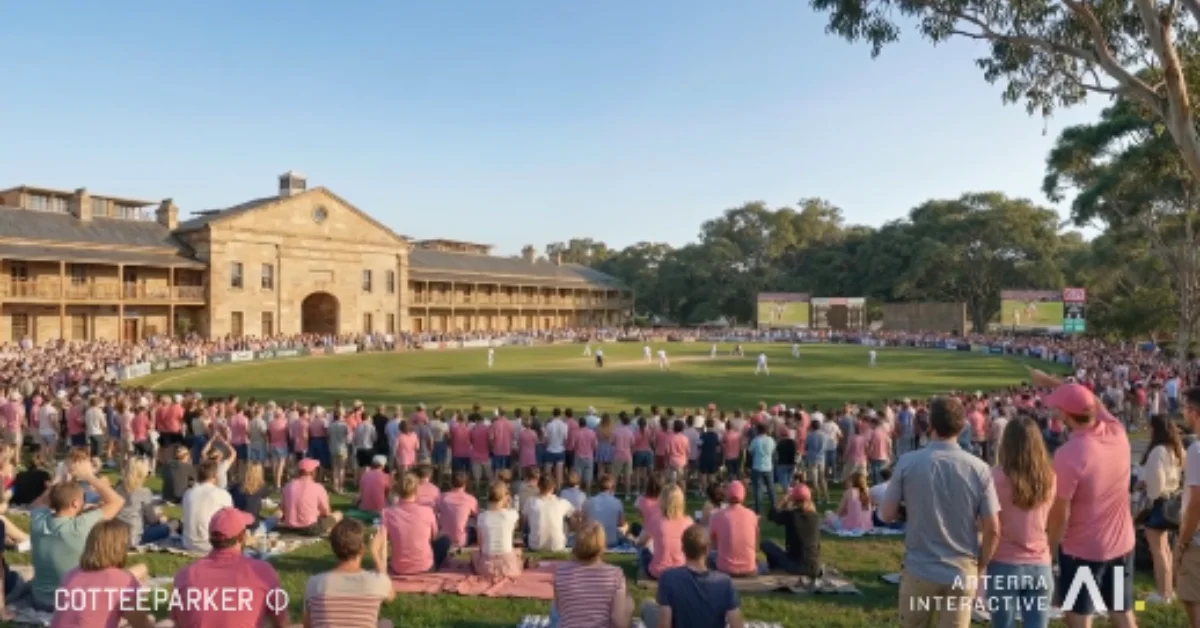
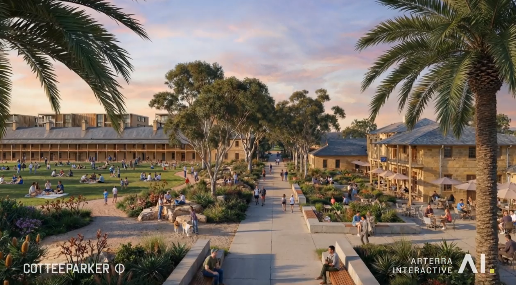
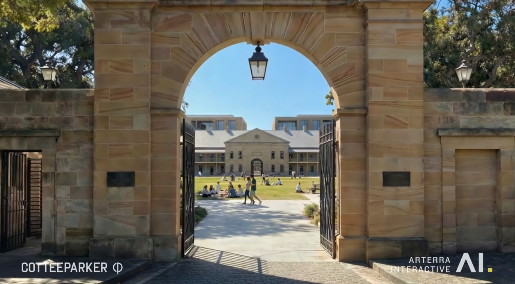
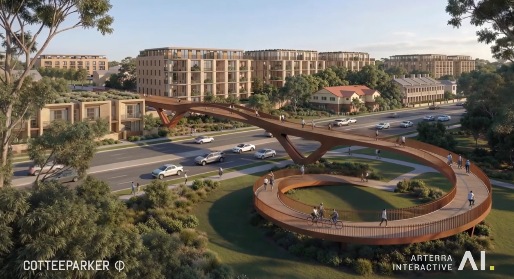
A bold new vision for Paddington’s Victoria Barracks has been made public, imagining the 20-hectare heritage site transformed into one of Sydney’s most significant public spaces, complete with a cricket-friendly parade ground, outdoor dining, shops within the historic sandstone buildings, and five-storey residential blocks alongside them.
Cr Zann Maxwell commissioned the renderings, working with architectural visualisation firm Arterra Interactive and Cottee Parker Architects to bring the City of Sydney’s community-backed Guiding Principles for the site to life.
The images showed Sydneysiders picnicking and playing cricket on the parade ground. It is a scene Cr Maxwell himself acknowledges is almost impossible to experience today.
“If we get this right, Victoria Barracks can become Sydney’s next great public place,” Cr Maxwell shared on LinkedIn. “I worked with Arterra Interactive and Cottee Parker architects to bring the City of Sydney’s community-backed Guiding Principles for the site to life. They did beautiful work within a very tight timeframe and with limited design information.”
The Heritage That Nobody Gets to See
Photo credit: LinkedIn/Cottee Parker
The Guiding Principles underpinning the concept cover conservation of the site’s heritage fabric, genuine public accessibility and ownership, and the integration of housing. Cr Maxwell has also floated the idea of consolidating Defence’s dispersed museum and heritage collections into a purpose-built military museum at the site.
According to Cr Maxwell, of the more than 130 museums and heritage displays maintained by Defence nationally, around 80 per cent are currently inaccessible to the public, with roughly 20 hectares of the Defence estate devoted to storing those collections, many relying on volunteers for their upkeep. A properly curated public museum at Victoria Barracks, he argues, could change all of that.
On housing, Cr Maxwell has argued that repurposing the barracks and addressing the broader housing crisis need not be mutually exclusive, saying both goals can be pursued together.
Opposition Crosses Party Lines
Photo credit: LinkedIn/Cottee Parker
Resistance to the divestment plan has been growing steadily, crossing party lines and drawing in civic organisations. Three separate online petitions have been launched against the sale, and in March the National Trust called for the barracks to remain in Defence ownership.
Labor MLA for Coogee, Marjorie O’Neill, whose electorate is near the barracks, has been among the most vocal critics. She has argued that the decision to sell was made without properly consulting senior commanders and units based at the site, and that it overlooks what she describes as the barracks’ ongoing operational role in counter-terrorism, crisis response, and major public events.
Photo credit: LinkedIn/Cottee Parker
She has also raised serious doubts about the proposed replacement at Defence Plaza in the city centre, describing it as not fit for purpose and flagging that bringing it up to the required security and operational standards could cost taxpayers hundreds of millions of dollars.
Cr Maxwell has acknowledged those concerns but maintains that keeping the base active would make meaningful public access almost impossible given security requirements. He says he is open to different models for the site’s future, provided any outcome is properly planned and delivers real public value.
For residents in Paddington, Surry Hills and the surrounding suburbs who have long walked past the barracks’ sandstone walls without ever seeing inside, the debate is becoming increasingly hard to ignore. Whether those gates ever open, and on whose terms, remains far from settled.
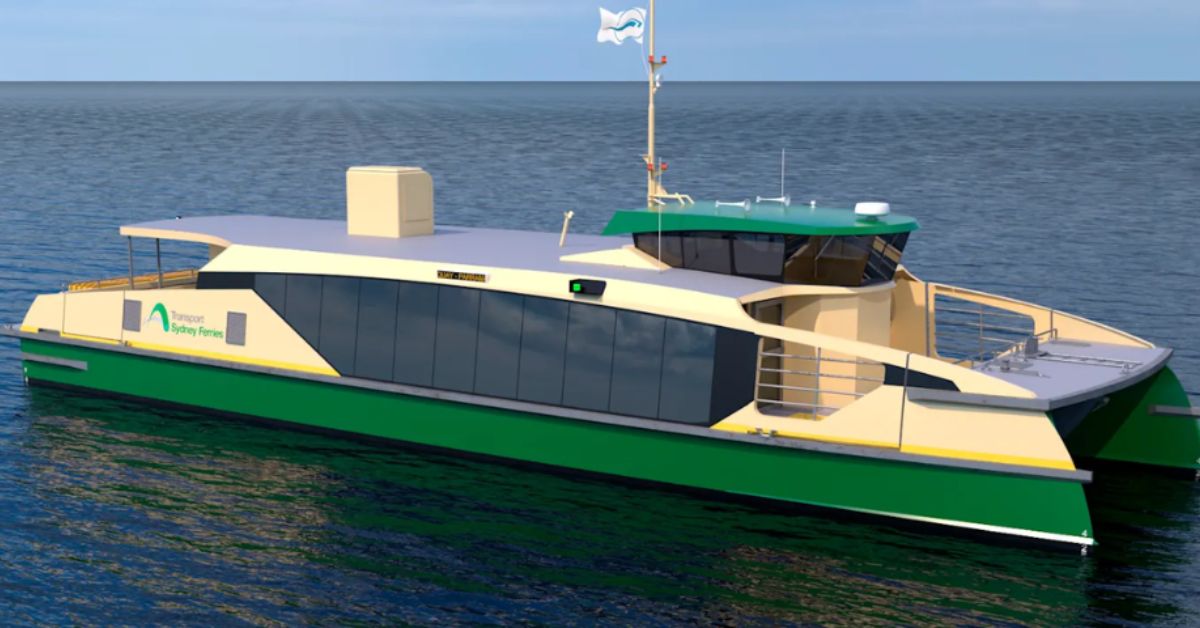
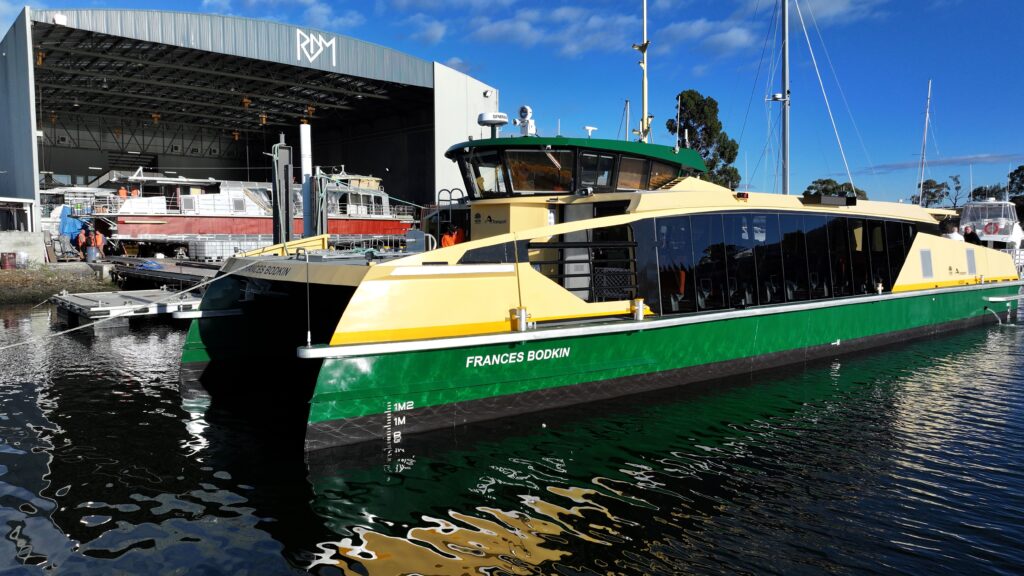
Contracts have been signed to build Sydney’s first battery-powered electric ferry, but the vessel won’t begin trials until early 2028, two years later than originally planned, and won’t enter passenger service on the Blackwattle Bay route until 2029.
The 24-metre ferry will be built by Tasmanian shipbuilder Richardson Devine Marine, with construction starting later this year. It’s modelled on the Parramatta River Class ferries already operating on Sydney Harbour and was designed by Northern Beaches-based naval architects Incat Crowther.
For Surry Hills residents and inner-city visitors who use the Sydney Fish Market at Blackwattle Bay, the timeline means a quieter, cleaner ferry connection to that precinct is still the better part of three years away.
The vessel itself, and what makes it different
The ferry runs entirely on battery-electric propulsion, producing no diesel exhaust and significantly less noise than the current fleet. At 24 metres, it sits in the same size class as the Parramatta River Class ferries, which have been well regarded since their staged rollout from May 2024.
Photo Credit: NSW Gov
Shoreside charging infrastructure will be installed at Barangaroo Wharf to support the trial. The proposed route after the trial period would connect Barangaroo to the new Sydney Fish Market precinct at Blackwattle Bay, which relocated from Pyrmont and opened earlier this year.
Transport for NSW Co-ordinator General Howard Collins described the trial as a genuine learning exercise. “This 12-month trial is an important learning opportunity,” he said. “It will allow us to test the vessel’s performance, reliability, and charging systems in real-world conditions while gathering feedback from passengers and crew.”
The challenge facing the rollout
When plans to electrify the Sydney ferry fleet were first announced, the initial trial vessel was expected on the water by 2026. The confirmed start of trials in early 2028 represents a two-year slip.
Photo Credit: NSW Gov
No decision has yet been made on ordering additional electric ferries beyond this first trial vessel. Transport for NSW and ferry operator Transdev Sydney Ferries will assess the trial’s results before any broader fleet commitment is considered.
The longer-term target, replacing Sydney’s 40-strong diesel fleet with electric or hydrogen-powered alternatives by 2035, depends heavily on what the trial delivers.
The contrast with the existing Parramatta River Class ferries is worth noting. Those vessels, designed with future electric conversion in mind, have operated without the controversies that marked an earlier generation of overseas-purchased River Class ferries, which entered service with steering defects, asbestos contamination concerns and clearance issues on the Parramatta River.
A fish market that finally has its own wharf
The Sydney Fish Market’s move to Blackwattle Bay has been a long time coming. The new precinct opened in 2026 after years of planning and construction, giving one of Sydney’s most visited destinations a purpose-built waterfront home with dramatically expanded public access.
A direct ferry connection, when it eventually arrives, would give inner-city residents and visitors a genuinely useful alternative to driving or catching a bus. The Barangaroo to Blackwattle Bay run is short and the harbour setting would make it one of the more enjoyable commutes on the network.
Established in 1840, Victoria Barracks has defined the Paddington ridgeline for well over a century and a half. Now, with 15 hectares of prime inner-Sydney land on the chopping block as part of a sweeping nationwide defence divestment, residents, heritage advocates and housing groups are making clear they have no intention of staying quiet about what comes next.
The Paddington site is among 67 Defence Department properties earmarked for sale across the country, a plan expected to raise an estimated $3 billion for the Australian Defence Force. But for many in the inner-Sydney community, the prospect of one of the city’s most significant Georgian military precincts passing into private hands raises an urgent question: will this be a missed opportunity of the highest order?
A once-in-a-generation chance
Photo credit: CC BY 3.0/Nick D/Google Maps
At a community information session held in Paddington on 7 May, Defence representatives heard directly from locals. The feedback, according to Defence, will help shape transition planning. What that planning ultimately looks like, however, remains to be seen.
The calls from the public are pointed. Affordable housing and schools rank high among the preferred uses for the site, reflecting well-documented housing pressures in Sydney’s inner suburbs. The idea that 15 prime inner-city hectares could be unlocked for public benefit rather than private profit has struck a nerve with community and housing advocates alike.
The National Trust of Australia is among the organisations pushing for the site to remain under Commonwealth ownership, citing its heritage significance. Listed on the Commonwealth Heritage List in 2004, Victoria Barracks contains one of the most important collections of Georgian military architecture in Australia. The Army Museum of NSW, housed in the original District Military Prison built in 1847, sits within its grounds.
Prominent voices push back
Photo credit: CC BY 3.0/J Bar/Google Maps
Several high-profile figures have come out firmly against the sale. Former prime minister Paul Keating, state Labor MP Marjorie O’Neill and independent Member for Sydney Alex Greenwich have all spoken out. O’Neill has described the barracks as too important to sell, arguing the site belongs in the care of the Australian people. Greenwich has also voiced strong opposition to the sale.
Several online petitions opposing the divestment have been circulating, and more than 100 submissions have been made to a Senate inquiry examining the broader defence estate sell-off. Public hearings are underway this month, giving community groups, heritage organisations and housing advocates a formal avenue to press their case.
Defence has indicated that office and administrative staff currently based at the barracks will relocate to Defence Plaza Sydney, roughly two kilometres away, while cadets are set to move to Randwick Barracks, 7km away, or a suitable community venue. The department has said heritage obligations will be explored with future owners as a condition of sale, and that community engagement will inform decisions around public access to the site’s historical collections and buildings.
For many locals, those assurances do not go far enough. Heritage and housing advocates have warned that once a site of this scale and significance leaves Commonwealth hands, the ability to guarantee meaningful public access or affordable outcomes becomes far harder to enforce. Community groups are urging decision-makers to treat the divestment not simply as a property transaction but as what many have called a once-in-a-generation opportunity to do something genuinely visionary, blending heritage preservation with housing, education and open public space.
With community pressure building, the future of Victoria Barracks Sydney is far from settled. What is clear is that the people of Paddington, Surry Hills and the broader inner-Sydney community want more than assurances. They want a plan.