


Mardi Gras Drops Moore Park Entertainment Quarter Party Amid Rising Costs

The Moore Park Entertainment Quarter, long seen as the heart of Sydney’s largest LGBTQIA+ post-Parade celebration, will no longer host the official Mardi Gras Party in 2026, marking a major shift in how the festival supports and brings together the community after the parade.


The Sydney Gay and Lesbian Mardi Gras festival will run from 13 February to 1 March 2026, with the iconic Mardi Gras Parade set for 28 February 2026. Organisers confirmed the cancellation of the large-scale post-Parade Party, which had previously been planned for Moore Park Entertainment Quarter in a revised format.

Financial Pressures Drive Major Change

Festival organisers said the decision followed ongoing financial strain and rising production costs linked to the party. According to festival leadership, the event had recorded losses in recent years, with last year’s celebration costing more than $1.5 million to deliver while ticket sales fell short of covering expenses. Organisers indicated the cost of staging the party had sometimes exceeded that of the parade itself, raising concerns about long-term sustainability.

Leadership also reported venue challenges following the loss of the Royal Hall of Industries as a key event space. Plans had been developed to move the celebration into a large single-site event at Moore Park Entertainment Quarter to better accommodate crowds and improve accessibility. However, organisers said setbacks, including the loss of headline performers and increased infrastructure costs, made it difficult to proceed in 2026.

The organisation stated that continuing to sell high-priced tickets for an event that no longer met community expectations or financial goals would be irresponsible. Instead, resources will be redirected toward supporting independently produced celebrations throughout the city on parade night.

Community Events Take Centre Stage

While the cancellation removes one of the festival’s most recognised party events, the broader Mardi Gras programme will continue to feature more than 120 events across Sydney. Organisers have encouraged attendees to support community-led gatherings that reflect the diverse identities within the LGBTQIA+ community.

Major festival highlights will remain, including the Mardi Gras Parade, which returns to Oxford Street, Flinders Street and Moore Park with the 2026 theme “Ecstatica”. The parade will again include traditional opening groups, thousands of marchers and hundreds of floats designed to celebrate pride, creativity and culture.

The programme will also include events such as the Mardi Gras Film Festival, which showcases international LGBTQIA+ cinema, as well as community gatherings such as Fair Day at Victoria Park. Cultural and performance-based events including Laugh Out Proud at the Enmore Theatre, Queer Art After Hours at the Art Gallery of NSW, and dance and performance nights across the city will continue to form key parts of the festival experience.

Exploring New Celebration Models

Festival organisers said they are considering smaller-scale options to celebrate the end of the parade in future years. Leadership indicated that the organisation is reviewing how post-Parade celebrations can remain inclusive while managing costs and adapting to changing audience expectations.

The shift away from a single large ticketed event is expected to encourage attendees to explore a wider range of venues and community-run parties across Sydney. Organisers said many independent event producers face their own financial pressures and community backing will be important to maintaining the city-wide festival atmosphere.


Despite the cancellation of the Moore Park Entertainment Quarter party, organisers stressed that Mardi Gras remains focused on providing accessible, inclusive celebrations that reflect the broader LGBTQIA+ community.

Published 10-Feb-2026

Paddington Barracks Sale Plan Puts Prime Inner-City Land in Play

Paddington is staring down a rare shake-up: Defence has flagged the 15-hectare Victoria Barracks for possible sale, a decision that could redirect hundreds of millions in projected upkeep while putting one of the suburb’s biggest locked-away sites in the spotlight for housing and community use.


The plan moved into public view on 4 Feb 2026, when Defence released details of a national estate audit and said it would proceed to sell most of the properties identified for disposal by reviewers, with the proceeds intended to be reinvested in Defence. 

Why Paddington’s Barracks Is on the List

The audit and related analysis described parts of the Defence estate as underused and expensive to maintain, and identified scope to consolidate staff into modern offices with spare capacity. 

In Paddington, Victoria Barracks was described as not fully utilised, while Defence Plaza in the CBD was also reported as operating well below capacity despite major investment. Supporters of the sale argue that keeping many administrative functions within a heritage site is increasingly difficult to justify as costs rise and alternative office space is available. 

Community Access, Housing Pressure, and Heritage Limits

Paddington’s barracks already hold military history resources, but access for the wider public has been limited in ways that local voices have criticised. Housing advocates, including groups pushing for more homes near jobs and transport, have argued that the site is too valuable and well-located to remain largely closed off, especially as rents in nearby areas have risen in recent years. 

At the same time, military history groups and some local representatives have argued the site has strong heritage value and should be protected, with at least one state MP raising concerns that the barracks still play an important role in Army command and training arrangements. 

Defence and ministers have framed the sell-down as a budget and capability choice, saying the organisation’s core job is defence readiness rather than preserving buildings, while also noting that heritage protections can still shape what happens next. Any future development would likely face constraints linked to its heritage status and would depend on planning decisions and consultations beyond Defence’s initial sale process. 

Finance Minister Katy Gallagher has said decisions about future land use had not been made, even as the audit’s figures and location maps fuel early debate about housing, open space and community benefit. Defence has also indicated some sales could take years because of relocation and remediation steps. 

For more details on the broader estate plan, Defence’s statement is here: Delivering the Future Defence Estate. 

Victoria Barracks in Paddington, NSW
Photo Credit: Australian War Memorial

History of Victoria Barracks

Victoria Barracks is one of Paddington’s oldest landmark sites, dating back to the mid-1800s. It was established in the 1840s and the main barracks was completed in 1848, first used by British troops and later serving Australian military functions. In recent times, the barracks contains military history collections, but access for the wider public has been limited.

Heritage material linked to the precinct also describes the long main building as being about 225 metres and widely regarded as the longest sandstone structure of its kind in the southern hemisphere, a point often raised in arguments for strong heritage protection.


The site includes the Army Museum of NSW, and the Army’s own museum listing notes limited opening hours and guided tours that are scheduled rather than daily.

Published 10-Feb-2026

Japanese Omakase Restaurant 16 Steps Back From Sydney Fish Market Reopening

A critically acclaimed Japanese restaurant has withdrawn from the newly opened Sydney Fish Market, citing operational issues and saying it had insufficient legal protections under the proposed lease arrangement.


Restaurant 16, an eight-seat omakase venue that operated in Cammeray, in the Lower North Shore, for over 14 years, had planned to open at the $836-million Glebe facility in February alongside Get Sashimi. The restaurant closed its Lower North Shore location in December and began fit-out work at the new markets before concluding that the arrangement was not viable for its specific operations.

Lease and Operational Concerns Behind Withdrawal

Managing director Hiroko Ryu says the decision to withdraw was difficult but unavoidable due to serious circumstances that emerged during the preparation phase. The restaurant had operated under a sublease structure with Get Sashimi but was unable to execute what Ryu describes as a standard, formal sublease agreement.

According to Ryu, operational issues became apparent as the opening approached, particularly around consistent and reliable access to necessary facilities. While the restaurant made efforts to resolve matters cooperatively and understood the challenges of an initial opening phase, Ryu says the operational necessity of reliable access was not sufficiently recognised.

Ryu alleged that the legal protections offered to them did not meet their internal requirements. More significantly, he says it became clear the environment would make it nearly impossible to maintain the standards Restaurant 16 has upheld for over 15 years, built on customer trust and a commitment to what the restaurant calls honest cuisine and sincere hospitality.

Conflicting Accounts Over Lease Arrangements

Get Sashimi director Antonio Muollo disputes aspects of Restaurant 16’s account, stating the lease arrangement was never with Get Sashimi but rather with Wellstoneme, the entity controlling three omakase rooms at the Fish Market.

According to Muollo, two other restaurants are leasing the remaining omakase rooms and report satisfaction with the arrangements. The dispute allegedly appears to centre on the structure and terms of the sublease rather than the physical space itself.

The differing accounts reflect contrasting views on the intended business structure. Restaurant 16 maintains that its negotiations were with Get Sashimi, while Get Sashimi has distanced itself from the lease, identifying Wellstoneme as the relevant entity. The specific terms of the proposed agreements remain confidential, and it is unclear whether either party will pursue further legal mediation over fit-out costs already incurred.

About Restaurant 16

Chef and owner Toru Ryu originally named the restaurant after Unit 16, the Sydney apartment where he lived during his training days. The Japanese-born chef built a cult-like following over his 16 years operating the intimate venue, which seated just eight diners.

As he approached his 16th year in business, Ryu had expressed readiness to move into a new chapter at the Sydney Fish Market. The closure of the Lower North Shore venue in December was intended to facilitate the transition to Glebe rather than mark the end of operations.

Ryu has indicated plans to eventually find another space for Restaurant 16, though no timeline or location has been announced. The withdrawal leaves the restaurant without a operating venue while it searches for suitable premises.

Sydney Fish Market Context

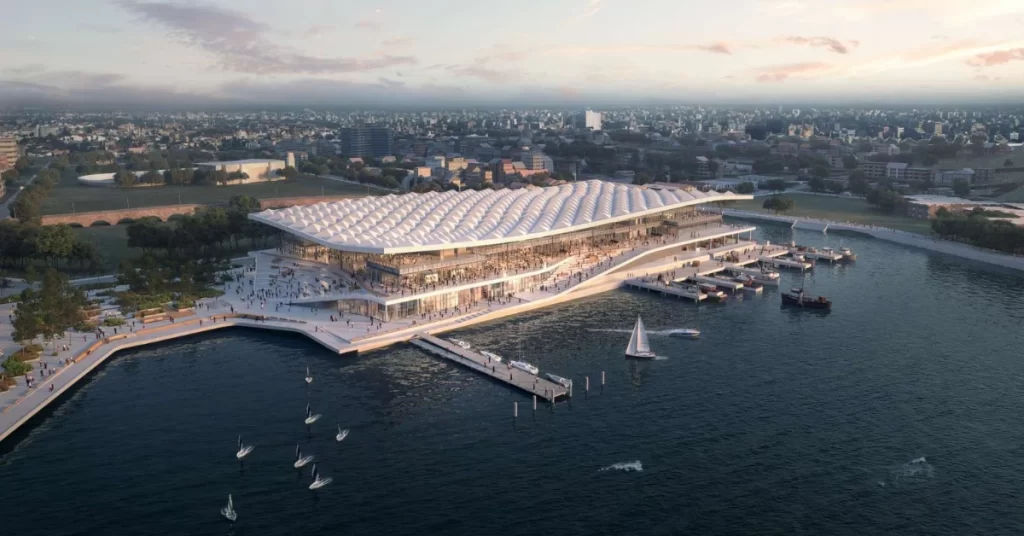
The new Sydney Fish Market opened on January 19, 2026, marking the completion of a $836 million redevelopment project. The facility replaced the decades-old Pyrmont markets, providing upgraded auction facilities, retail fish markets, restaurants and public spaces on a waterfront site.

Photo Credit: Sydney Fish Market

The markets are located at 1 Bridge Road, Glebe, approximately three to four kilometres from Surry Hills in Sydney’s inner west. The location is accessible within 10 to 15 minutes by car from Surry Hills or via public transport connections through the light rail network.

The development includes multiple hospitality operators in addition to the core fish market operations, creating a dining and tourism destination intended to complement the working market facilities. The omakase rooms where Restaurant 16 had planned to operate represent part of the premium dining offering within the broader complex.

Opening phase challenges are not uncommon for large-scale mixed-use developments, particularly those involving multiple independent operators sharing infrastructure and facilities. These concerns echo broader industry discussions during the market’s handover phase about whether the infrastructure was adequate for premium hospitality operators.

The Fish Market development brings together retail, wholesale, hospitality and public realm functions in an integrated precinct.

Lease arrangements in such developments typically involve head leases from the property owner to anchor tenants, with potential sublease structures for smaller operators. The specific arrangements at the Fish Market involve various entities with different operational responsibilities, as indicated by the distinction between Get Sashimi and Wellstoneme in this case.

Implications for Diners and the Precinct

The withdrawal removes one anticipated option from the Fish Market’s dining lineup. Customers awaiting the new opening now have no announced reopening date or location.

The cult following built over many years represents a dedicated clientele. Restaurant 16 had announced plans to relocate, and now says it plans to find another space.


Published 06-February-2026.

Hargrave Lane Cottage Set to Go Under the Hammer

A charming worker’s cottage in Paddington’s quiet Hargrave Lane is set to go under the hammer this month, representing a labour of love for the young couple who transformed it from a dark rental into a light-filled modern home.


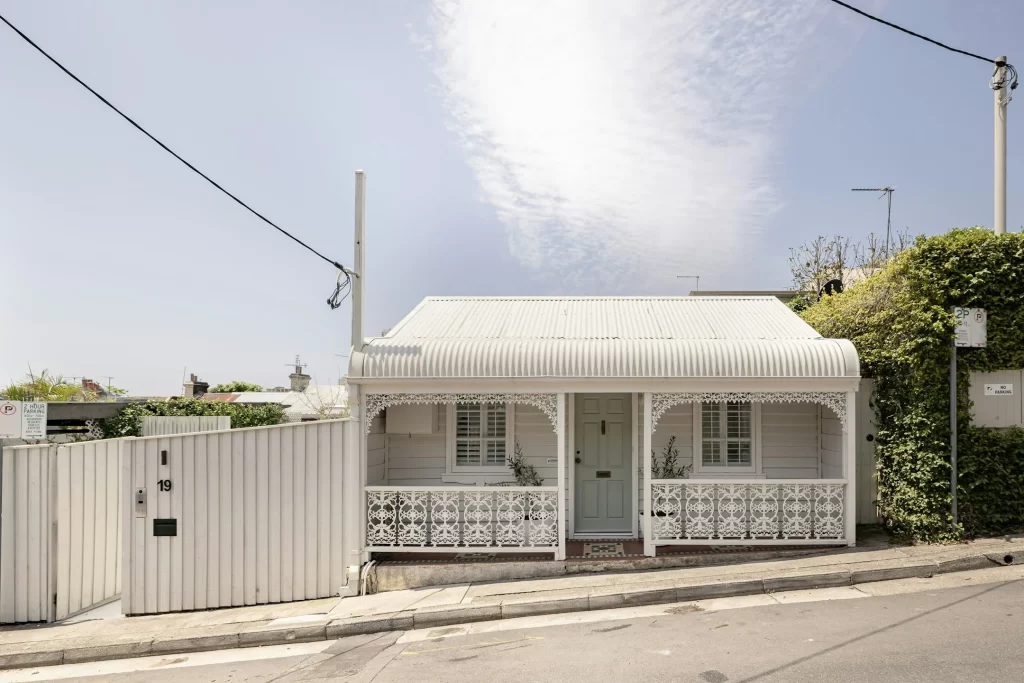
Sally and Josh first walked through the doors of 19 Hargrave Lane as prospective tenants in 2019. At the time, the turn-of-the-century cottage was cramped and lacked natural light despite being a freestanding property. However, the sunny north-facing courtyard and proximity to Paddington’s cafés and boutiques won them over, and they decided to rent the home.

Photo Credit: BresicWhitney

The couple spent much of their time in the outdoor space, imagining how they could improve the property if given the chance. That opportunity came in late 2020 when they learnt their landlord had passed away and the home would be sold. After a stressful bidding process at auction, they successfully purchased the deceased estate.

Photo Credit: BresicWhitney

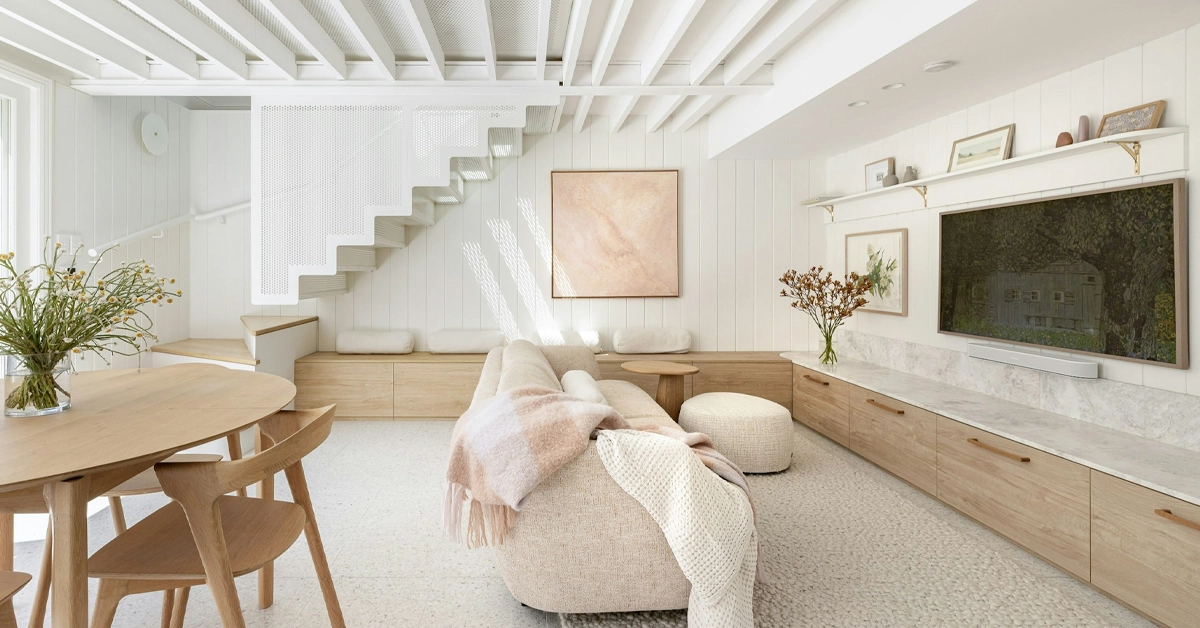
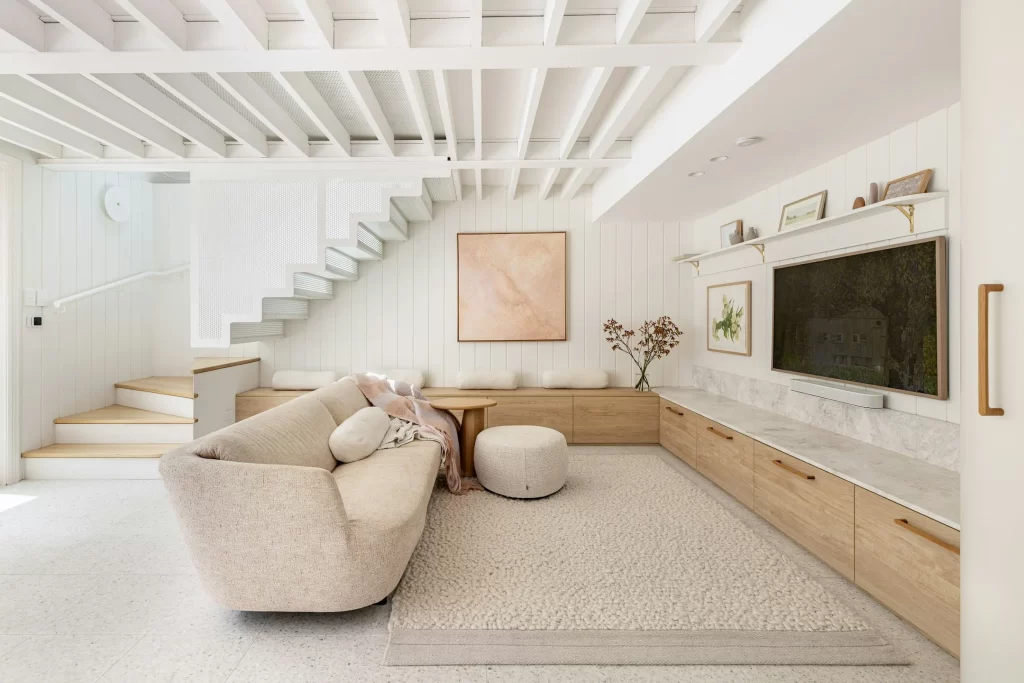
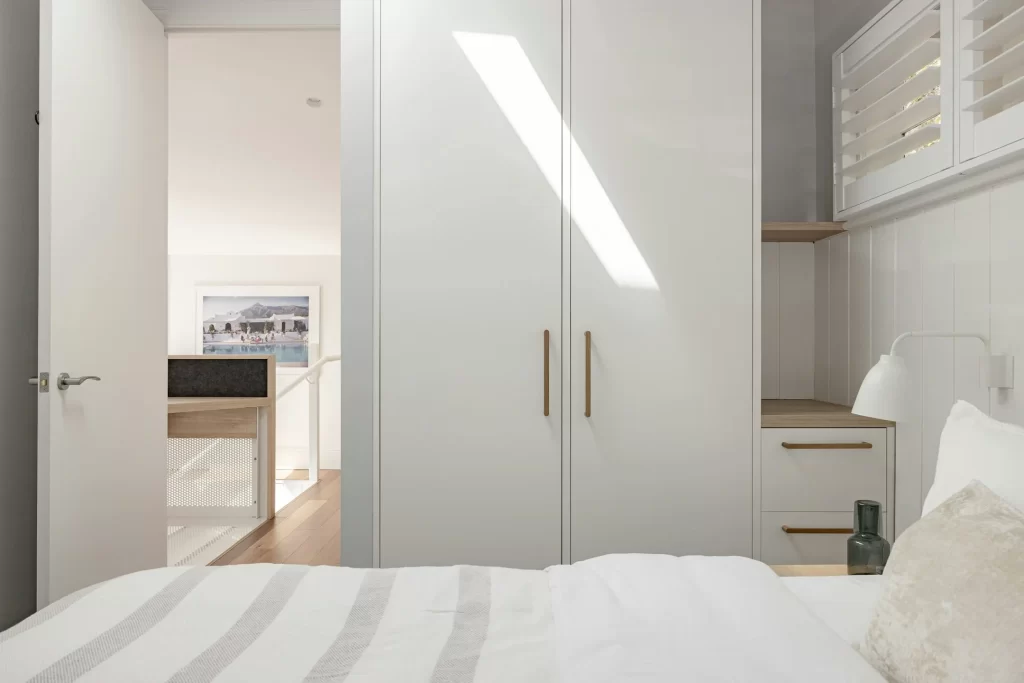
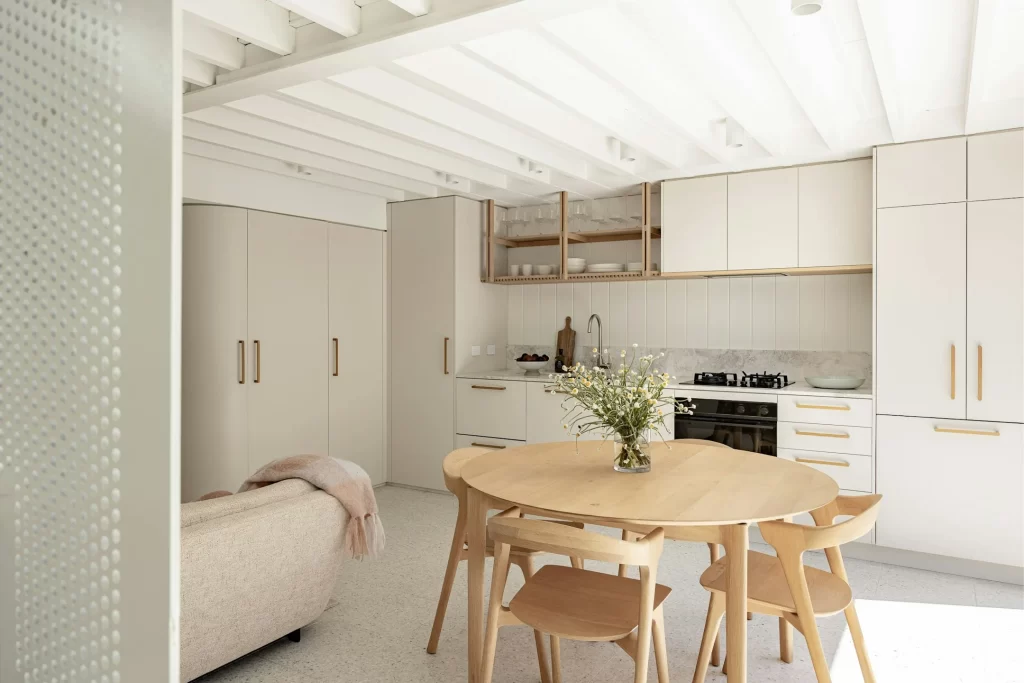
What followed was an extensive renovation that completely reimagined the cottage’s layout. Working with architect Michiru Higginbotham, Sally and Josh flipped the existing two-storey floor plan, relocating the main living areas downstairs and creating an open-plan kitchen, dining and living space. Full-width sliding glass doors now connect the interior to the courtyard, whilst upstairs, the former living room has become a second bedroom.

Photo Credit: BresicWhitney

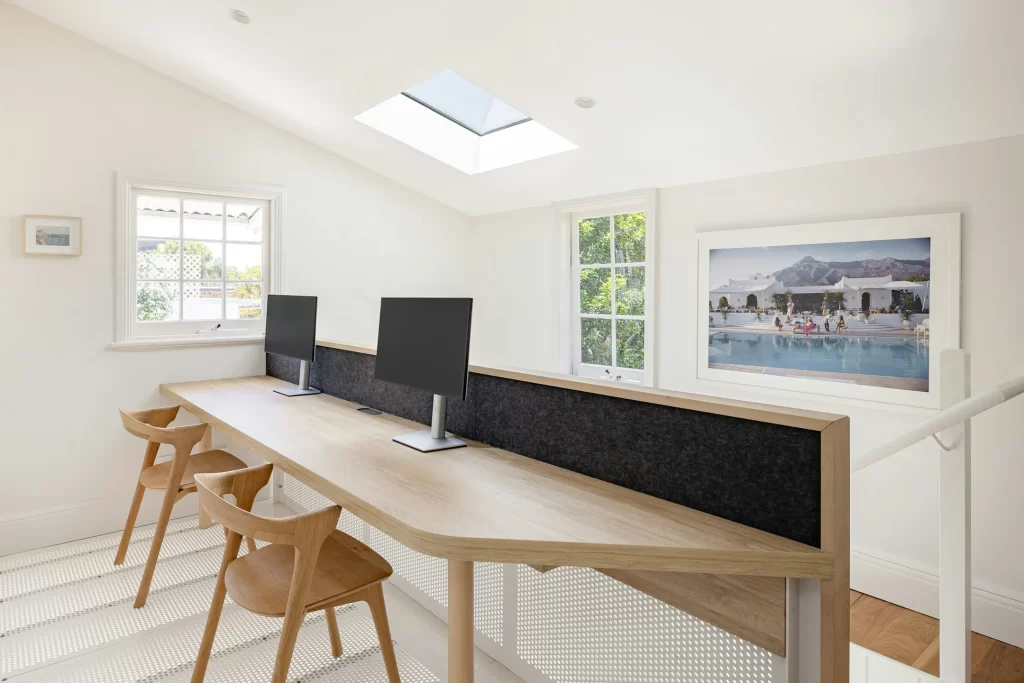
A standout feature of the renovation is the perforated steel staircase connecting the two levels, which allows natural light to filter down from the upper floor. The couple embraced every opportunity to brighten the home, adding windows, removing internal walls, and installing a skylight above a home office nook where Josh, a software engineer, works.

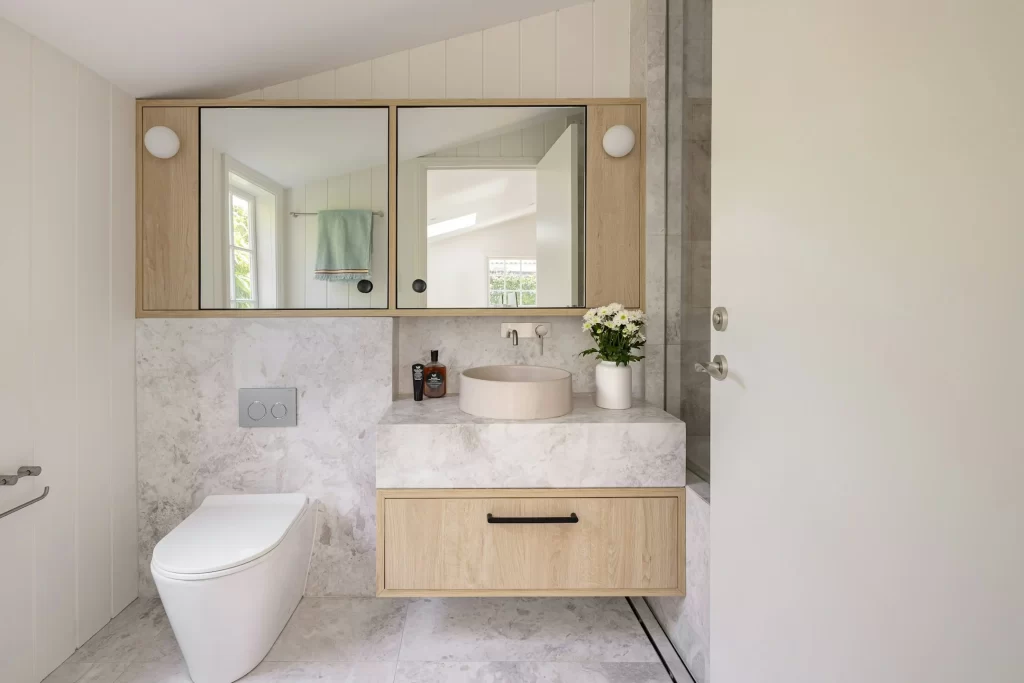
The interior design follows a light and airy brief, with the staircase and exposed beams painted white. Off-white marble in the kitchen and terrazzo-tiled floors add texture whilst maintaining the bright aesthetic. Cream-coloured custom joinery maximises storage space, with natural wood accents providing warmth.

Photo Credit: BresicWhitney

Modern conveniences include smart-home automation, ducted air conditioning and underfloor heating. Outside, the heritage charm remains intact, with the front verandah’s bullnose roof and iron lacework carefully restored.

Sally, who works in investment management, says they achieved their goal of having the best of both worlds. The couple moved back in during 2022 and embraced the Paddington lifestyle, spending weekends strolling to local cafés, relaxing in their courtyard, and entertaining friends.

Photo Credit: BresicWhitney

However, the arrival of their first child, Max, in 2025 has prompted the decision to sell. The couple needs additional space for visiting family members and a separate room for their son. Whilst they’ve found another property in Paddington, they remain attached to the cottage they transformed.

Photo Credit: BresicWhitney

The property will be auctioned at 10.30am on Saturday, 14 February, with a price guide of $2.5 million. BresicWhitney’s Catherine Dixon is handling the sale.


According to recent market data from property analysts, Paddington’s median house price currently sits at $3,622,500, with annual capital growth of 11.46%. Properties in the suburb typically spend around 37 days on the market.

Published 3-February-2026

Australia Day Honours Recognise Paddington Leadership In Tourism And Construction

Two Paddington residents have been recognised on the Australia Day 2026 Honours List, with long-standing contributions spanning the major events and tourism sector and the construction industry.


A Career Shaping Major Events And Tourism

Sandra Chipchase of Paddington, was appointed a Member of the Order of Australia (AM) in the General Division for significant service to the major event and tourism industry.

Her career spans several decades across international, domestic and regional tourism, with senior leadership roles in destination marketing, major event delivery and precinct development. She served as Chief Executive Officer of Destination NSW from 2011 to 2019 and was Executive Producer of Vivid Sydney Festival between 2012 and 2019, overseeing the event’s development into one of Australia’s largest annual festivals.

Ms Chipchase’s professional background includes senior executive roles with the Melbourne Convention and Visitors Bureau, the Sydney Harbour Foreshore Authority and Tourism Australia, alongside leadership of Australia’s Pavilion at World Expo 2000.

Governance And Industry Contribution

Beyond operational roles, Ms Chipchase has contributed extensively through board and advisory appointments. She is Chair of On Stage Australia, a company specialising in the design and management of mobile performance venues, and a Business Development Partner with Impresario Productions.

Her board experience includes service with the National Museum of Australia between 2021 and 2024, as well as chairing national advisory panels focused on tourism and business events recovery and industry development from 2020 to 2022.

Industry commentary accompanying her honours appointment cited sustained leadership, innovation and long-term contribution to Australia’s visitor economy and major events sector.

Service To Construction And Community

Also recognised from Paddington, Timothy John Murphy received the Medal of the Order of Australia (OAM) in the General Division for service to the construction industry and to the community.

Mr Murphy is a foundation member and inaugural chairman of the Masonry Contractors Association and continues to serve as a director and treasurer. His industry involvement includes long-term participation in professional bodies and training organisations supporting skills development within the building sector.

His community service includes ongoing involvement with education-focused bursary programs and charitable initiatives linked to schools and memorial foundations.

Paddington Australia Day
Photo Credit: Pexels

Outlook


The Australia Day 2026 Honours List highlights Paddington residents whose careers reflect sustained professional service across distinct sectors. The appointments of Sandra Chipchase and Timothy John Murphy recognise long-term leadership, industry development and community involvement through national honours.

Published 27-Jan-2026

Paddington Australia Day Honours Recognise Genomic Medicine Specialist

A Paddington-based genetic pathologist has been recognised on the Australia Day 2026 Honours List for long-standing contributions to genomic medicine, research, education and clinical care.


Genomic Medicine Contribution In Paddington

Dr Michael Francis Buckley was appointed an Officer of the Order of Australia (AO) in the General Division for distinguished service to human genomic medicine, genetic pathology, and to research, education and training.

Dr Buckley is the Clinical Director of the Randwick Genomics Laboratory and has held specialist genetic pathology roles within NSW Health Pathology since the late 1990s, including senior staff appointments through to 2025.

Clinical Impact And Patient Outcomes

Dr Buckley’s work has been linked to the application of prenatal genomic testing, supporting early diagnosis and treatment planning in complex medical cases.

One publicly reported case involved Victorian resident Melissa Nord, whose son Mitchell received a life-saving diagnosis following a prenatal genomic test analysed by Dr Buckley and his team at the Randwick Genomics Laboratory. The diagnosis enabled immediate access to specialised care following birth.

The case has been cited as an example of how genomic medicine can guide clinical decisions at critical stages of pregnancy and early life.

Paddington Australia Day Honours
Caption: Melissa Nord with her son Mitchell and family, whose prenatal genomic testing supported an early diagnosis and access to specialised care following birth.
Photo Credit: NSW Health Pathology

Research, Training And Professional Leadership

Dr Buckley’s career spans clinical practice, laboratory leadership and research involvement across national and international genomic projects.

His professional leadership roles include serving as President of the Human Genetics Society of Australasia from 2018 to 2020, as well as Chief Examiner in Genetics for the Royal College of Pathologists of Australasia from 2002 to 2009. He has also contributed to advisory committees and accreditation processes within genetic pathology.

Dr Michael Buckley
Photo Credit: NSW Health Pathology

Other Paddington Honourees

Australia Day 2026 honours recognised 949 Australians through appointments and awards within the Order of Australia, alongside meritorious and service distinctions.

Paddington was also represented on the Australia Day 2026 Honours List by two additional recipients.

Ms Sandra Chipchase was appointed a Member of the Order of Australia in the General Division for significant service to the major event and tourism industry, with senior leadership roles including Destination NSW and national industry boards.

Mr Timothy John Murphy received the Medal of the Order of Australia in the General Division for service to the construction industry and to the community, reflecting long-term involvement in industry organisations and education-focused community initiatives.

Looking Forward


The Australia Day 2026 Honours List recognises Paddington-based service across specialised professional fields, with Dr Buckley’s appointment highlighting the growing role of genomic medicine in diagnosis, treatment planning and medical training, alongside broader community contributions.

Published 27-Jan-2026

Darlinghurst Project Turns Bondi Tributes into Lasting Remembrance

In a Darlinghurst storage space generally reserved for preserving history, thousands of flowers left after the Bondi Beach attack are being dried, pressed, and catalogued, as the Sydney Jewish Museum works with volunteers and an artist to turn a spontaneous outpouring of grief into a permanent community memorial.


A race to save what the community left behind

When plans to remove the temporary memorial at Bondi were confirmed, the Sydney Jewish Museum moved quickly to prevent the tributes from being lost. Museum staff and volunteers organised transport, storage and preservation methods in a matter of days, dealing with tonnes of flowers and personal items left in memory of the victims. 

According to accounts from museum staff, the process involved securing trucks, finding spaces that could store perishable material and setting up drying systems before the Christmas period intensified logistical pressures. 

Flowers, memory and method

Inside rented storage facilities, volunteers sorted, hung and dried thousands of flowers, handling each piece carefully. Fresh petals were pressed or preserved using different techniques, while decayed material was set aside for compost. These materials will later be used in a range of memorial forms, including seating and other functional elements intended for the museum space. 

The work has been described by those involved as slow, repetitive and emotionally demanding, with many volunteers saying the careful handling of each flower offered a quiet way to process grief.

Art shaped by community loss

Melbourne-based visual artist Nina Sanadze, who was already working with the Sydney Jewish Museum before the attack, has been commissioned to develop the permanent memorial works. Drawing on her experience with large-scale, community-engaged projects, she is working alongside volunteers and curators rather than producing a single standalone piece. 

The aim, according to project details shared publicly, is to reflect the scale of the loss and the collective response, using multiple artworks and materials rather than one symbolic object.

Darlinghurst site and future plans

The Sydney Jewish Museum, located in Darlinghurst, is currently closed for redevelopment, with plans to reopen in late 2026. The preserved tributes are intended to form part of the museum’s future exhibitions, offering visitors a space for reflection and education. 

Museum representatives have said the memorial will focus on unity and remembrance, acknowledging the broader community impact of the attack while keeping the individual stories behind each tribute intact.


From temporary grief to lasting record

While the memorial at Bondi was never meant to be permanent, those involved in this project say preserving the tributes ensures the community’s response is not forgotten. By turning flowers, messages and personal items into lasting artworks, the Darlinghurst-based museum hopes to carry forward the meaning behind each offering, long after the physical memorial site has been cleared.

Published 23-Jan-2026

Dog Dies After Stepping On Electrified Manhole Cover In Surry Hills

A dog has died after stepping on an electrified manhole cover on a footpath in Surry Hills, prompting an investigation into a fault beneath Crown Street.


A Hidden Fault Beneath The Footpath

A dog has died after stepping on an electrified manhole cover on a footpath in Surry Hills, during an evening walk along Crown Street.

The incident occurred on Wednesday evening. A woman was walking two dogs when one stepped onto the manhole cover and was electrocuted. The dog died at the scene.

The woman also received an electric shock and was taken to hospital for observation before later being released.

Surry Hills footpath
Photo Credit: Pexels

Link Box Fault Under Investigation

The incident is believed to have been caused by a fault within an underground link box beneath the footpath. Ausgrid said components within the underground box are believed to have caused part of the covered pit to become energised.

Wet conditions were reported at the time, with rain considered a likely factor in creating an electrical pathway to the metal rim of the cover.

People walked across the area for about 15 minutes before it was secured, with rubber shoe soles credited with preventing further injuries.

Ausgrid Response

Ausgrid accepted responsibility for the incident, issued an apology, and said it appeared to be an isolated event. The company said the area has been made safe and a comprehensive investigation is underway to determine the cause of the failure.

The company said it has spoken with the woman and will be providing support.

Recent Works Also Being Considered


The footpath had reopened only weeks earlier after redevelopment. Factors being examined include recent works and the condition of underground equipment.

Published 17-Jan-2026

How A Surry Hills Office Building Was Shaped By Movement And Imagination

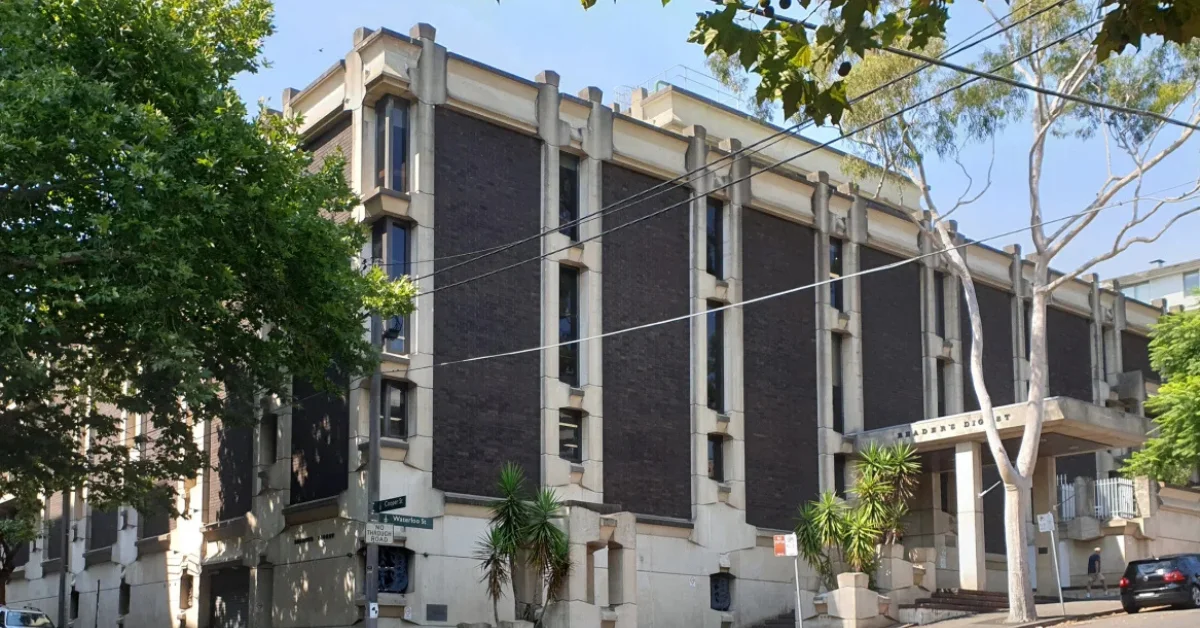
The former Reader’s Digest Building in Surry Hills is being revisited through the eyes of its original architect, John James, who believes the office block was designed to make people feel movement, curiosity and freedom within its spaces.


A Building That Begins With Movement

At 94, architect John James returned to the Reader’s Digest Building, a project that defined both the height and conclusion of his architectural career. Designed when James was 33, the building was completed after four years and opened in November 1967 as the Sydney headquarters of the Reader’s Digest publishing house.

James has long maintained that architecture should feel physical rather than static. For him, a well-designed space encourages movement, curiosity and emotional response, rather than simply directing people from one point to another.

John James architect
Photo Credit: Design 5 Architects

A Departure From Office Design Norms

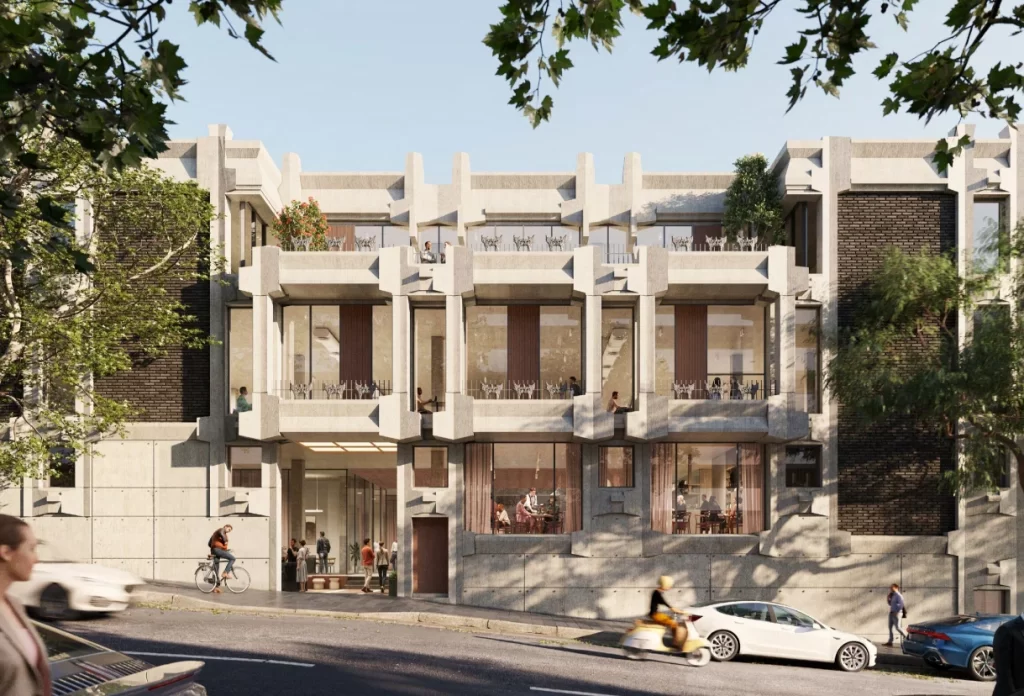
At the time of its completion, the Surry Hills building stood apart from prevailing office architecture. While glass towers dominated the era, James pursued expressive concrete forms influenced by Gothic architecture and organic proportions.

The structure became known for its curved surfaces, heavy concrete expression and interiors that contrasted sharply with its exterior. Inside were fountains, coloured finishes, gardens, high ceilings and distinctive lighting, all intended to soften the working environment and make it more human in scale.

The building was also the first office building in Sydney designed to house a computer, which at the time occupied an entire floor and was visible from the main entrance.

Sydney architecture
Photo Credit: Design 5 Architects

Recognition That Came Later

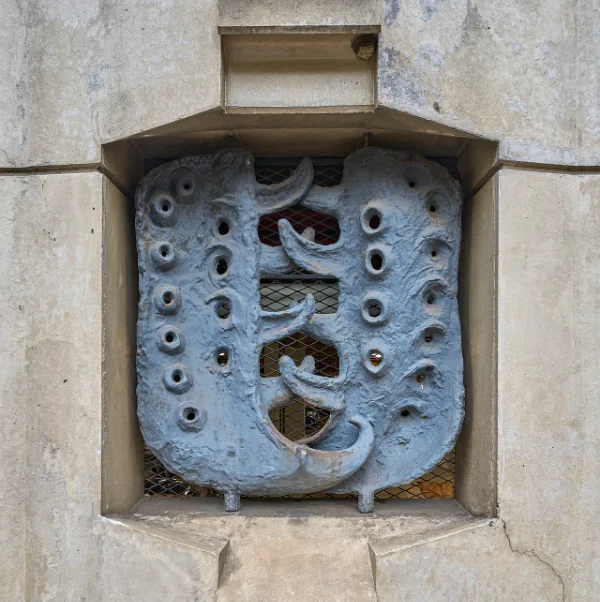
Initial reactions to the building were mixed, with some describing it as eccentric or unfashionable. Over time, however, its reputation shifted. In 2016, the building received an enduring architecture award recognising its long-term architectural significance, including its sculptural work by Douglas Annand and rooftop garden by Bruce Mackenzie.

Public commentary since has continued to reflect strong opinions, with many describing the building as one of Australia’s most distinctive commercial structures.

Photo Credit: Design 5 Architects

Revisiting The Original Vision In Surry Hills

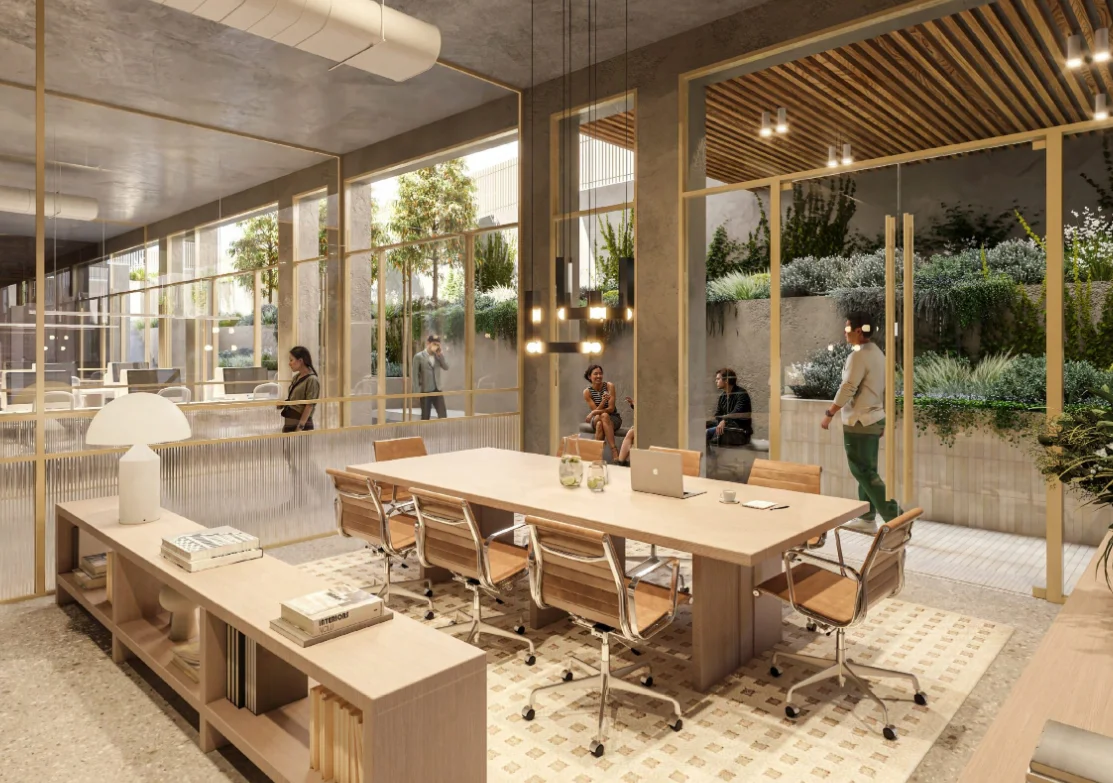
A $23 million adaptive reuse project is now being finalised for the 4,200-square-metre, heritage-listed building. The refurbishment is being led by SJB and Design 5 – Architects, working with building owner Barana Group, which purchased the site in 2019.

The project aims to adapt the building for contemporary creative use while retaining original features. Planned works include accessibility upgrades, improved natural light, sustainability improvements, upgraded entries including access from Cooper Street, and new ground-level uses such as a café.

Design 5 Architects
Photo Credit: Design 5 Architects

Restoring Playfulness And Discovery

James has encouraged the project team to embrace colour, curves and unexpected moments within the interior. He has described corridors not as passages, but as experiences that should unfold gradually, creating anticipation rather than efficiency alone.

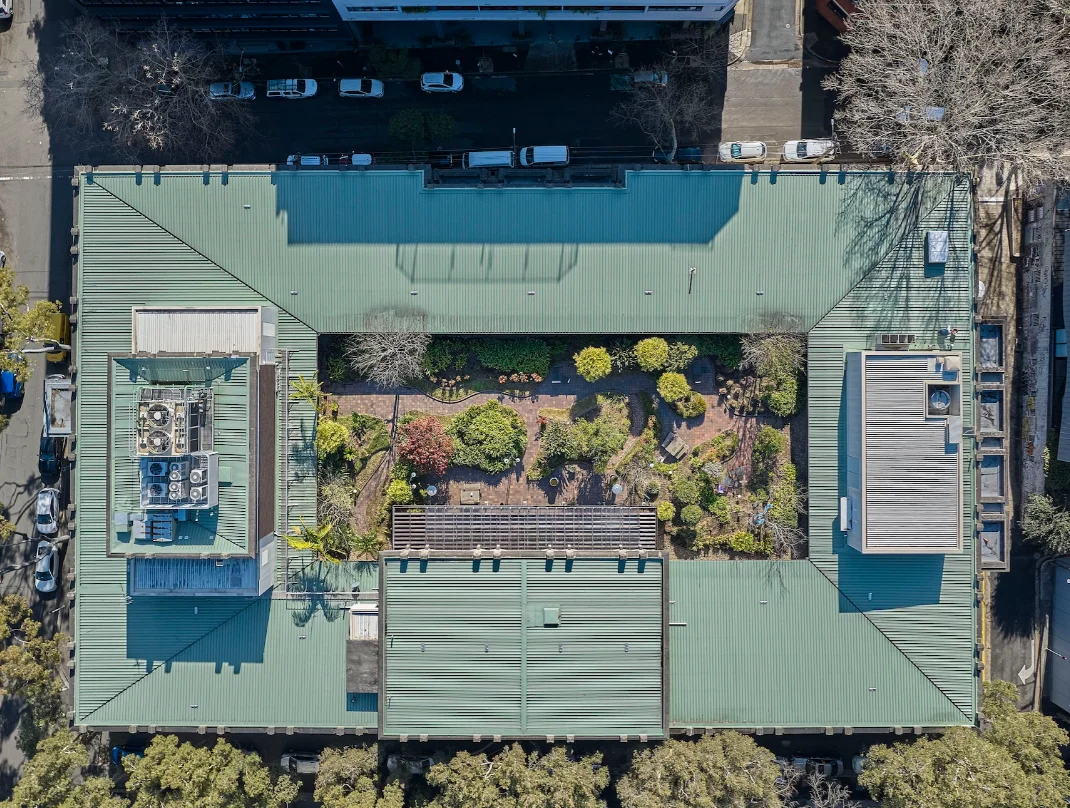
The refurbishment also plans to reinstate Annand’s sculptural elements, some of which were concealed for decades, and rebuild the rooftop garden originally designed by Mackenzie.

A Space For Creative Exchange


The renewed building is intended to function as a shared creative environment within Surry Hills, encouraging collaboration and informal interaction among tenants. This approach aligns with James’ original intent to design workplaces that felt alive rather than rigid.

Published 13-Jan-2026

Surry Hills’ Pioneering Lebanese Restaurant Abdul’s Closes After Six Decades

A Surry Hills dining institution has abruptly closed its doors after nearly 60 years, leaving shocked customers staring at for lease signs where Abdul’s Lebanese Restaurant once welcomed generations of diners on Elizabeth Street.


Read: Rare Commercial Property in Surry Hills Sparks Strong Buyer Interest


The beloved eatery, which has been serving traditional Lebanese cuisine since 1968, announced its closure with a simple message on its website: “Abdul’s Lebanese Restaurant has closed. Thank you to you all!!” The closure has left customers without one of what was long considered the city’s best Lebanese eateries.

History of the Restaurant

Abdul’s story begins with Lebanese migrant Dib Ghazal, who arrived in Australia in 1965 with no intention of staying permanently. Like many migrants of his era, Dib hoped to achieve success before returning to Lebanon. However, fate had different plans for the Ghazal family.

What started as an Arabic sweets shop transformed into a groundbreaking restaurant when Dib and his wife Nizam acquired the business in 1968. Abdul’s holds a significant place in Australian culinary history as one of the first establishments in the country to sell falafel and traditional Lebanese bread. At the time, these foods were virtually unknown to most Australians, and sourcing authentic ingredients proved extremely challenging.

Nizam, affectionately known as “Umm al-Abd”, would knead dough by hand to make fresh bread for the falafel sandwiches that Dib prepared. Initially, they only sold falafel sandwiches on weekends, but demand quickly grew, with queues stretching from the restaurant door all the way to the end of Elizabeth Street.

The restaurant became a true family operation, with each of Dib and Nizam’s nine children playing a role after completing their schoolwork. Dib would cut parsley for tabbouleh—he was reportedly the fastest among them all. Two daughters helped Nizam with the bread-making, whilst two sons assembled and wrapped the falafel sandwiches. Other family members took orders and served customers. This collective effort built not just a business, but a legacy that would span nearly six decades.

Building a Community Following

Abdul's
Photo credit: Abdul’s Restaurant/Google Maps

Abdul’s initial clientele consisted mainly of Arab migrants who would visit after attending services at the nearby Maronite church. These early customers connected deeply with Nizam’s home-cooked Arabic dishes.

By the early 1970s, word had spread beyond the migrant community. Australian diners discovered Abdul’s vegetarian offerings, particularly the falafel, and became fascinated by the food’s origins. Nancy remembers customers being interested in the smallest details, wanting to know about the recipe’s history and the story of the man who brought it to Australia. Dib would explain that falafel was a dish popular amongst the poor in Lebanon, and that he had come to Australia to create a better future for his family.

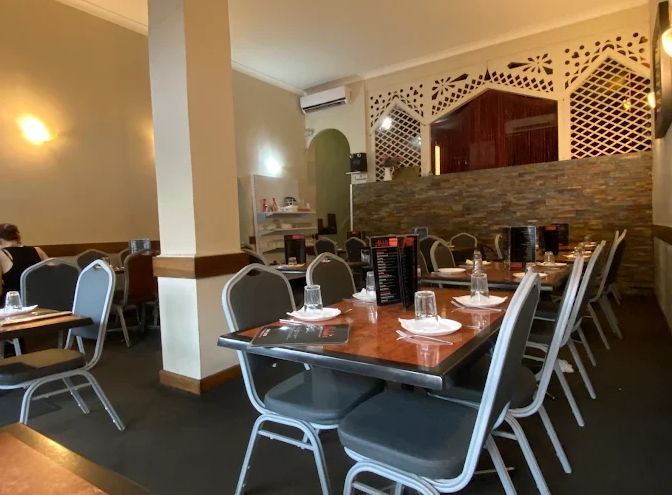
Over the decades, the restaurant evolved from its humble beginnings into a sprawling establishment that became a Sydney institution. Abdul’s was known for its generous portions, handmade dishes, and welcoming family atmosphere. The menu expanded to include classic mezze, charcoal-grilled meats, vibrant salads, house-made dips, and traditional desserts.

The End of an Era

Photo credit: Cindy Huang/Google Maps

No official reason has been provided for Abdul’s closure, and the Ghazal family has not yet commented publicly on the decision. The restaurant’s sudden shuttering, discovered by customers who noticed the for lease signs this week, marks the end of an extraordinary chapter in Sydney’s culinary history.


Read: Reader’s Digest Building in Surry Hills Finds New Purpose in 21st Century


For the thousands of Sydneysiders who celebrated milestones, enjoyed family gatherings, or simply savoured a perfectly wrapped falafel sandwich at Abdul’s over the past 57 years, the closure represents far more than the loss of a restaurant. It’s the end of a pioneering establishment that helped introduce Lebanese cuisine to Australia and became an integral part of Sydney’s rich multicultural tapestry.

Published 13-January-2026