Surry Hills Landmark Clock Hotel Sold in Record Breaking Food and Beverage Deal

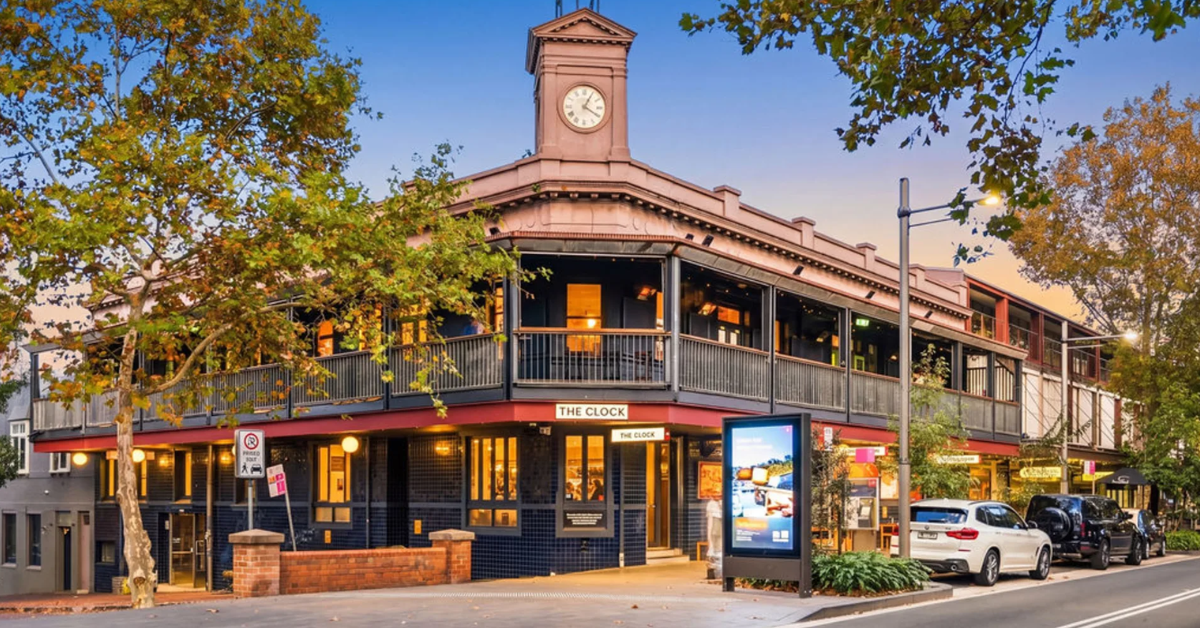
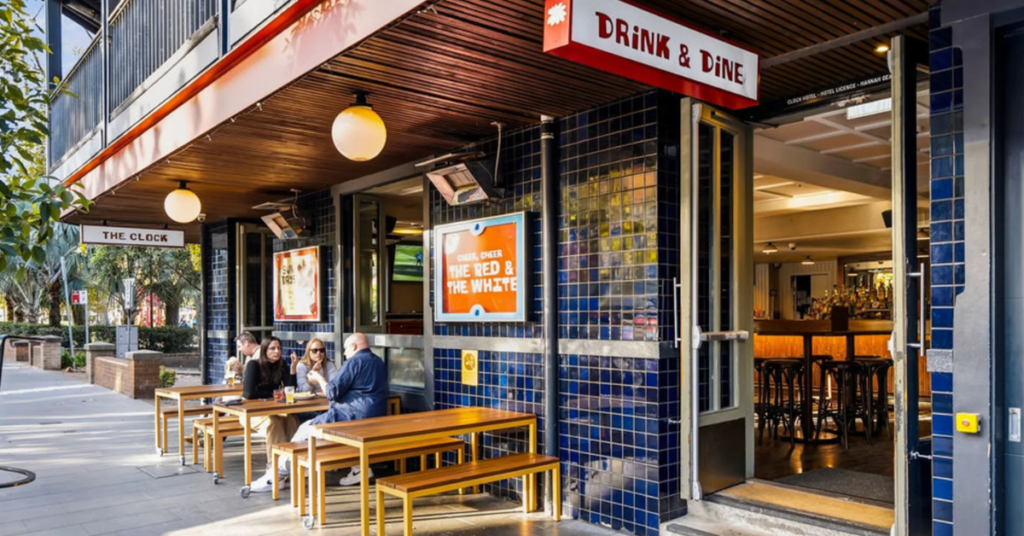
As Sydney’s hospitality landscape undergoes a massive structural realignment, the historic heart of Surry Hills is experiencing a significant changing of the guard following a multi-million-dollar pub mega-deal centred around the legendary Clock Hotel.


Clock Hotel
Photo Credit: JLL Investor Centre

For generations, local watering holes have functioned as the literal living rooms of our neighbourhoods, anchoring community life from quiet weekday afternoons to bustling weekend gatherings. The recent transaction sees the Fairfax family’s Amalgamated Hotels step back from decades of stewardship, handing over the reins of iconic community cornerstones to corporate operators. 

Why do we care so deeply about these walls? Because they hold our collective memories, weathering decades of economic highs and lows while remaining steady community touchstones.

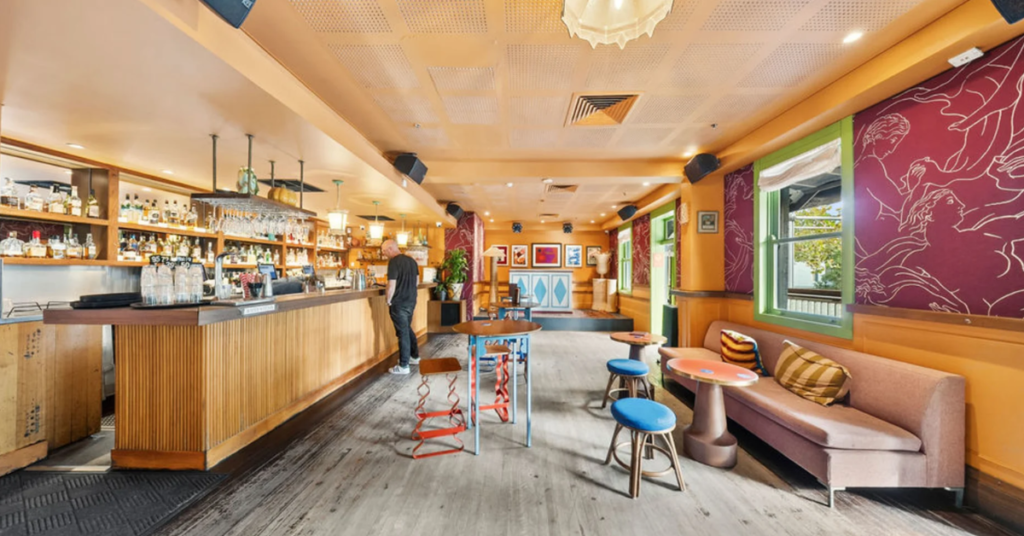
Clock Hotel
Photo Credit: JLL Investor Centre

Enter the Australian Venue Co., partnering with institutional property capital to drive this multi-million-dollar acquisition and expand its growing footprint across the country. Industry analysts explain that pairing operational hospitality experts with institutional property investors allows massive venue networks to streamline management while keeping physical architecture intact. 

Sure, some community members worry about the corporate consolidation of beloved local spaces. Can professional backing genuinely preserve the distinct, gritty soul of Crown Street in Surry Hills or King Street in Newtown, or will it smooth away all the rough edges that give these places character?


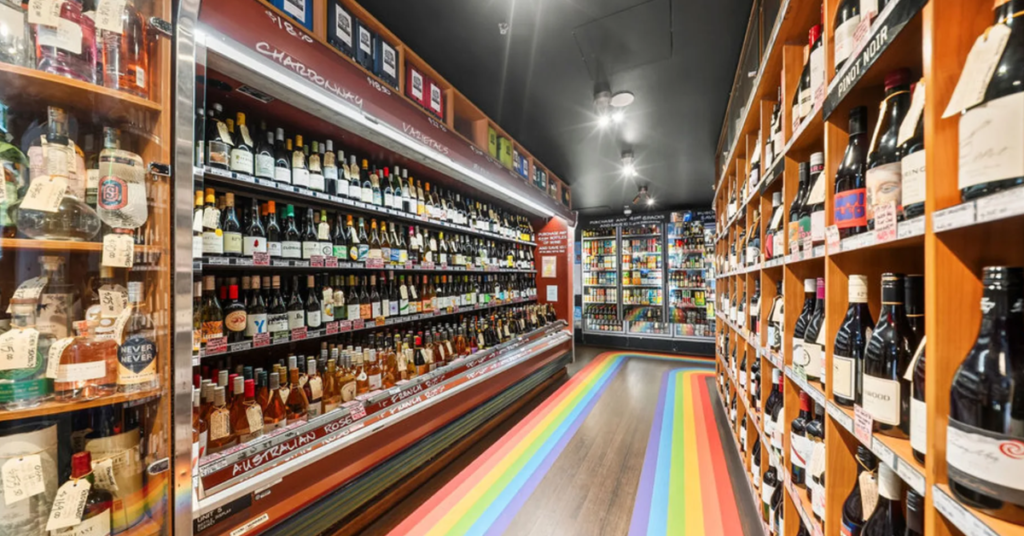
Clock Hotel
Photo Credit: JLL Investor Centre

Representatives from property marketing groups emphasize that successful hospitality venues survive by staying relevant across generations rather than simply functioning as transactional real estate. As the new operators take control of these high-traffic community hubs, regular patrons look onward to see how the unique daily rhythms of their favourite local spots will adapt to a new corporate chapter.

Published Date 04-September-2026

Oxford Street Cycleway Dispute Reignites Over Parking and Business Access


A long-running dispute over the missing cycling connection through Paddington has intensified, with local traders warning that changes to parking could hurt businesses while neighbouring councils push for a continuous protected route between Sydney’s CBD and the eastern suburbs.


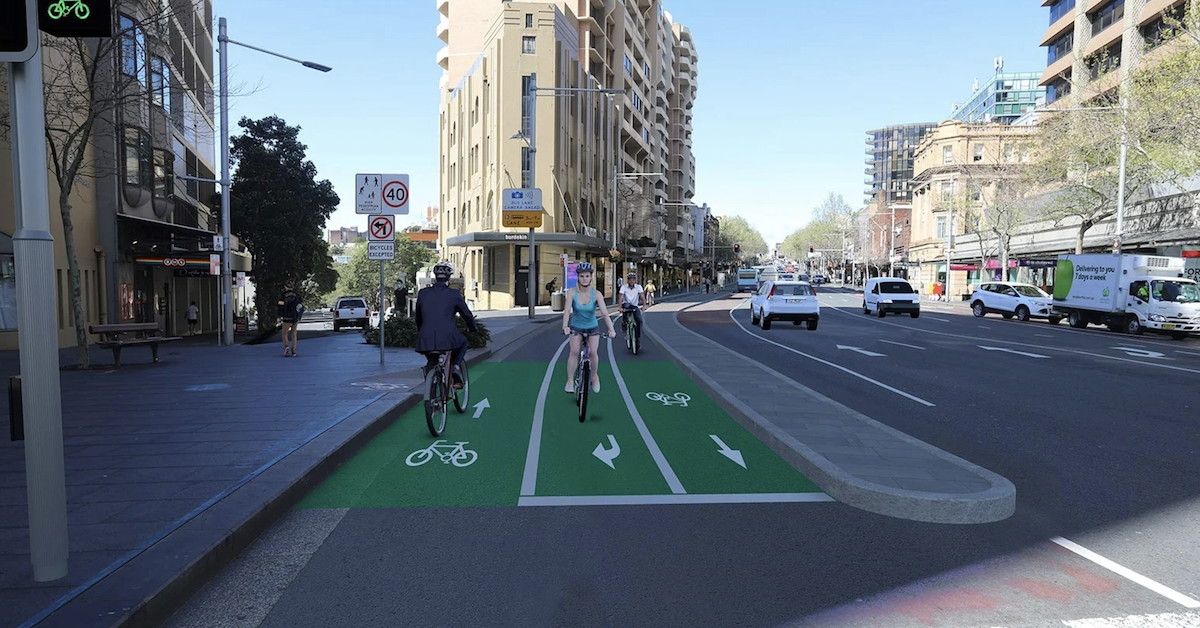
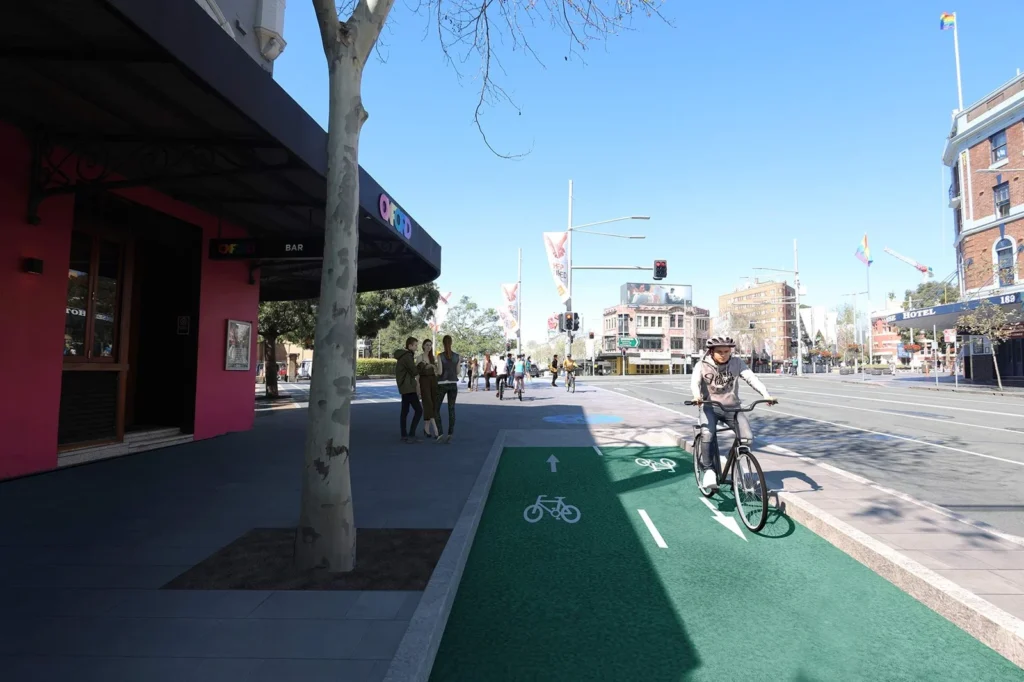
The contested corridor runs along Oxford Street between Taylor Square and the Centennial Parklands Gates, linking the completed City of Sydney cycleway through Darlinghurst with cycling infrastructure towards Centennial Park and the eastern suburbs. Transport for NSW is progressing improvements to the corridor through its broader Oxford Street Revitalisation Project.

Traders raise parking and access concerns

Paddington business owners have warned that reducing nearby parking could affect trade, particularly for shops whose customers often arrive by car. One flooring retailer said customers generally drove to the area and that finding parking for a work vehicle could already involve circling nearby streets for as long as 45 minutes.

Other local traders have raised similar concerns about passing traffic and customer access if parking is reduced to accommodate the cycling connection. Business owners have also pointed to the existing cycling route along Moore Park Road, about 300 metres away, as an alternative to a separated route along Oxford Street.

Concerns over parking and access pre-date the latest debate. Earlier Transport for NSW consultation recorded concerns from the Paddington Chamber of Commerce about potential parking losses, accessibility and the case for the proposed route, including requests for comparisons with cycling movements on Moore Park Road.

Woollahra Council opposed the earlier Oxford Street East Cycleway proposal. In November 2025, the NSW Government announced the Oxford Street Revitalisation Project would replace the earlier cycleway project.

Photo Credit: CityOfSydney

Councils press for link to Centennial Park

Waverley Council and the City of Sydney have renewed calls for a safe, continuous cycling corridor along Oxford Street, arguing that the Paddington section remains a gap between the city and the eastern suburbs.

Sydney Lord Mayor Clover Moore has criticised the length of time taken to complete the connection, while Waverley Cr Michelle Stephenson said riding along the remaining section of Oxford Street was difficult and dangerous where separated infrastructure ends.

The City of Sydney completed its two-way separated cycleway between Castlereagh Street and Taylor Square in July 2025. The works also included upgraded intersections and pedestrian crossings, new paving, garden beds and street furniture.

City figures have shown strong use of the completed route. More than 4,000 daily bicycle trips were recorded in early December 2025, compared with almost 3,000 trips a day before the separated infrastructure opened. 

Revitalisation plan extends beyond cycling

The current state-led proposal is broader than the earlier cycleway project. Transport for NSW’s Oxford Street Revitalisation strategy includes a separated bicycle connection as well as wider and more accessible footpaths, additional trees, improved public spaces, street furniture and opportunities for outdoor dining.

Plans also identify improvements around Taylor Square, Glenmore Road and the Centennial Parklands Gates, along with pedestrian crossings and changes to public transport infrastructure. Transport’s published concepts are indicative and remain subject to further community and stakeholder input and design development. 

Supporters of the cycling connection have also cited evidence that walking and cycling improvements can benefit local shopping strips. Committee for Sydney research on walkable and bikeable streets cites Australian and international studies linking active-transport improvements with increased customer visits and spending, including examples where on-street parking was reduced as cycling and pedestrian infrastructure was introduced. 


Some Paddington traders remain concerned about whether the redesigned street will preserve enough parking, loading and customer access for businesses whose customers and deliveries frequently arrive by vehicle. With the final design still under development, debate over how to close Oxford Street’s cycling gap while accommodating local businesses remains unresolved.

Published 25-Aug-2026

Surry Hills Terrace Passed In at Auction as Sydney’s Clearance Rate Flatlines

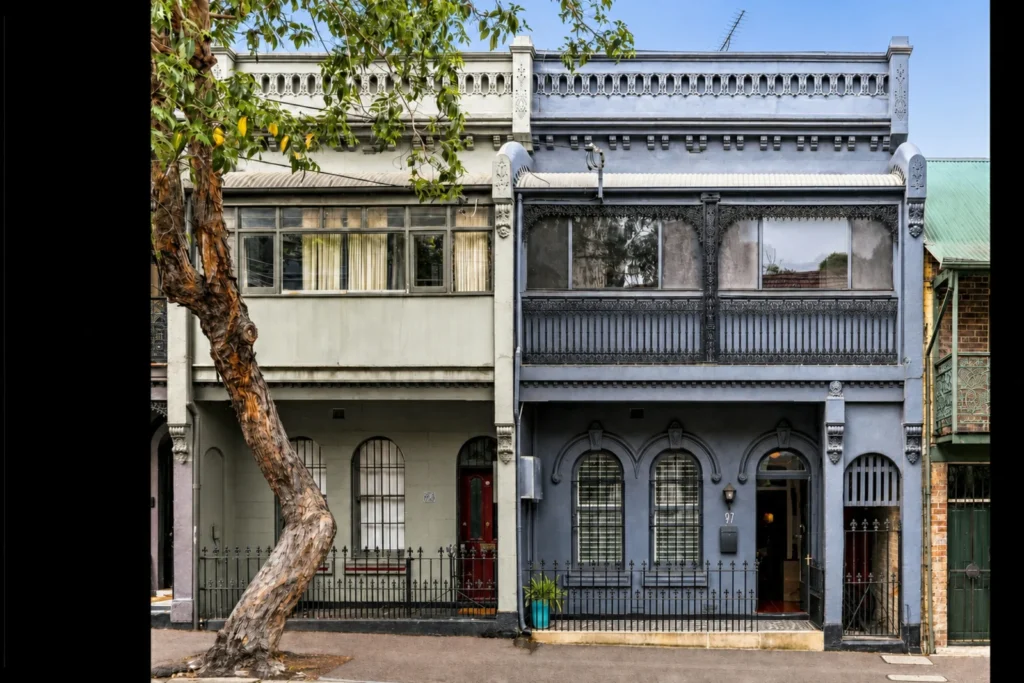
A renovated Surry Hills terrace passed in at auction this weekend after drawing just one registered bidder — and now it looks like the property will end up on the rental market rather than find a new owner.


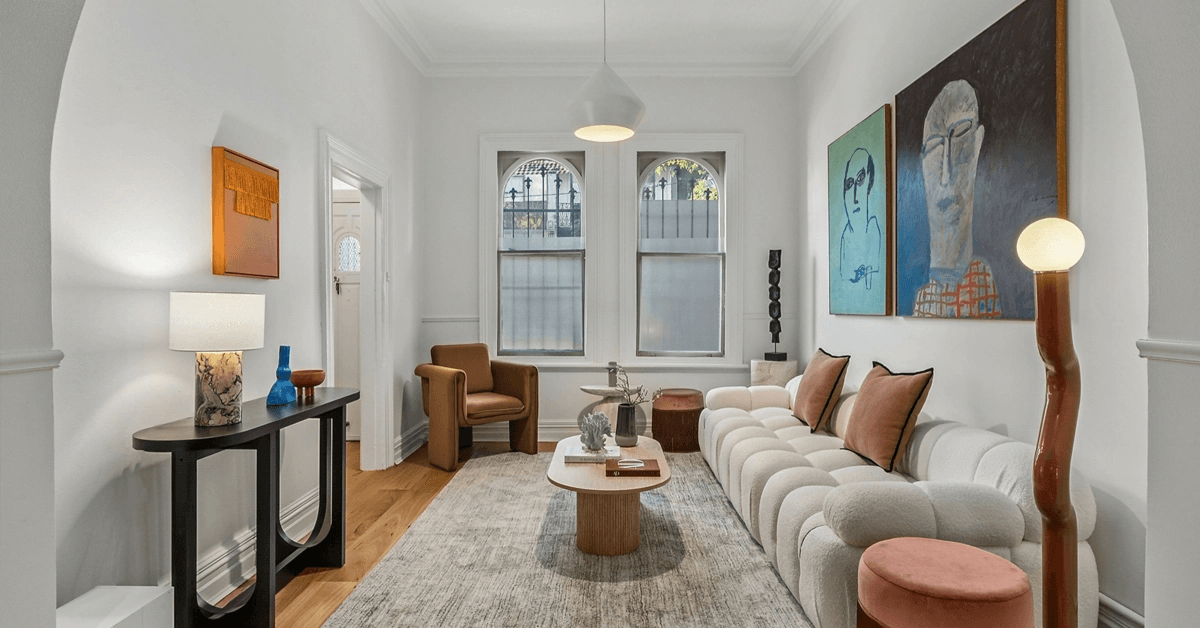
Photo Credit: McGrath Estate Agents

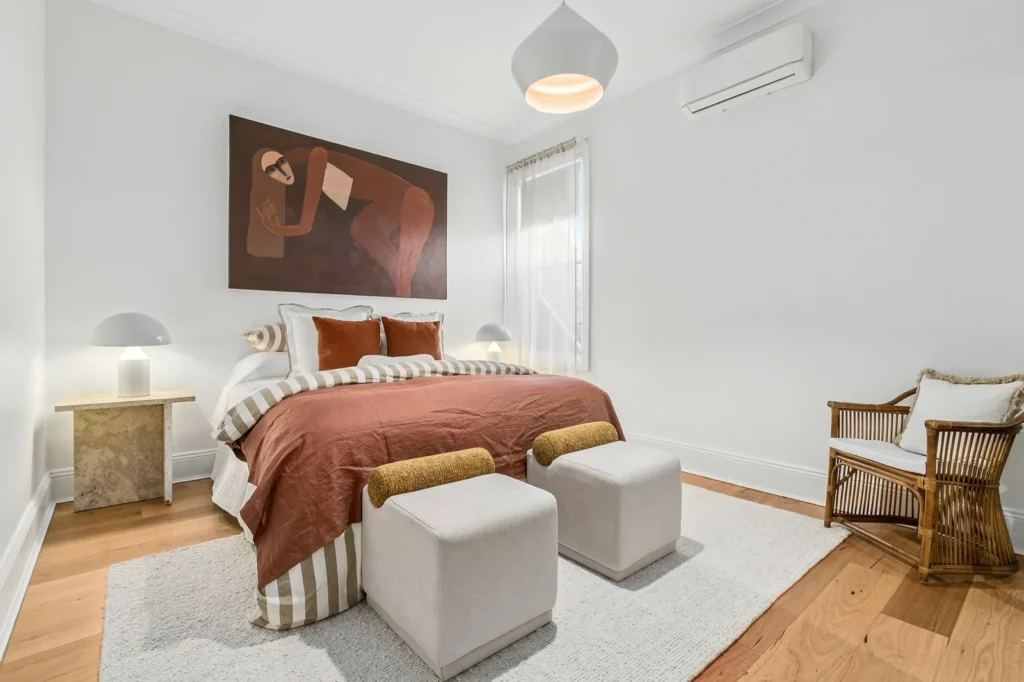
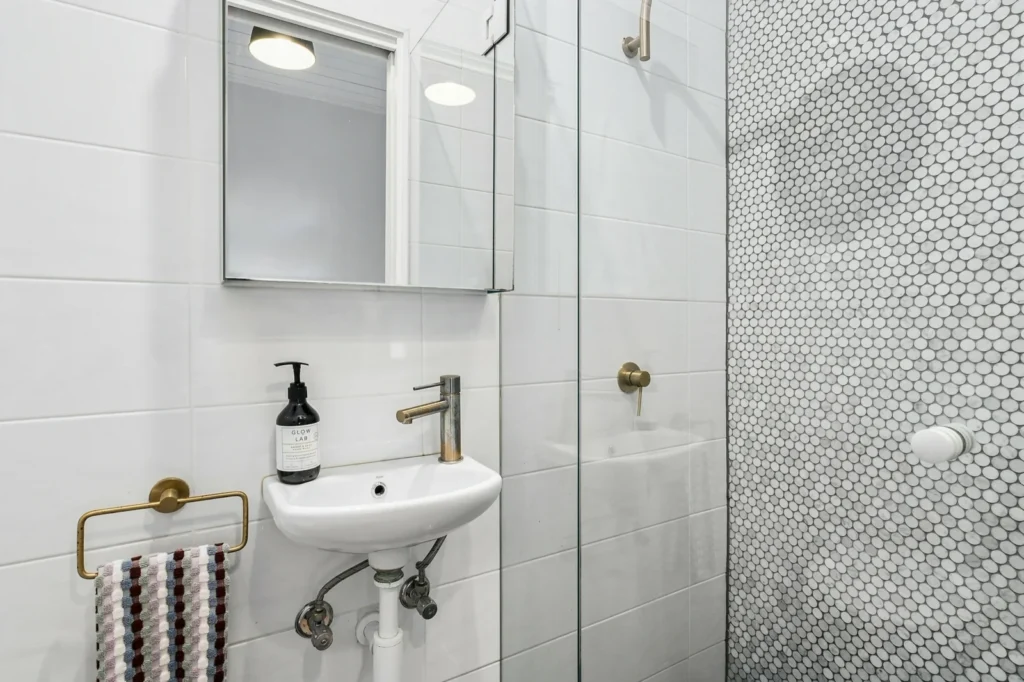
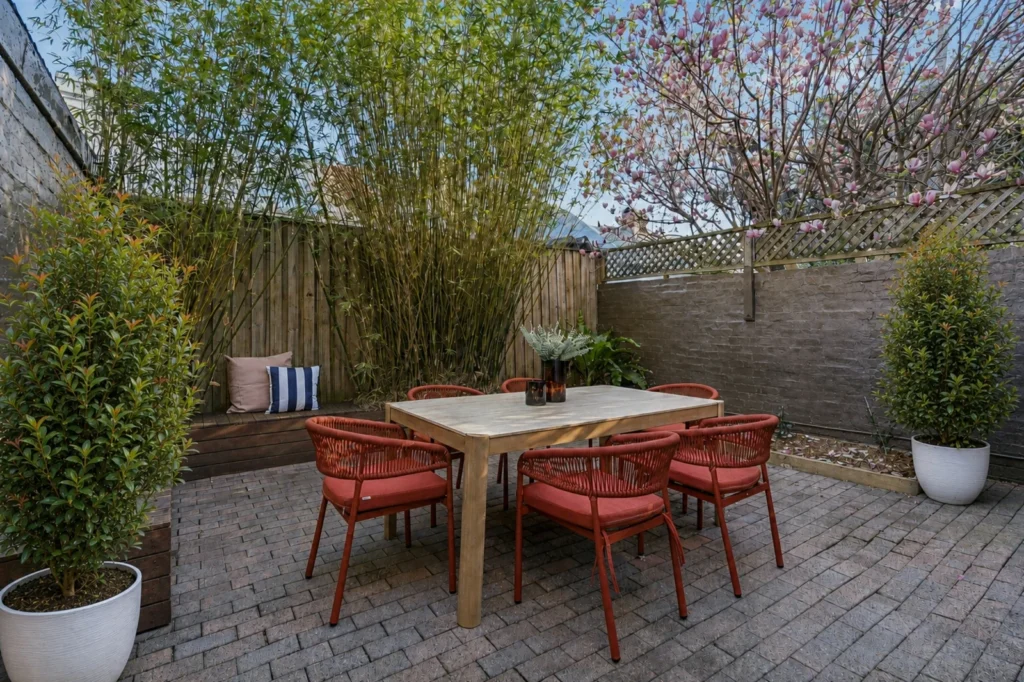
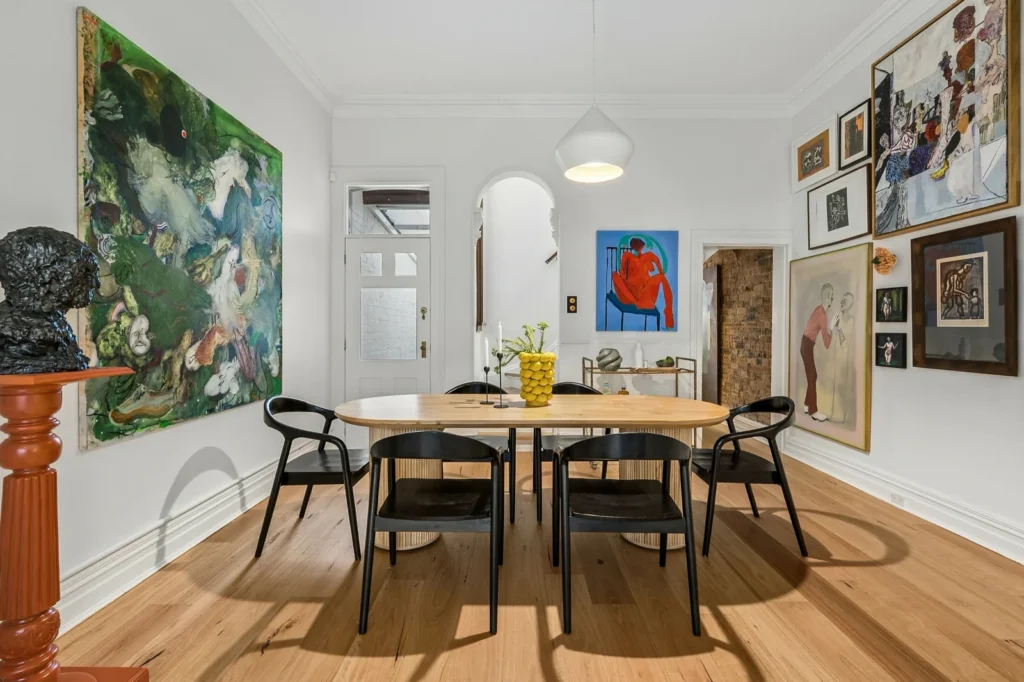
The three-bedroom, two-bathroom home at 97 Fitzroy Street went to auction on Saturday with a price guide of $2.5 million — the same figure the property last changed hands for in 2024. The sole registered bidder opened at $2.2 million before nudging their own offer to $2.3 million. With no other takers, the property was passed in well short of the vendor’s reserve of $2.65 million. A third party reportedly showed interest after the auction concluded, but no sale had been finalised at the time of writing.

Photo Credit: McGrath Estate Agents

The terrace features exposed brick walls, oak floors, high ceilings, a breakfast bar and a study nook — the kind of considered renovation that typically attracts strong interest on Fitzroy Street, a road long regarded as one of the suburb’s more sought-after addresses. Buyers for Fitzroy Street terraces tend to be owner-occupiers — professionals, upsizing families and downsizers from the Eastern Suburbs — who historically compete hard at auction. This weekend, that competition simply did not materialise.

Photo Credit: McGrath Estate Agents

What makes the outcome particularly telling is the seller’s situation. The vendor is preparing to move overseas imminently and, once they depart Australia, they will no longer qualify as an Australian tax resident. That deadline effectively closed off the option of a protracted post-auction negotiation. With the clock running out, the decision was made to hold the property and lease it out rather than accept a price that fell short of expectations.

Photo Credit: McGrath Estate Agents

McGrath Surry Hills selling agent Wes Smuts noted that many transactions in the current environment are being struck before or after auction day rather than under the hammer — a sign that both buyers and sellers are seeking more certainty than the auction process can offer right now. He also observed that properties priced up to around $1.5 million are still moving under competitive conditions, while the upsizer and discretionary buyer segments are taking considerably longer.

Photo Credit: McGrath Estate Agents

The 97 Fitzroy Street result sits within a broader pattern of subdued auction conditions across Sydney. According to Domain, Sydney’s preliminary auction clearance rate for the weekend of 17 August came in at 53 per cent — more than 20 percentage points below the same weekend a year earlier, when it sat at 74 per cent. The week ending 23 August recorded a preliminary clearance rate of 54 per cent from 369 reported results, with 114 auctions withdrawn across the city. Withdrawn auctions are counted as unsold properties in clearance rate calculations, which means the final figure is likely to come in a few points lower once all results are tallied. Industry observers have been questioning whether auctions remain a viable sales method in the current climate, with buyers and sellers alike uncertain about where the market is heading.

The 60 per cent clearance rate is widely used as a rough benchmark separating a market that favours sellers from one that is more evenly balanced — or tilting toward buyers. Sydney has been sitting well below that line for some time now.

For locals keeping an eye on what’s happening to property values in the neighbourhood, data from PropertyValue indicates that around 125 houses sold in Surry Hills over the past 12 months, with a median sale price of $2.5 million, up 6.5 per cent annually — though vendor discounting has averaged around 6.2 per cent, and homes are taking an average of 28 days to sell. The gap between the $2.3 million bid and the $2.65 million reserve at 97 Fitzroy Street reflects that discounting dynamic in sharp relief.


For now, the Fitzroy Street terrace joins a growing cohort of properties whose owners are choosing to wait — or, in this case, rent — rather than meet the market where it currently stands.

Published 23-August-2026

World’s Tallest Timber-Hybrid Tower Rises on Surry Hills’ Edge

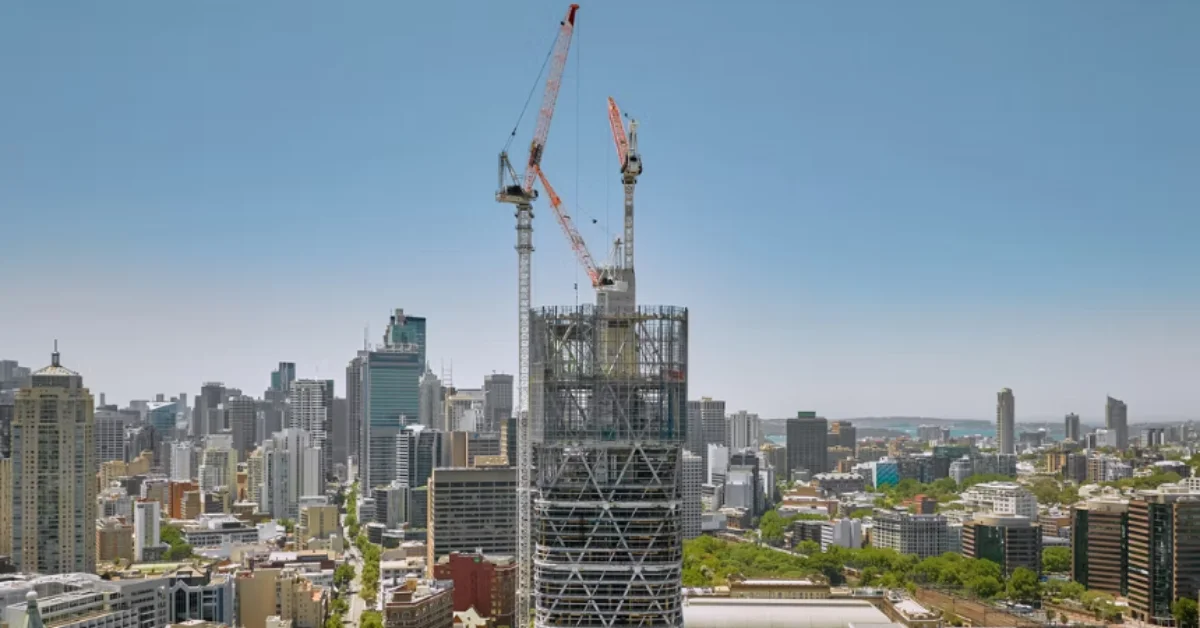
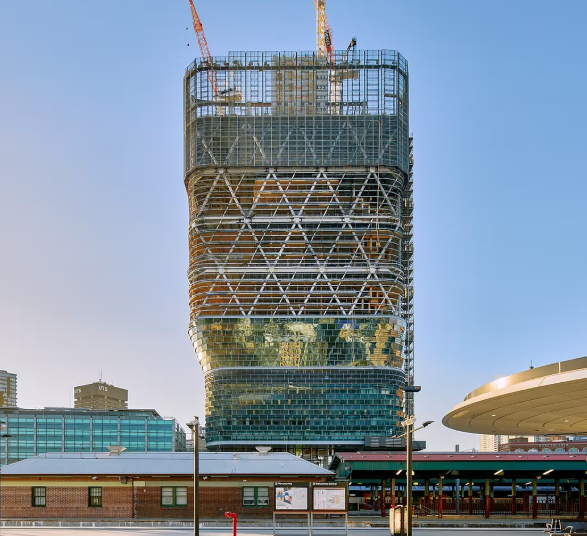
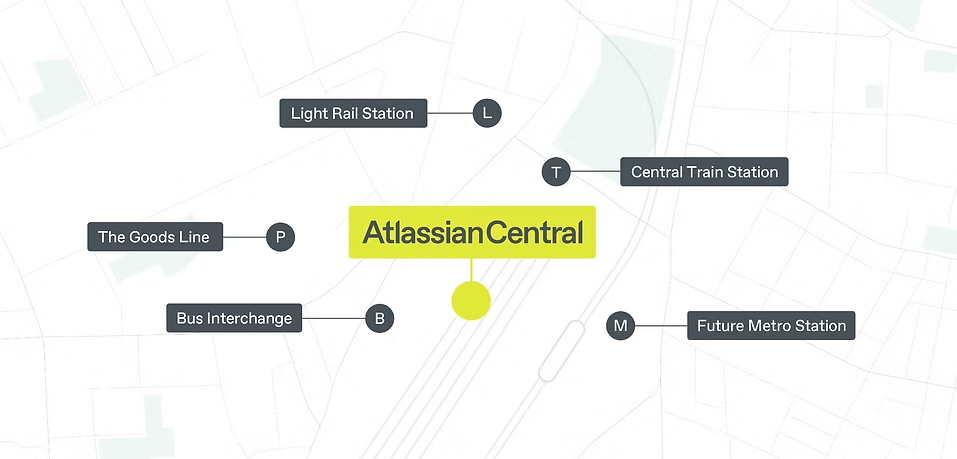
A new landmark has taken shape beside Sydney’s Central Station, with Atlassian Central reaching more than 180 metres and becoming the world’s tallest hybrid timber tower.


Read: Surry Hills: Triumph Over Adversity at Central Station


The 39-storey development has reached its full structural height, marking the construction milestone known as “topping out.” The project is being developed by Dexus and Atlassian, with practical completion targeted for the end of 2026.

The tower rises about 100 metres higher than the previous record holder, Ascent in Milwaukee, United States. Its structure combines mass timber with steel and concrete, using the different materials together to provide the strength and stability required at high-rise scale.

Photo credit: atlassiancentral.com.au

Sustainability is a central feature of the project. Dexus said Atlassian Central is targeting a 50 per cent reduction in upfront embodied carbon across its structure compared with a conventional premium commercial office tower. It is also targeting a 50 per cent improvement in operational energy efficiency compared with a conventional 5 Star NABERS base building.

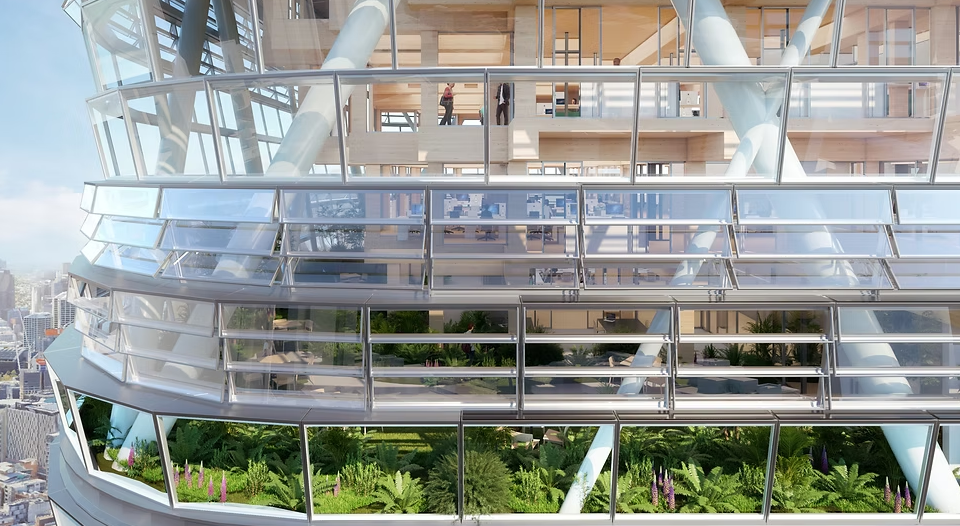
The design includes seven timber “habitats,” which bring together natural materials, light and ventilation in spaces intended for work and collaboration. The timber elements form part of a broader structural system incorporating steel and concrete, while a steel exoskeleton supports the building’s glass facade.

Photo credit: atlassiancentral.com.au

The development also incorporates the heritage-listed Parcel Building at the site. Dexus says the building, formerly occupied by YHA, is being restored and will become the lobby for Atlassian Central. A new YHA hotel is also part of the development.

Atlassian Central is located at 8-10 Lee Street in Haymarket, immediately beside Central Station. It forms part of Tech Central, Sydney’s technology and innovation precinct, which includes areas around Haymarket and Surry Hills as well as Ultimo, Camperdown, Darlington and Eveleigh.

The project sits on the edge of Surry Hills, beside Central Station and within the broader Tech Central precinct. Atlassian Central is intended to become the Australian headquarters of Atlassian and is being developed as a major workplace within the precinct.

Photo credit: atlassiancentral.com.au 

The project has also been designed with technology and changing workplace patterns in mind. Atlassian CEO and co-founder Mike Cannon-Brookes has described the building as being designed for a future of work that will continue to be reshaped by artificial intelligence.

With the structural frame now complete, construction has moved into the next phase. Façade installation and central building services are continuing, with the development on track for practical completion by the end of 2026.


Read: New Community, Parks Planned Over Sydney Central Station Rail Yards


For a project that has made timber the defining feature of a major Sydney office tower, reaching its full height marks a significant construction milestone. The next stage will bring the façade, services and internal spaces closer to completion as Atlassian Central takes its place beside one of Sydney’s busiest transport hubs.

Published 21-August-2026

E-Bike Battery Sparks Garbage Truck Fire on Surry Hills Street

A discarded e-bike battery triggered a garbage truck fire in Surry Hills, bringing the dangers of improper battery disposal right to our doorstep — and renewing urgent calls for locals to think before they bin.


The fire broke out on Wemyss Lane at around 8.40am on Wednesday, 12 August, as the truck was making its rounds. Crews from Fire and Rescue NSW’s (FRNSW) City of Sydney station arrived quickly, spotted smoke billowing from the vehicle, and directed the driver to tip the entire burning load onto the street. Firefighters then doused the flames and sifted through the debris, finding the culprit: an e-bike battery that had been tossed out with ordinary household rubbish. Nobody was hurt.

It was the third garbage truck fire recorded across NSW in just six days. A blaze on the previous Friday brought significant traffic chaos to the M5 Motorway at Milperra, burning so fiercely that investigators were unable to determine its cause. A day before the Surry Hills incident, crews also dealt with a burning truck in Kirribilli.

Those three incidents are part of a much larger pattern. There have been 40 garbage truck fires across NSW so far this year, with most believed to have started with lithium-ion batteries discarded in household rubbish bins. In 2025, the full-year toll stood at 62.

The mechanics behind these fires are well understood. When a garbage truck’s compactor crushes its load, any lithium-ion batteries mixed in can be punctured or deformed, setting off what specialists call thermal runaway — a self-sustaining chemical reaction that generates its own heat, oxygen and fuel. Once ignited, these fires are notoriously hard to put out, and they spread rapidly through surrounding waste.

FRNSW Acting Assistant Commissioner for Community Safety, Greg Rankin, stressed that the risk extends well beyond e-bikes. Smartphones, laptops, tablets, cordless vacuum cleaners, electric toothbrushes and vapes all contain lithium-ion batteries that pose the same threat if they end up compacted in a truck.

NSW EPA Director Sam Lewis echoed that message, pointing out that what might seem like a trivial convenience — tossing a spent battery in the household bin — can have serious consequences further down the line for truck drivers and the broader community.

FRNSW and the NSW Environment Protection Authority are jointly running the Never Bin A Battery campaign, which directs residents to free drop-off points where batteries can be disposed of safely. Batteries can be dropped off at many supermarkets, Bunnings stores and local Community Recycling Centres around Sydney. Residents are advised to cover the terminals of batteries with sticky tape before dropping them off at collection points.

For Surry Hills residents, the message is straightforward: check what’s inside your gadgets before they go in the bin, and take batteries to an authorised drop-off instead.


More information on safe lithium-ion battery disposal is available at the FRNSW website and the NSW EPA’s Never Bin A Battery page.

Published 12-August-2026

UNSW Art & Design Lecturer Kuba Dorabialski Set For Venice Film Festival Premiere

UNSW Art & Design is celebrating a major milestone for lecturer Kuba Dorabialski, whose debut feature film, Agata the Writer, will have its world premiere at the 2026 Venice Film Festival in September.


Read: UNSW Sydney Retains Title as Australia’s Most Employable University


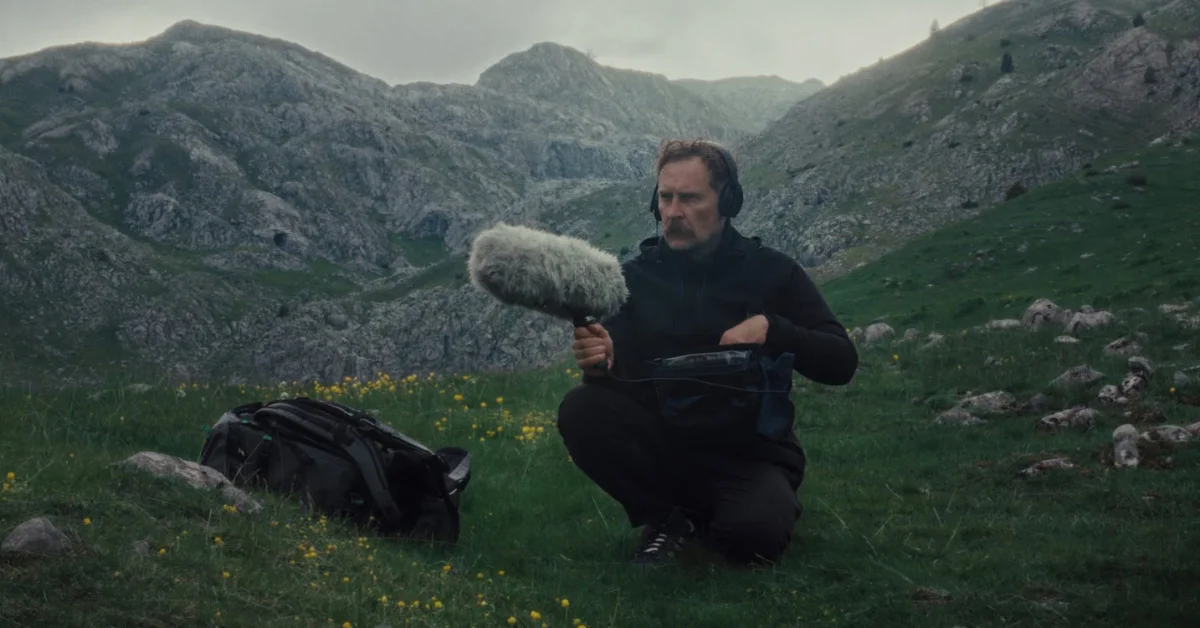
Dorabialski is an artist, writer, and educator originally from Wrocław, Poland, who works primarily in video installation. He is also a PhD candidate at UNSW Art & Design, where his research explores the intersections of mysticism and radical politics in Eastern European moving-image practice.

The UNSW Art & Design, which has a campus in Paddington, hosts galleries, public, and student-initiated performances, screening and lecture programs alongside its teaching and research activities.

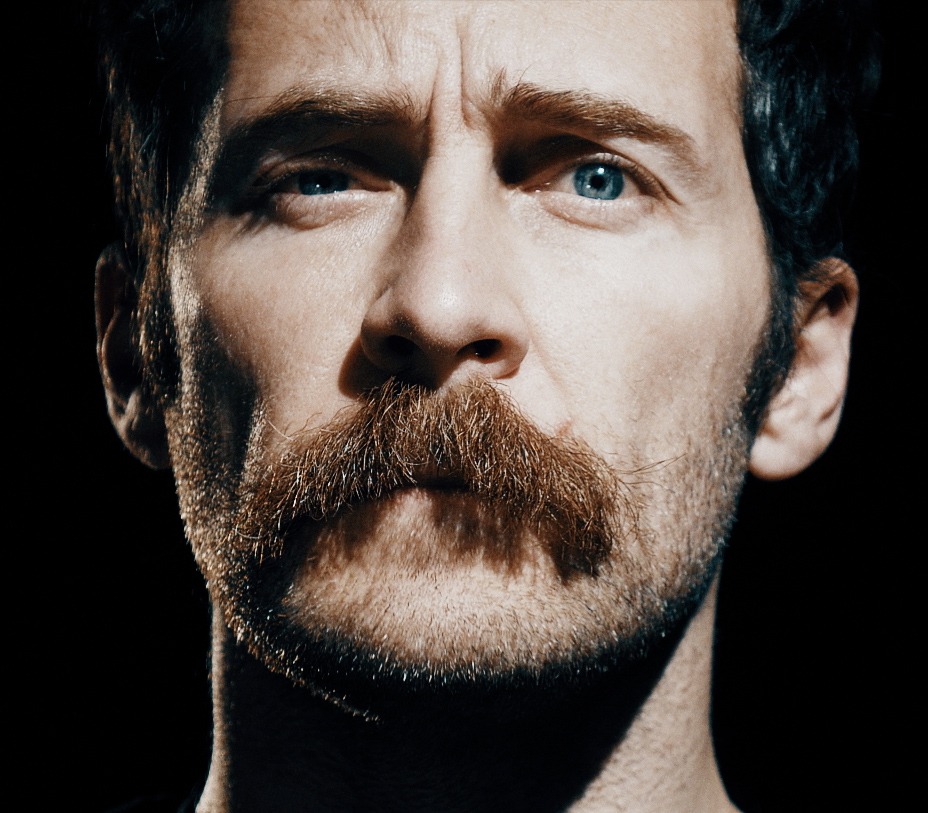
Kuba Dorabialski (Photo credit: unsw.edu.au)

The Venice selection brings Dorabialski’s feature filmmaking to an international festival audience, alongside his existing work in visual art and research. Agata the Writer has been selected for Giornate degli Autori, the independent section of the Venice Film Festival, where it is one of 10 films in the 2026 competition.

‘Agata The Writer’ Brings Sydney Story To Sarajevo

Photo credit: IMDb

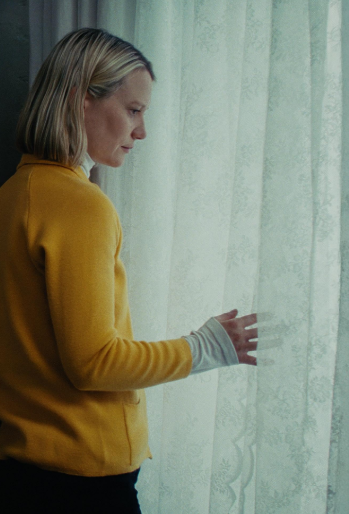
The film stars Mia Wasikowska as Agata, a Polish-Australian novelist who travels from Sydney to Sarajevo intending to write a novel about war. Her project becomes increasingly complicated when locals question her motives and the reasons behind her decision to write about historical trauma. The story then takes an unexpected turn as a number of provocative and obscene artworks inexplicably disappear.

As the mystery unfolds, Agata’s creative uncertainty grows, prompting her to reconsider what it means to tell stories about the past. As the story develops, the novel she is writing becomes less about the war itself and more about the quiet human experiences and resilience that continue in its aftermath.

Dorabialski has taken on multiple creative roles for the film. He is credited as writer, director and director of photography, as well as editor and composer. The project reflects his broader interest in cinema, language and geography, as well as his practice as a visual artist. His work and research explore the relationship between mysticism, radical leftist politics and the personal poetic.

Dorabialski has described the Venice premiere as a dream come true and said he hopes the film encourages audiences to consider the ethical and political dimensions of storytelling, including who gets to tell particular stories, under what circumstances and for what purpose.


Read: Air Quality Study Places Inner Sydney High School Under the Microscope


Those questions are central to the film’s exploration of storytelling and the responsibilities of the storyteller. Agata the Writer brings together a Polish-Australian protagonist, her journey from Sydney to Sarajevo and questions about the responsibilities involved in telling stories about historical trauma.

Published 8-August-2026

Wentworth Park Greyhound Racing To End As Glebe Site Moves Towards Redevelopment

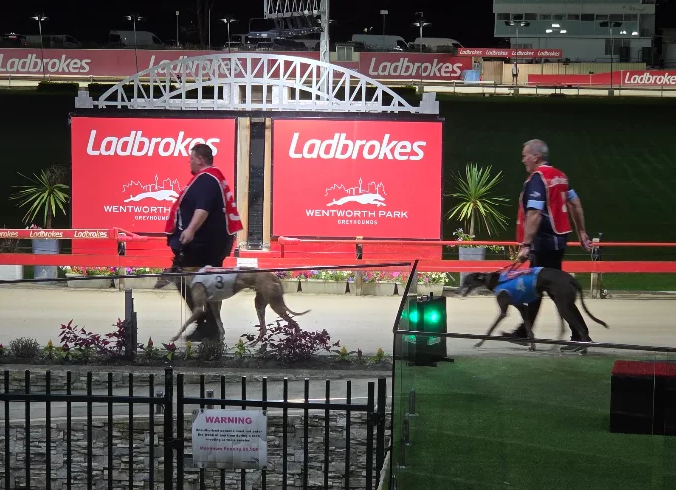
Almost a century of greyhound racing at Wentworth Park is about to end, with the Glebe track’s final race meeting now locked in for 16 October before the site begins its transition towards public open space and community sport.


Read: Wentworth Park Set to Make Way for Thousands of New Homes


The historic venue will go out with one of its biggest events, the Ladbrokes Million Dollar Chase, billed as the world’s richest greyhound race. After the final meeting, attention will shift to plans to remove the racing facilities and ultimately incorporate the precinct into a larger, more connected Wentworth Park.

The earlier departure follows an agreement involving NSW and the Greyhound Breeders, Owners and Trainers Association (GBOTA), bringing the end of racing forward from the previous lease timetable. The change is expected to allow the next stage of the site’s redevelopment to begin sooner.

A New Future For Wentworth Park

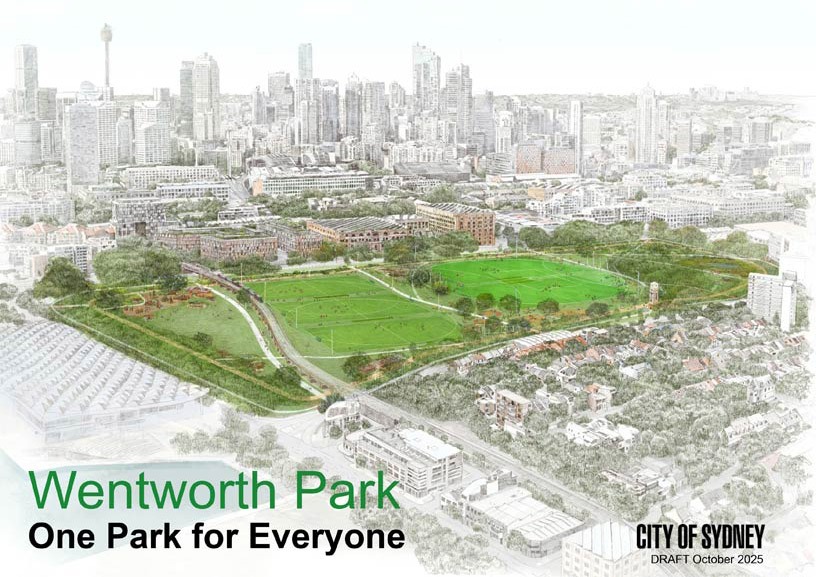
Vision for Wentworth Park (Photo credit: City of Sydney)

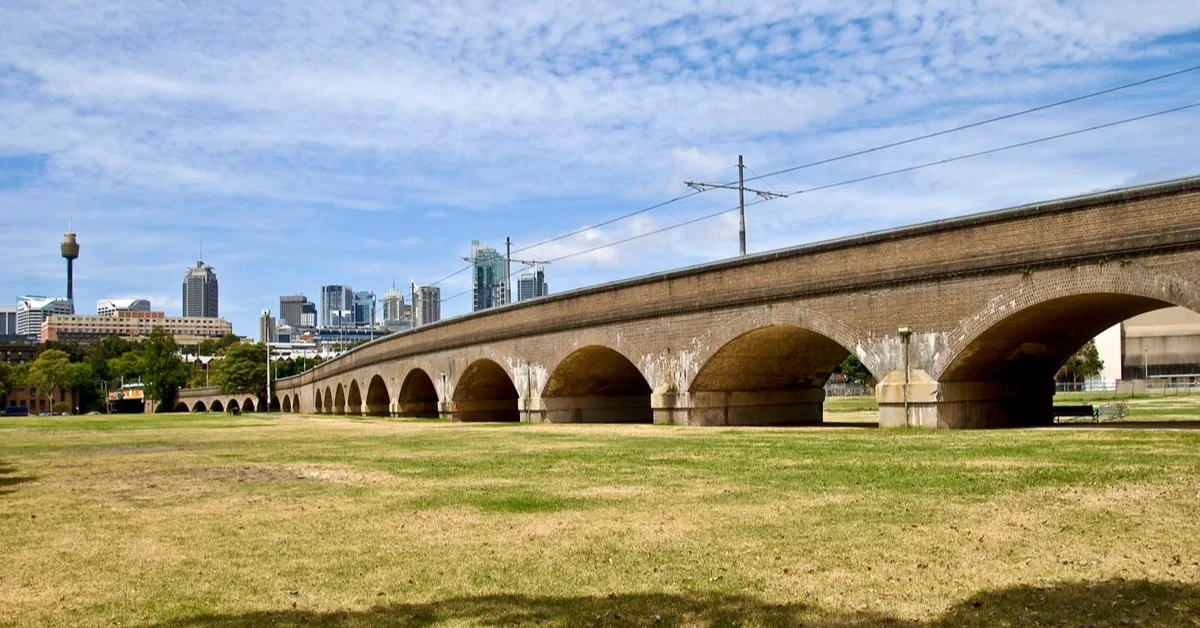
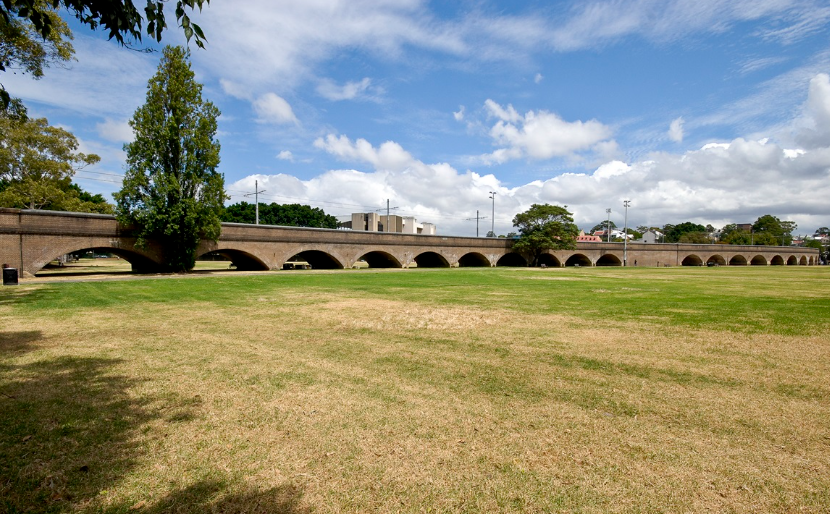
The City of Sydney has already developed a long-term vision for Wentworth Park, with plans for the park to become a larger, unified public space serving Glebe, Ultimo, and Pyrmont.

The existing greyhound precinct is planned to be converted into community sporting fields and public green space. The broader 14-hectare park vision includes five sports fields, a new large playground, walking and cycling paths, areas for community events, picnic facilities and additional landscaped open areas.

The plans were shaped through community consultation, with residents and other participants highlighting the importance of sport, exercise, nature, social activities, and easier movement through the park.

That work gives the October racing deadline a wider significance for Glebe. Once the greyhound facilities are removed, the central part of Wentworth Park can move towards becoming part of a more connected public park.

The City of Sydney’s current planning material says it is working on the removal of the existing greyhound facilities and the transfer of the land to the City.

Racing Moves Beyond Glebe

Photo credit: Google Maps/Sydney Sider

The final meeting will also signal a change for metropolitan greyhound racing. Greyhound Racing NSW (GRNSW) has said it worked with GBOTA and NSW authorities to bring forward the industry’s departure from Wentworth Park rather than continuing until the lease was due to expire in 2027.

GRNSW chief executive Steve Griffin said the organisation wanted the final meeting to coincide with the Million Dollar Chase, providing a significant farewell for the venue and those connected with the sport.

GBOTA chief executive Daniel Weizman similarly described the departure as a significant moment for participants, while indicating that the organisation would continue working with GRNSW on the future of metropolitan greyhound racing.

After the final Wentworth Park meeting, Saturday metropolitan racing is scheduled to move to Gosford before later relocating to Richmond while a new Sydney Metropolitan Racing Precinct is developed. GRNSW has said it expects to announce the location of the replacement venue before the end of 2026.

From Racing Track To Public Park

Photo credit: City of Sydney

The closing date has prompted different responses. Racing representatives have focused on the venue’s long history and the significance of its final meeting, while anti-racing advocates have welcomed the decision and called for further closures.

For Glebe, however, the most visible change will come after the final race. The site is planned to become part of a larger public park with new sporting and recreational facilities.


Read: Marriott Street Terraces Bring a Contemporary Edge to Classic Sydney Living


Wentworth Park has long been part of the sporting and recreational life of Glebe, Ultimo and Pyrmont. Its next chapter will place greater emphasis on how the space can be used by the wider community.

With racing scheduled to finish on 16 October 2026, attention is now turning towards the work required to move the site from a greyhound venue towards its planned future as community open space.

Published 8-August-2026

Why Families Travel Across Sydney for Schools on Cleveland Street

Some families are accepting long daily commutes to reach selective schools near Surry Hills, with students travelling from across Sydney for the academic environment and opportunities offered at Sydney Boys High School and Sydney Girls High School.


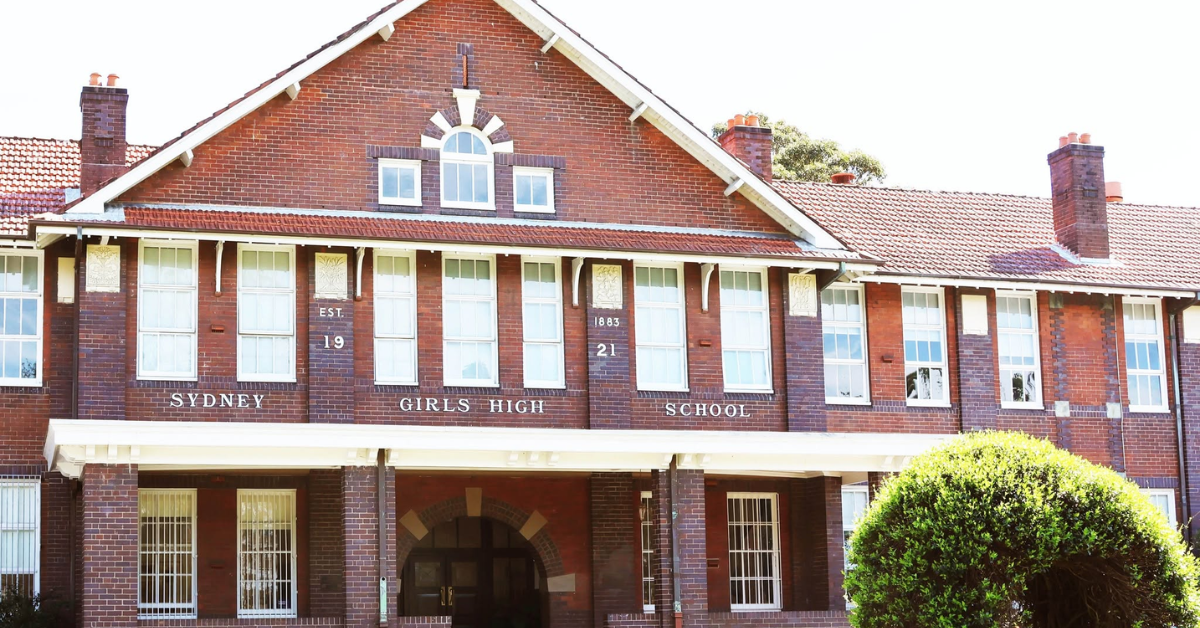
The two academically selective public high schools sit beside one another on Cleveland Street, with Sydney Boys High School and Sydney Girls High School forming a well-known educational precinct in the area.

Their location makes the precinct a daily destination for students living well beyond the surrounding inner city.

Among Year 7 students in 2026, Sydney Boys High draws from 100 different postcodes, the broadest geographic spread recorded among selective schools in NSW. Sydney Girls High draws its Year 7 students from more than 80 postcodes.

At both schools, the average journey is about 20 kilometres each way when measured in a straight line.

Why Some Families Make The Journey

The experiences of individual students provide some insight into why families are prepared to manage those distances.

Twelve-year-old Reyansh Shroff travels about 40 kilometres each way from Bella Vista to Sydney Boys High. His family previously lived in Baulkham Hills but moved to Bella Vista to be closer to the metro line.

His mother, Shilpa Trivedi, considered the selective school system a better option for her children than the public schools available in their area. Her reasons included education, a sense of community and an environment where children could feel secure.

A 2025 national survey of Australian students’ daily commutes found that the most common reason parents chose an out-of-area public school was to pursue a school they regarded as better or more highly ranked.

Surry Hills schools
Photo Credit: Sydney Girls High School

At Sydney Girls High, Year 11 student Aleeza Ahmad travels about 90 minutes each way from Edmondson Park. She began preparing for selective entry from kindergarten with encouragement from her parents.

Aleeza regards the school’s academic standing, ATAR prospects and opportunities as beneficial for her future, despite finding the commute tiring.

What Makes These Cleveland Street Schools Stand Out

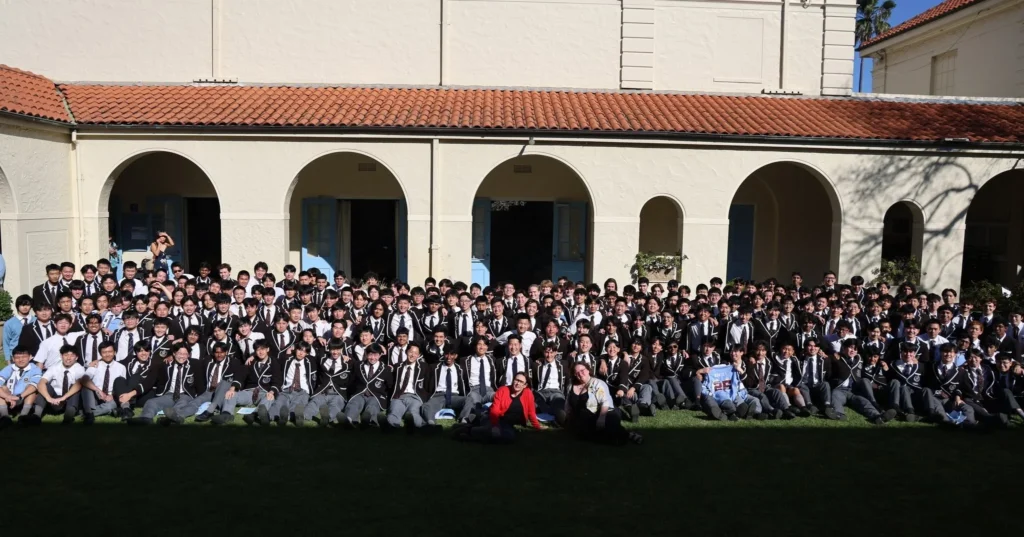
Sydney Boys High currently has 1,207 students and states that boys come from across Sydney to attend.

Its academic program includes differentiated and enriched learning through Years 7 to 10, opportunities for accelerated study in Years 10 and 11, and advanced senior courses. Students can also participate in academic competitions and sports including rowing, cricket, basketball, swimming, rugby, football, volleyball and fencing.

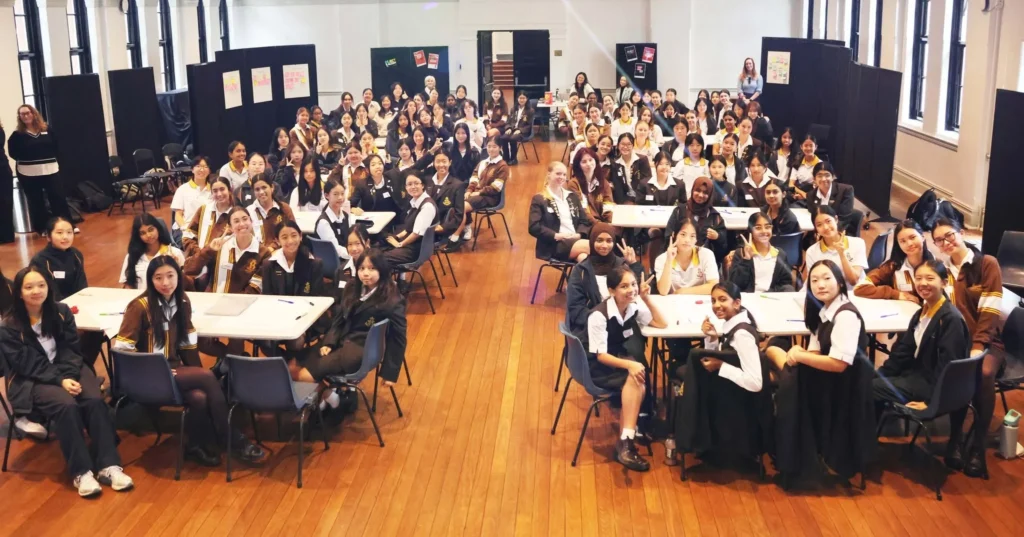
Sydney Girls High describes itself as an academically selective Years 7 to 12 school in Surry Hills.

Academic merit is central to Year 7 selection, while applications for Years 8 to 11 can also take into account co-curricular involvement, leadership potential and personal initiative.

Beyond classroom study, the school offers opportunities across performing and creative arts, music, sport, leadership and service. Its current school information also places student wellbeing alongside academic participation.

For the families profiled, the decision to attend these schools involves balancing those educational opportunities against substantial daily travel.

Sydney Boys High School on Cleveland Street
Photo Credit: Sydney Boys High School

Early Starts For Cleveland Street Students

For Reyansh, the journey to Cleveland Street begins by 7am when he catches the metro and at about 6am when he is driven.

On days with extracurricular activities, he may not arrive home until 10pm or 11pm. At least one Year 7 student attending Sydney Boys High has a journey estimated at 67 kilometres.

Aleeza’s trip between Edmondson Park and Sydney Girls High takes about 90 minutes each way.

The Cleveland Street schools are part of a wider selective-school travel pattern. Across NSW, Year 7 selective students in 2026 come from more than 380 postcodes, about 40 more than the previous year.


Demand for places also remains strong. About 17,000 students sat the selective school entrance examination in 2026 for 4,338 places, with placement outcomes due on 19 August.

Published 5-August-2026

Workers Pulled from Rubble After Sudden Ultimo Building Collapse

Two men have been taken to hospital in a serious but stable condition after part of a building under construction collapsed in Ultimo, sending bricks and other debris onto a nearby street and petrol station.


Emergency crews were called to Wattle Street at about 11:00 a.m. on Monday, 3 August, after the roof and a section of wall gave way. The collapse damaged vehicles parked near a neighbouring Shell service station and prompted the evacuation of the construction site and surrounding buildings.

Workers pulled from debris as emergency crews secure the site

The two injured men, both aged in their 60s, were pulled from the debris by emergency personnel. One suffered a leg injury, while the other sustained a neck injury, according to NSW Ambulance.

The men were taken to separate hospitals for treatment, with one transported to St Vincent’s Hospital and the other to Royal Prince Alfred Hospital. Authorities said both remained in a serious but stable condition.

Another five people were assessed by paramedics at the scene. They were released without requiring further treatment.

Roof and wall gave way beside busy service station

Fire and Rescue NSW said the incident involved the partial collapse of a building about seven metres high. Large sections of brickwork and roofing fell towards Wattle Street and into the grounds of the adjoining petrol station.

Acting Superintendent Peter Murray said part of the structure had collapsed onto vehicles parked within the service station area. Images from the scene showed piles of bricks scattered across the site and sections of the damaged roof resting near parked cars.

The building was still under construction when the collapse occurred. The cause of the structural failure had not been confirmed.

Search crews deployed as police order evacuations

Urban search-and-rescue firefighters were deployed to examine the damaged building and check for anyone who may have remained trapped. Police also established an exclusion zone while emergency crews worked to stabilise the area.


Workers were evacuated from the construction site, while occupants of nearby buildings were also told to leave as a precaution. Members of the public were urged to avoid Wattle Street and surrounding roads while the emergency operation continued.

Published 5-Aug-2026

Redevelopment of Paddington’s Verona Site Approved as Oxford Street Revitalisation Gathers Pace

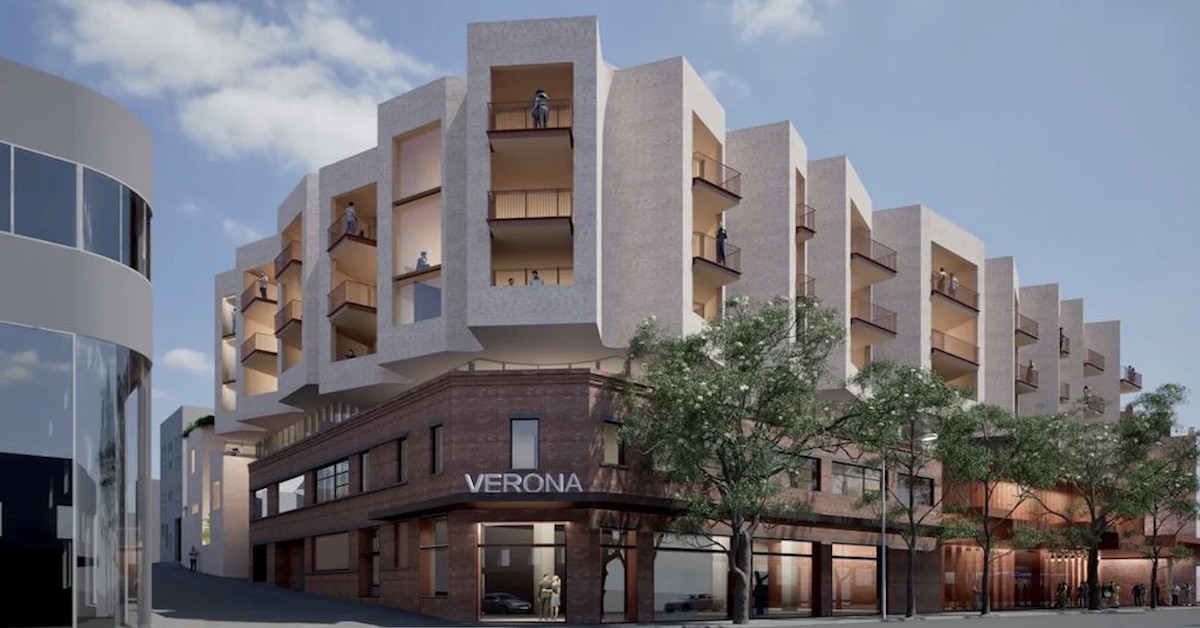
A $97-million redevelopment of Paddington’s iconic former Verona Cinema site has officially secured approval, paving the way for new housing, affordable rentals, and the long-awaited return of a cinema to Oxford Street.


The seven-storey project at 13–17 Oxford Street and 2 Verona Street will deliver 64 new homes, including 46 market-rate apartments, 14 designated affordable rental units, and four terraces. Ground-floor retail, a boutique bar, and a four-screen subterranean cinema complex will anchor the site’s commercial footprint, with construction slated to begin by late 2026.

From Commercial Office Hub to Residential Anchor

Developer WT Malouf originally won approval for an eight-storey commercial office building on the site. However, the proposal was dramatically overhauled after the company acquired neighboring properties at 13–15 Oxford Street.

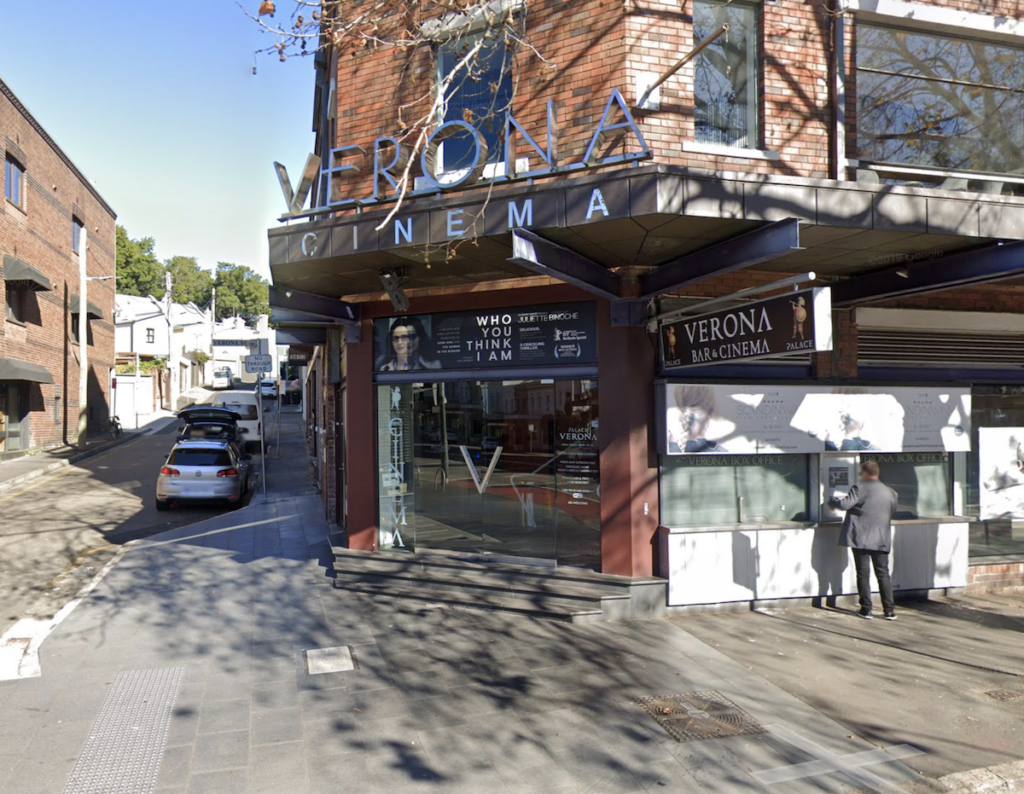
Photo Credit: Google Maps screengrab

The developer expanded the project footprint and shifted focus from desks to dwellings. Placing permanent residents along the Oxford Street corridor aligns with wider City of Sydney urban planning goals, bringing year-round foot traffic to an established inner-city enclave just three kilometres from the CBD.

Housing Trade-Off Sparks Local Scrutiny

While the addition of 14 affordable rental homes has been touted as a civic win, the development comes with a significant trade-off. To build the new complex, 27 existing apartments at 13–15 Oxford Street will be demolished—resulting in a net loss of lower-cost housing on the block.

Furthermore, the new affordable dwellings are only secured under that designation for 15 years, after which they can revert to market value. Housing advocates note that final consent conditions regarding eligibility, rental caps, and ongoing management will determine whether the scheme genuinely aids lower-income locals or simply accelerates gentrification.

Cultural Resurgence: The Return of the Verona

For nearly three decades, the Verona was an anchor of Sydney’s arthouse cinema scene before shuttering in 2024. Hollywood superstar Nicole Kidman officially opened the Verona Cinema on Valentine’s Day in 1996, giving the venue an early touch of Hollywood glamour.

Its revival—expected to be operated by Golden Age Cinema—is poised to reignite Oxford Street’s night-time economy, drawing evening patrons to nearby restaurants, bars, and retail strips.

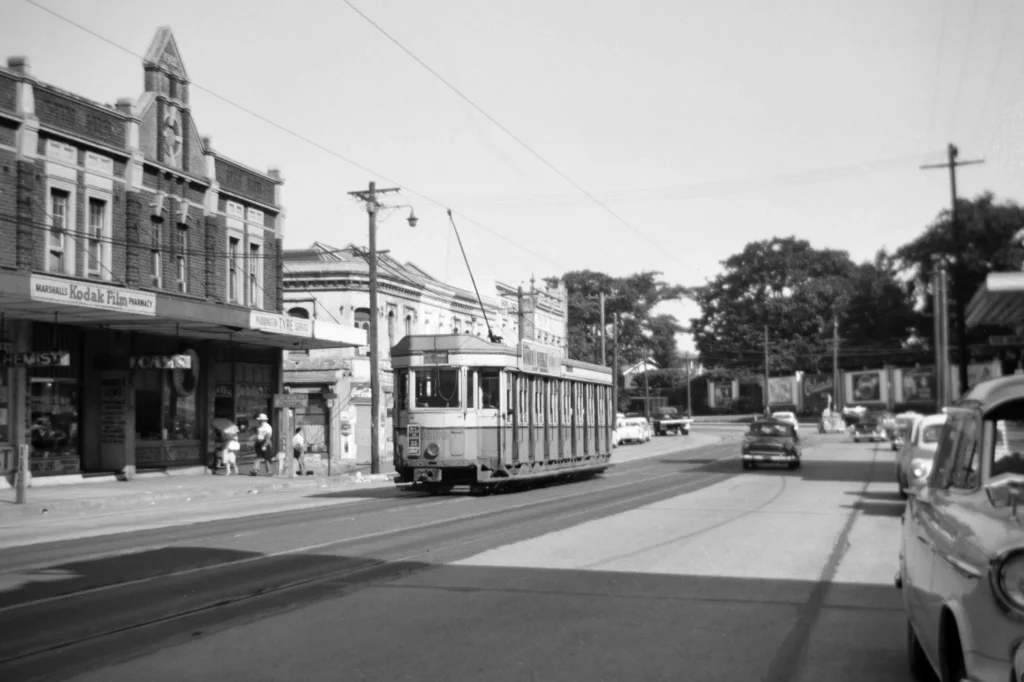
Photo Credit: The Verona

In a poetic architectural twist, design firm Tonkin Zulaikha Greer (TZG), which originally converted the former industrial paper factory into the Verona Cinema back in 1996, has been retained for the redevelopment. The scheme will preserve and restore the building’s historic two-storey brick facade, respecting the strict guidelines of the Paddington Urban Heritage Conservation Area while inserting modern residential levels above.

Private Luxury Meets Public Benefit

The complex offers upscale amenities for residents, including a landscaped central courtyard, a rooftop terrace with a 20-metre infinity pool, and two basement levels providing 56 parking spaces. Yet the development’s ultimate value to Paddington will not be measured by its private luxuries. 


Instead, its success hinges on whether the return of a beloved cultural institution and the boost to local trade can balance the loss of existing housing in one of Sydney’s most rapidly evolving corridors.

Published 5-Aug-2026