




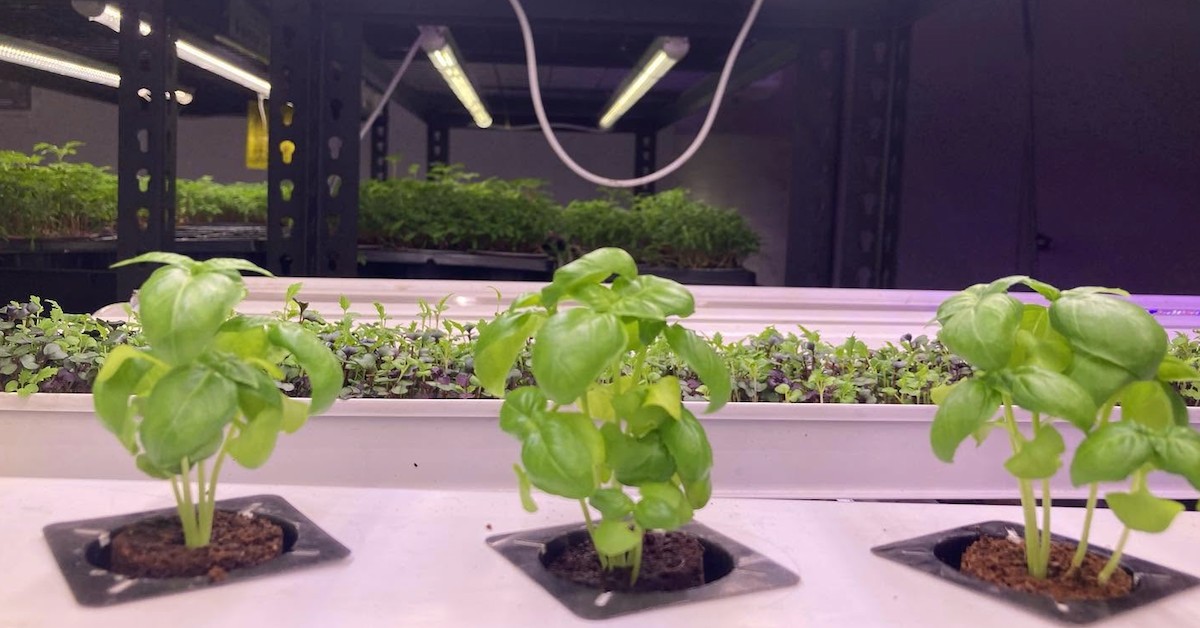
Four levels beneath Barangaroo’s office towers, rows of green shoots grow under artificial light. There are no paddocks, tractors or patches of soil. Instead, trays of microgreens sit on stacked shelves inside a former section of an underground car park.
The site is home to Urban Green Sydney, a commercial indoor farm founded by former chef Noah Verin. The farm grows small herbs, sprouts and specialty leaves for restaurants across Sydney.
During National Science Week, visitors will be able to explore the site and learn how food can be produced in spaces that cities often overlook. The tours will run from Monday, 17 August, to Friday, 21 August. A related Urban Green Sydney pop-up will also take place in the Sydney CBD on Wednesday, 19 August.
A working farm hidden beneath the business district
Urban Green Sydney operates on basement level B4 at 1 Shelley Street in Barangaroo. Above it are offices, streets, shops and restaurants. Below, plants grow in an enclosed, controlled environment where LED lights replace natural sunlight.
Fans move air around the room. Insulated panels help control the growing conditions. Reverse-cycle air conditioning keeps the temperature within a suitable range. The crops sit in rows of trays arranged on vertical racks. This design allows the business to grow more plants within a limited floor area.
The Barangaroo site has been described as one of the world’s first underground car park farms. Museums of History NSW has also previously promoted tours of the farm.
The setting may be as striking as the farming system. It shows that food production does not always have to begin in an open field. However, an operation of this size cannot replace the large farms that produce most of the city’s food. Instead, it focuses on fast-growing specialty crops that suit limited spaces and are valued by chefs.
From restaurant kitchens to indoor farming
Verin started Urban Green Sydney in 2016, several years before moving the operation to Barangaroo. Before becoming an urban farmer, he worked as a chef and studied environmental science. His background gave him experience with both food and the way it is produced.
The business began on a much smaller scale. Verin first experimented with growing plants in an apartment in Bondi. He later moved the operation to a shared workspace in Marrickville.
In early 2020, Urban Green Sydney began growing food in the Barangaroo car park. Verin’s experience as a chef also gave him direct knowledge of the small, strongly flavoured greens used by restaurants.
Chefs use microherbs and baby leaves to add flavour, colour and texture to dishes. However, these delicate crops can lose quality during long storage or transport. Growing them close to city kitchens can shorten the time between harvest and service.
Coconut husks take the place of farm soil
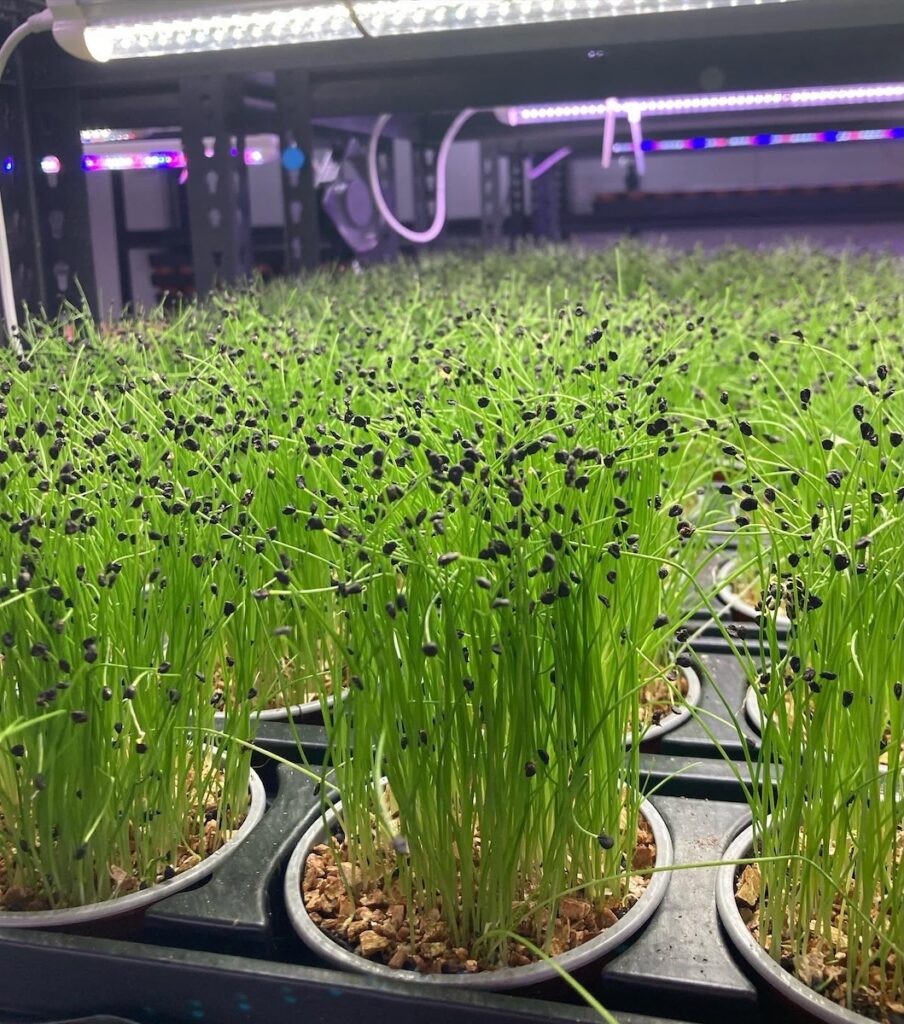
The Barangaroo farm uses coconut coir, a material made from coconut husks, instead of conventional soil. Coir holds water while leaving space for air around the roots. It can also anchor plants in substrate-based hydroponic systems. The approach is an example of circular farming because it gives a coconut-industry byproduct another use.
The farm uses vertical shelves, controlled airflow and LED lights to maintain stable growing conditions. However, it still needs electricity for lighting, ventilation and temperature control. This energy use remains an important factor when assessing the environmental impact of indoor farming.
Microgreens turn a small room into productive space
Urban Green Sydney specialises in microgreens, sprouts and baby leaves. Microgreens are young seedlings harvested soon after they develop their first leaves. Different varieties offer different flavours, colours and textures.
In 2022, reports said the farm was growing about 40 types of herbs and vegetables. Many microgreens suit indoor systems because they grow quickly and require little space.
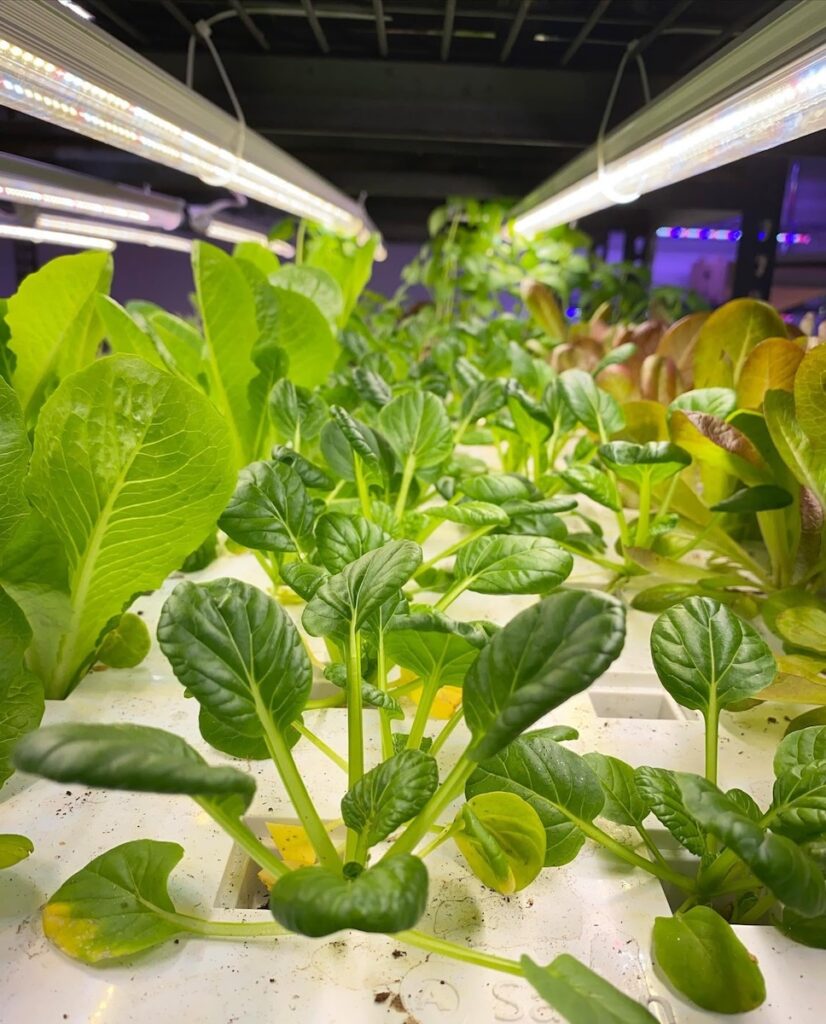
Microgreens are also better suited to this small indoor site than broadacre crops such as wheat or bulky vegetables such as potatoes. They grow in short cycles and can be sold to nearby restaurants.
Short trips can help fragile produce stay fresh
One of Urban Green Sydney’s strongest selling points is its location. Barangaroo and the wider Sydney CBD contain many restaurants, cafés and hotels. Produce grown under the precinct can travel a short distance before reaching a kitchen.
Shorter trips may help reduce damage and spoilage. They can also allow chefs to receive produce soon after harvest. Some plants can be supplied while still growing, rather than being cut and packed several days earlier. This can extend their useful life in a restaurant kitchen.
Still, transport is only one part of the farm’s environmental impact. Indoor farms use manufactured lights and climate-control equipment. Their total impact depends on the source of their electricity, the efficiency of their equipment, their packaging and the amount of food they produce.
Current energy use and emissions figures would need to be confirmed with the company before making wider claims about its environmental performance.
A car park becomes a test site for future cities
The farm raises questions about urban underground space usage. While car parks, basements and empty rooms aren’t typically associated with agriculture, they often have access to power, water and nearby businesses. Transforming these spaces into farms could optimise underutilised areas for income.
However, not all car parks are suitable. Indoor farms require proper ventilation, drainage, safe access, reliable power and space for equipment. They must also generate enough revenue to cover expenses.
The Barangaroo site focuses on crops suitable for local customers who value freshness. This initiative complements, rather than replaces, traditional farms that supply large quantities of food to cities. Indoor farms can provide selected products near consumers while maximising urban resources.
Science Week brings the basement farm above ground
The National Science Week program will give members of the public a chance to see the Barangaroo operation at work.
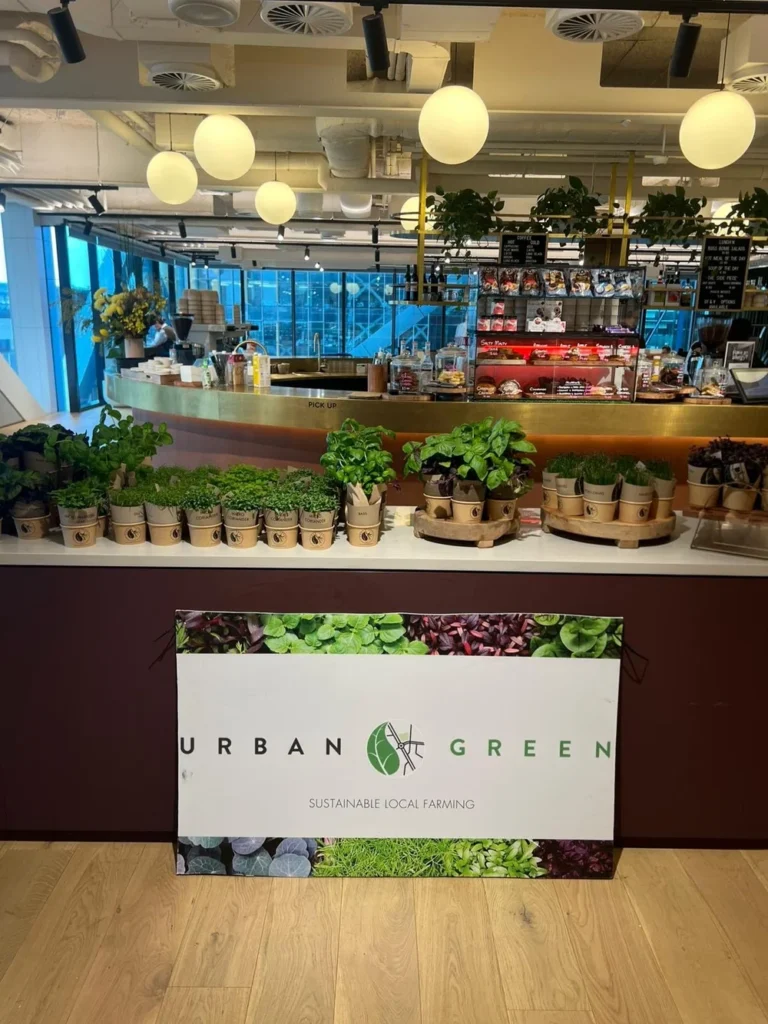
Visitors will learn how plants grow without traditional soil and how farmers control light, water and temperature indoors. They will also be able to taste some of the greens produced at the site. The event forms part of a wider program about farming, food security, science and city design.
Urban Green Sydney is also encouraging schools, workplaces, community organisations and other groups to join a national microgreens experiment through its Seed to STEM Grow Kits. The kits are designed to help participants grow microgreens and study plant development.
Published 23-July-2026