

Sydney Fish Market Bike Path Sparks Safety Concerns Among Cyclists and Commuters

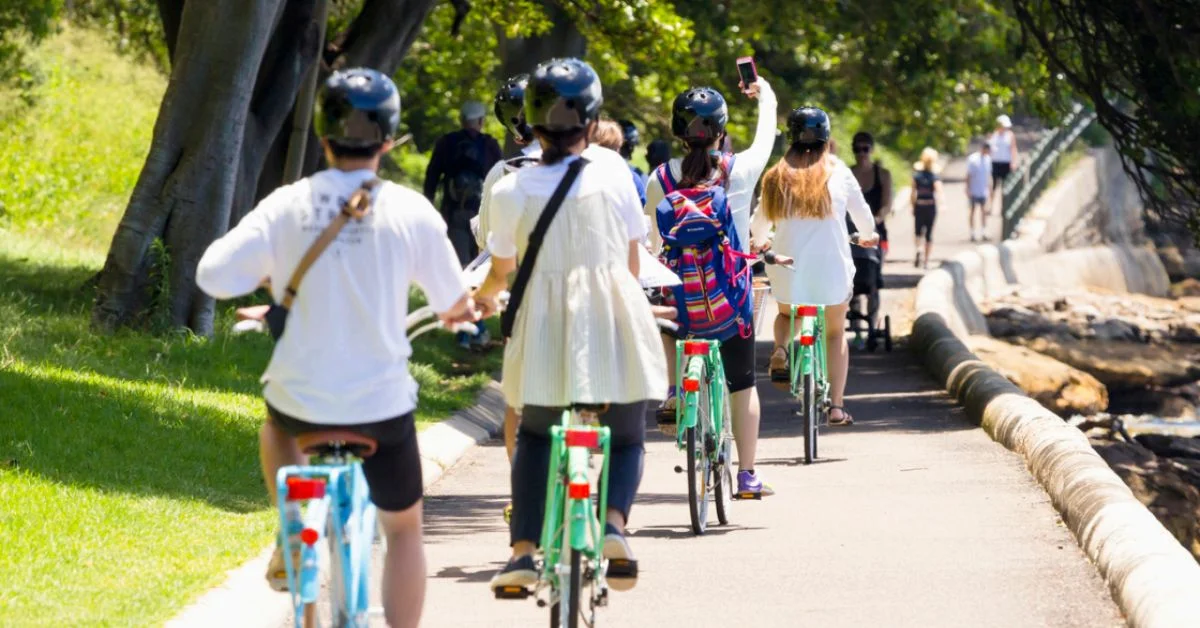
Hundreds of cyclists using a crucial route from Sydney’s inner west to the city say the shared bike path outside the new Sydney Fish Market on Bridge Road creates dangerous conflicts between riders and pedestrians, with many calling the design a “nightmare” for commuters.


The $836 million Sydney Fish Market development at 1 Bridge Road in Glebe includes a wide pavement designed for both pedestrians and cyclists, rather than a separated cycleway along what serves as a strategic cycling corridor. The bike path runs beside the market building, which opened in early February and is expected to attract more than six million visitors annually as the biggest fish market in the Southern Hemisphere.

Cyclist Bek Hawkins, who commutes between Glebe and Pyrmont, said the new shared bike path created a clash between people on their daily commute and tourists looking at the new building. The route improvement over riding in traffic has created a new hurdle as everyone walks around the markets while cyclists try to pass through.

Daily Commute Becomes Obstacle Course

Emma Taviani, another cyclist who rides past the fish market regularly, described the situation as feeling like an accident waiting to happen. The bike path forces busy crowds of market visitors to share space with cyclists traveling at speed on a route used by hundreds of riders each day.
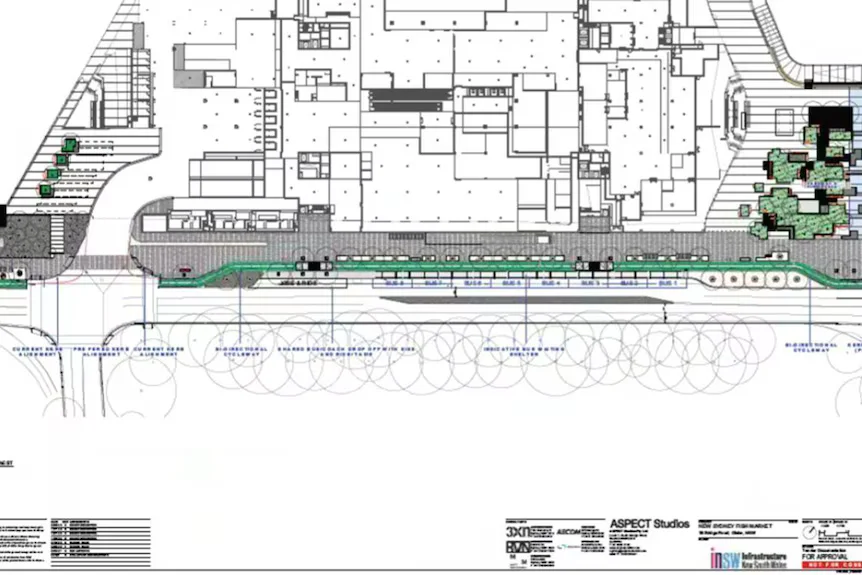
Shared bike path plan
Photo Credit: City of Sydney

Local representatives had advocated for a separated cycleway since the very start of the project, requesting at every opportunity for this infrastructure to be included in the final design. A preliminary design of the precinct shows a fully separated cycleway running by the fish market along Bridge Road, with one less traffic lane than exists now.

Missing Links Create Additional Hazards

Beyond the shared bike path itself, cyclists face several dangerous pinch points that require sudden merges in and out of busy footpaths and traffic. Hawkins said her 10-minute commute between Glebe and Pyrmont sometimes leaves her shaken up by the time she arrives at work due to these clunky connections.
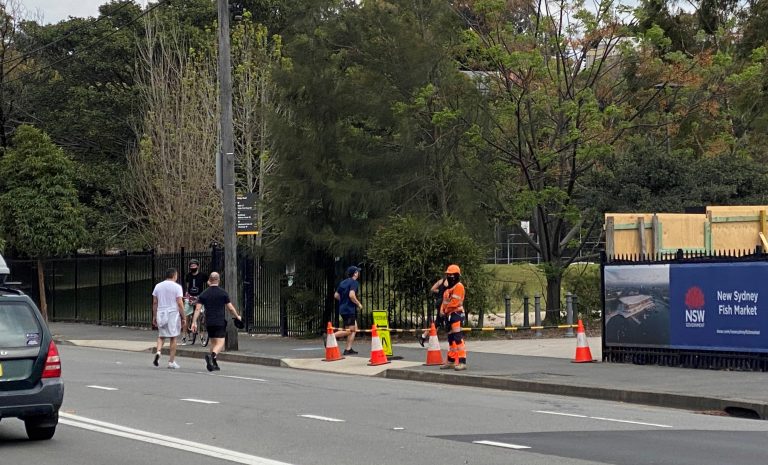
Gemma Bassett, another regular cyclist, prefers to avoid the shared bike path altogether and ride on the road because the connections are disjointed and illogical. She said cycling on the road proves quicker and more convenient than navigating through pedestrian traffic on the shared path.

Ben, a local cyclist, said many riders feel caught in the middle. If they use the footpath, they risk getting in the way of pedestrians; if they ride on the road, they face frustrated drivers. The result, he said, is a lose-lose situation where tensions rise and cyclists end up looking like the problem.

Design Contradicts Best Practice

Urban designer and planner Michael Harrison, who has more than 40 years of experience in Sydney, said the final design contradicts policy recommendations and is inexplicable. Policy recommends building separated bike lanes in busy areas along strategic cycling corridors such as the route past the fish market.

Harrison noted that traffic lanes are needed for vehicle access, but space still would have been available for a dedicated cycleway due to the deep setback of the building from Bridge Road. The site serves as an important access point to ANZAC Bridge and the city, requiring accommodation for pedestrians, bike riders, public transport, coach visitors and motor vehicle traffic.

Advocacy Continues for Cycling Infrastructure

Peter McLean, chief executive of Bicycle NSW, said the real shame is that installing a bike path retrospectively will cost significantly more than building it during initial construction. Attitudes towards cycling are improving as more cycleway projects open across the city, but there remains a long way to go before best practice infrastructure is rolled out, he said.

Authorities said the shared bike path was constructed to best accommodate pedestrians and cyclists of all ages and abilities in a constrained environment. They noted travel patterns in the area will continue to be monitored given current demand requires catering to a wide range of transport users.

The situation highlights broader tensions in planning active transport infrastructure, where competing priorities for road space can leave cyclists navigating compromised solutions that satisfy neither riders nor pedestrians using busy routes near major attractions.


Published 17-February-2026.
Japanese Omakase Restaurant 16 Steps Back From Sydney Fish Market Reopening

A critically acclaimed Japanese restaurant has withdrawn from the newly opened Sydney Fish Market, citing operational issues and saying it had insufficient legal protections under the proposed lease arrangement.


Restaurant 16, an eight-seat omakase venue that operated in Cammeray, in the Lower North Shore, for over 14 years, had planned to open at the $836-million Glebe facility in February alongside Get Sashimi. The restaurant closed its Lower North Shore location in December and began fit-out work at the new markets before concluding that the arrangement was not viable for its specific operations.

Lease and Operational Concerns Behind Withdrawal

Managing director Hiroko Ryu says the decision to withdraw was difficult but unavoidable due to serious circumstances that emerged during the preparation phase. The restaurant had operated under a sublease structure with Get Sashimi but was unable to execute what Ryu describes as a standard, formal sublease agreement.

According to Ryu, operational issues became apparent as the opening approached, particularly around consistent and reliable access to necessary facilities. While the restaurant made efforts to resolve matters cooperatively and understood the challenges of an initial opening phase, Ryu says the operational necessity of reliable access was not sufficiently recognised.

Ryu alleged that the legal protections offered to them did not meet their internal requirements. More significantly, he says it became clear the environment would make it nearly impossible to maintain the standards Restaurant 16 has upheld for over 15 years, built on customer trust and a commitment to what the restaurant calls honest cuisine and sincere hospitality.

Conflicting Accounts Over Lease Arrangements

Get Sashimi director Antonio Muollo disputes aspects of Restaurant 16’s account, stating the lease arrangement was never with Get Sashimi but rather with Wellstoneme, the entity controlling three omakase rooms at the Fish Market.

According to Muollo, two other restaurants are leasing the remaining omakase rooms and report satisfaction with the arrangements. The dispute allegedly appears to centre on the structure and terms of the sublease rather than the physical space itself.

The differing accounts reflect contrasting views on the intended business structure. Restaurant 16 maintains that its negotiations were with Get Sashimi, while Get Sashimi has distanced itself from the lease, identifying Wellstoneme as the relevant entity. The specific terms of the proposed agreements remain confidential, and it is unclear whether either party will pursue further legal mediation over fit-out costs already incurred.

About Restaurant 16

Chef and owner Toru Ryu originally named the restaurant after Unit 16, the Sydney apartment where he lived during his training days. The Japanese-born chef built a cult-like following over his 16 years operating the intimate venue, which seated just eight diners.

As he approached his 16th year in business, Ryu had expressed readiness to move into a new chapter at the Sydney Fish Market. The closure of the Lower North Shore venue in December was intended to facilitate the transition to Glebe rather than mark the end of operations.

Ryu has indicated plans to eventually find another space for Restaurant 16, though no timeline or location has been announced. The withdrawal leaves the restaurant without a operating venue while it searches for suitable premises.

Sydney Fish Market Context

The new Sydney Fish Market opened on January 19, 2026, marking the completion of a $836 million redevelopment project. The facility replaced the decades-old Pyrmont markets, providing upgraded auction facilities, retail fish markets, restaurants and public spaces on a waterfront site.

Photo Credit: Sydney Fish Market

The markets are located at 1 Bridge Road, Glebe, approximately three to four kilometres from Surry Hills in Sydney’s inner west. The location is accessible within 10 to 15 minutes by car from Surry Hills or via public transport connections through the light rail network.

The development includes multiple hospitality operators in addition to the core fish market operations, creating a dining and tourism destination intended to complement the working market facilities. The omakase rooms where Restaurant 16 had planned to operate represent part of the premium dining offering within the broader complex.

Opening phase challenges are not uncommon for large-scale mixed-use developments, particularly those involving multiple independent operators sharing infrastructure and facilities. These concerns echo broader industry discussions during the market’s handover phase about whether the infrastructure was adequate for premium hospitality operators.

The Fish Market development brings together retail, wholesale, hospitality and public realm functions in an integrated precinct.

Lease arrangements in such developments typically involve head leases from the property owner to anchor tenants, with potential sublease structures for smaller operators. The specific arrangements at the Fish Market involve various entities with different operational responsibilities, as indicated by the distinction between Get Sashimi and Wellstoneme in this case.

Implications for Diners and the Precinct

The withdrawal removes one anticipated option from the Fish Market’s dining lineup. Customers awaiting the new opening now have no announced reopening date or location.

The cult following built over many years represents a dedicated clientele. Restaurant 16 had announced plans to relocate, and now says it plans to find another space.


Published 06-February-2026.

New Sydney Fish Market Faces Contractor Collapse in Blackwattle Bay

The redevelopment of Sydney Fish Market at Blackwattle Bay has encountered a financial setback following the collapse of a key construction contractor.


Background and Progress

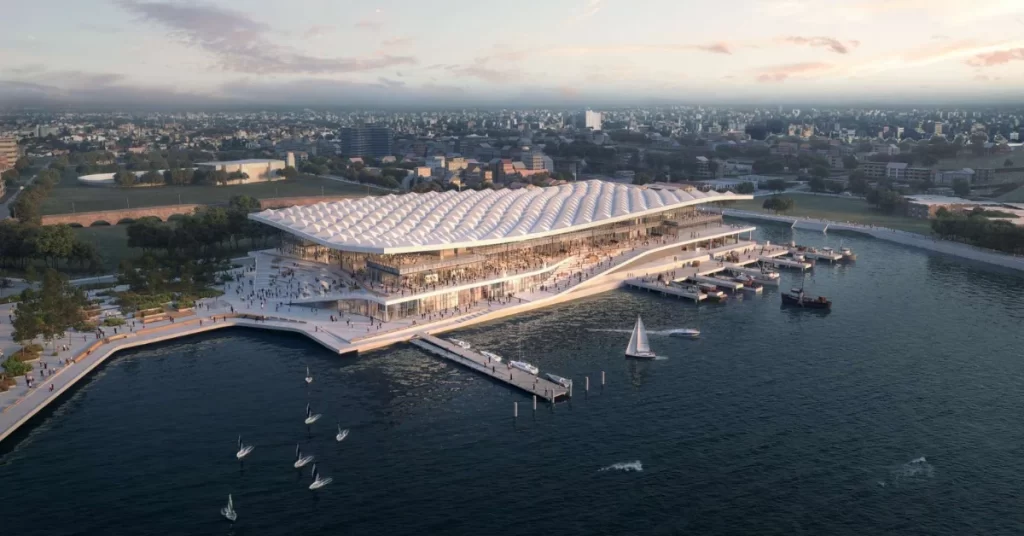
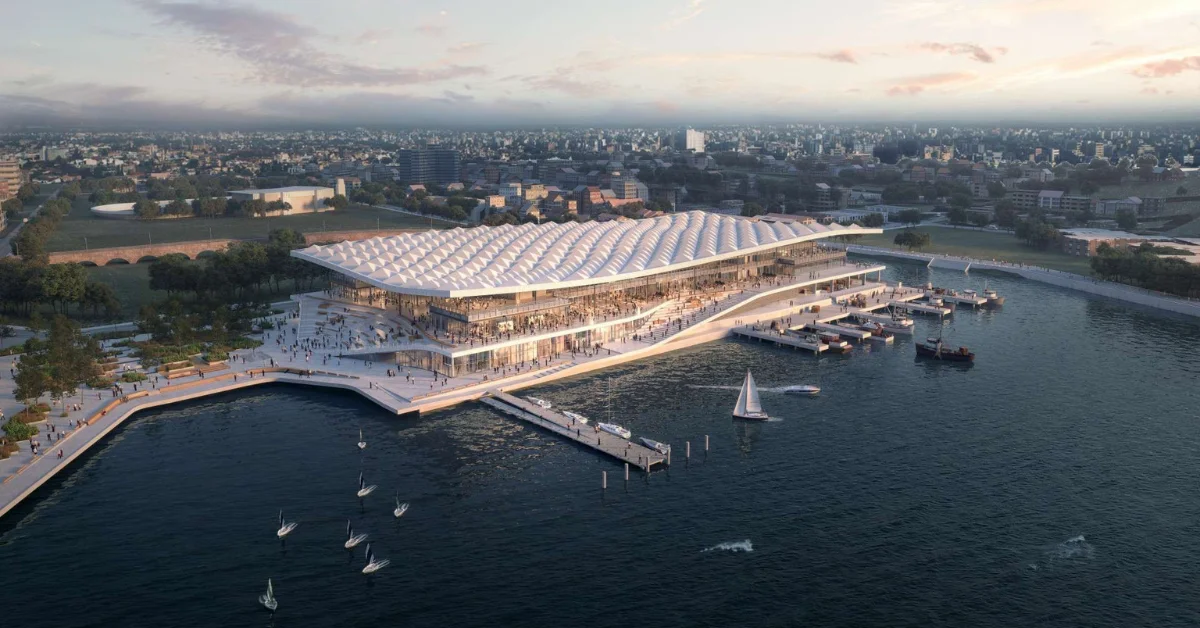
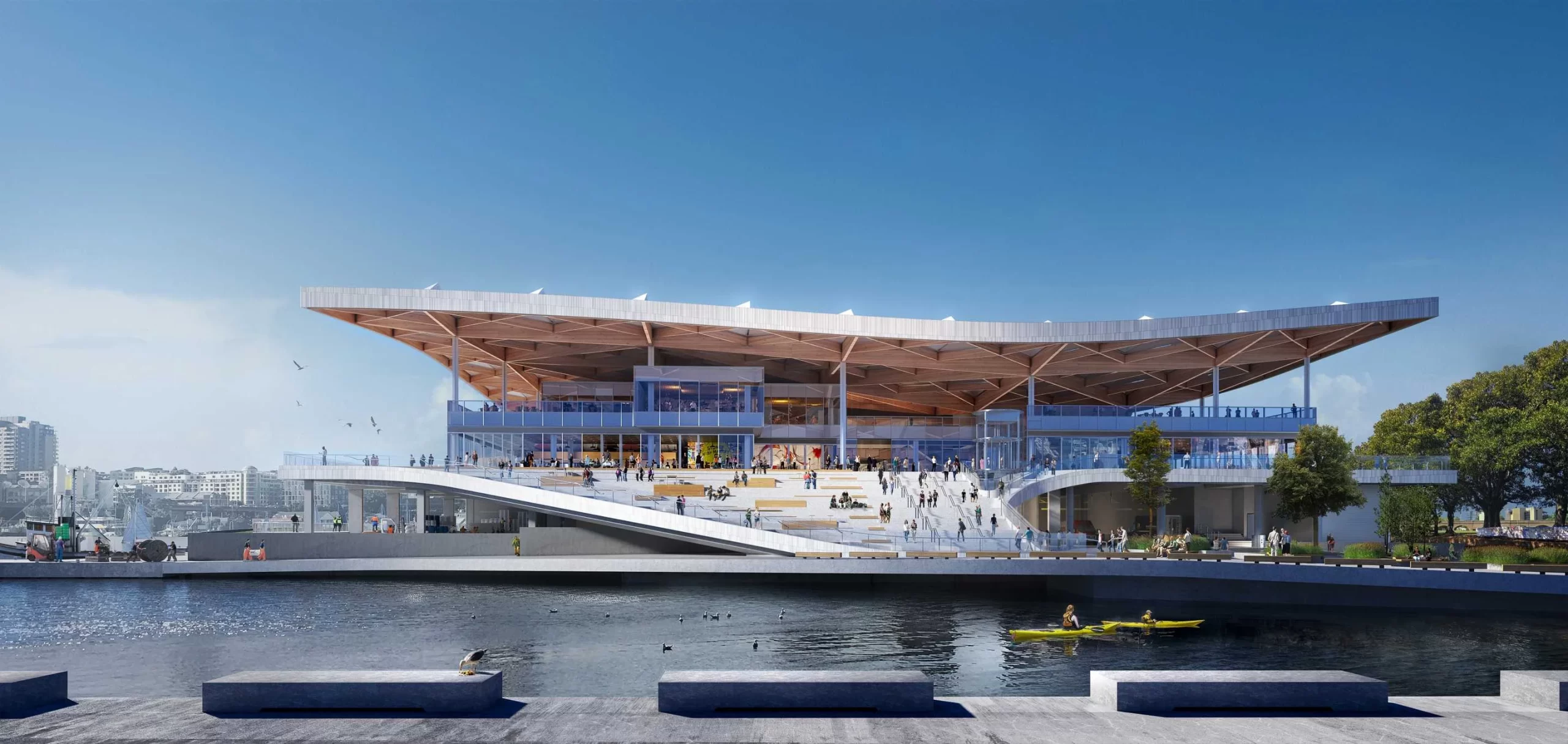
The new Sydney Fish Market at Blackwattle Bay was designed by the Danish firm 3XN. They designed it alongside BVN and GXN Innovation. It reached a significant structural milestone with its 200-metre-long floating canopy. The roof, comprising 594 timber beams and 400 aluminium cassettes, is now recognised as the largest timber canopy in the southern hemisphere.

Sydney Fish Market delays
Photo Credit: New Sydney Fish Market

Originally announced in 2018 and approved in 2020, the $836 million redevelopment aims to revitalise Blackwattle Bay through the addition of 26,000 square metres of retail, dining and public space. The project forms part of a broader urban renewal plan, including a waterfront promenade and over 1,100 new homes.

New Sydney Fish Market
Photo Credit: New Sydney Fish Market

Financial Setback and Administration

The project’s timeline has been disrupted after Sharvain Facades, a key contractor responsible for the roof’s construction, entered voluntary administration. The firm previously worked on several high-profile façades in Sydney, including the Chau Chak Wing Building. In October 2024, Sharvain Facades reportedly received a $16 million loan from Multiplex, the main contractor, to support its role in the project.

Despite the financial assistance, increasing cost of labour and materials and delays led to the company’s collapse. Multiplex has since called for government support as overall project costs rose from an initial $750 million to $836 million.

Blackwattle Bay development
Photo Credit: New Sydney Fish Market

Design and Functionality

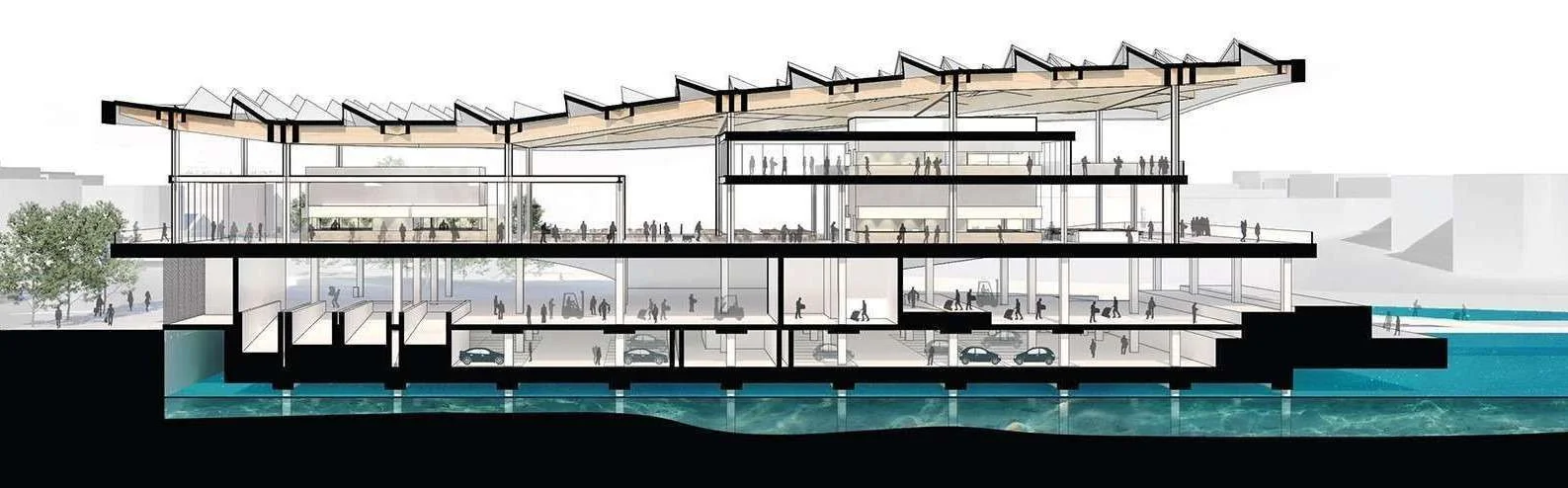
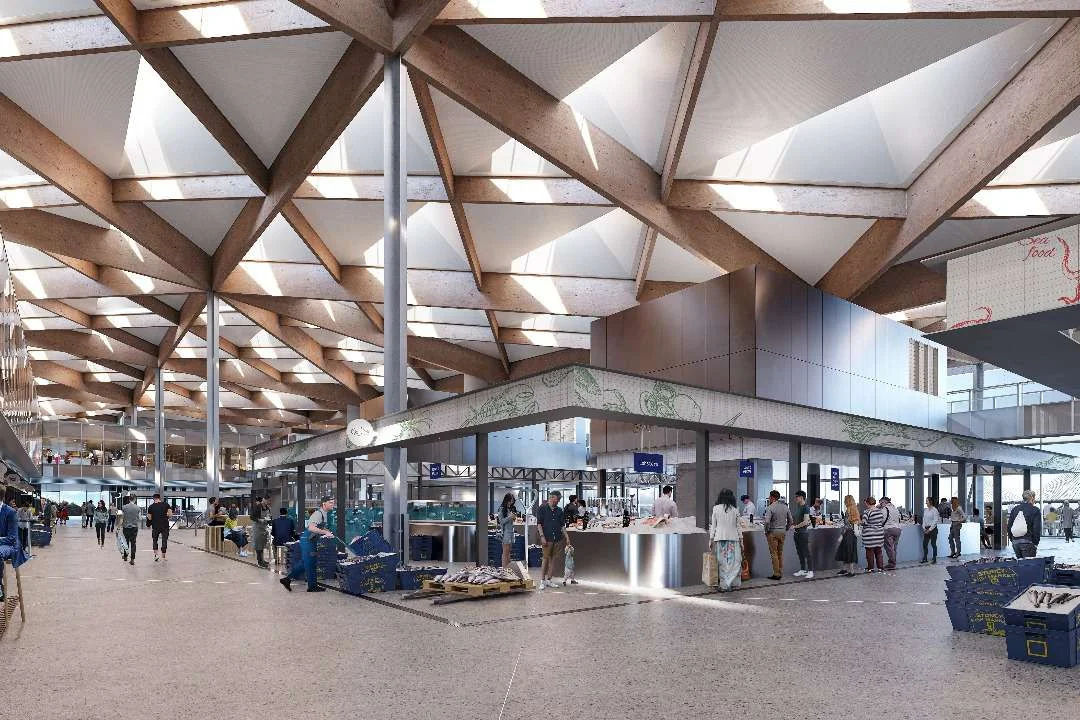
The roof’s completion marked a shift from structural work to interior finishes. Designed to reflect traditional market layouts, the building features glass-surrounded ground floor operations including fish landing, wholesale activities and auction areas. Above, public spaces such as restaurants and retail outlets are accessible via plaza-linked auditoriums overlooking the harbour and Anzac Bridge.

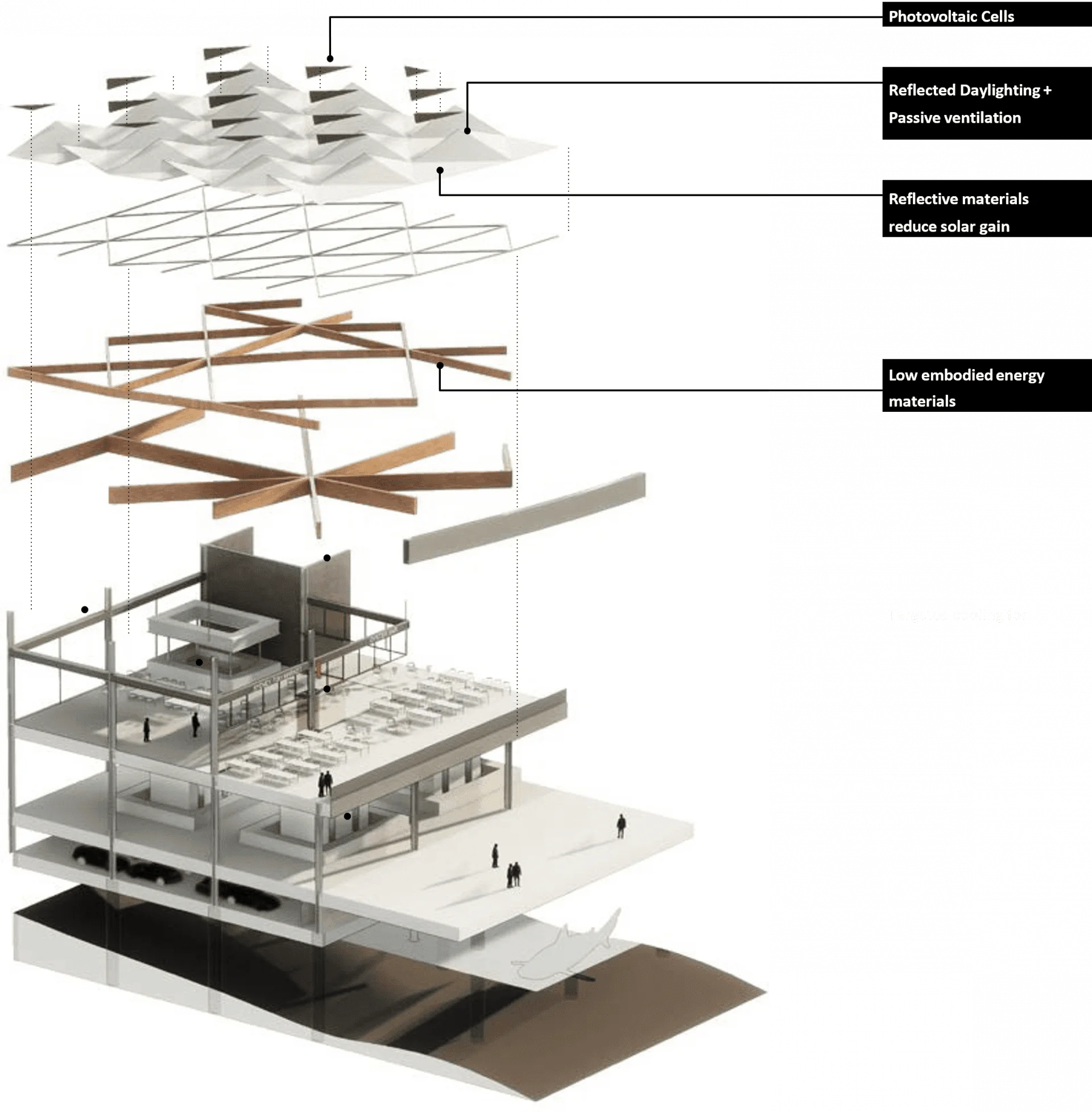
Sustainability features of the structure include daylight access, natural ventilation, rainwater harvesting, and solar readiness.

Sydney Fish Market constructor collapse
Photo Credit: New Sydney Fish Market

Community and Urban Impact

Intended as a public destination, the new market integrates working fish trade facilities with tourism and community areas. The redevelopment also aims to improve pedestrian and cycling connections across the harbourfront.


Although the collapse of Sharvain Facades has caused uncertainty, the project continues toward its target completion in 2025.

Published 10-Apr-2025