




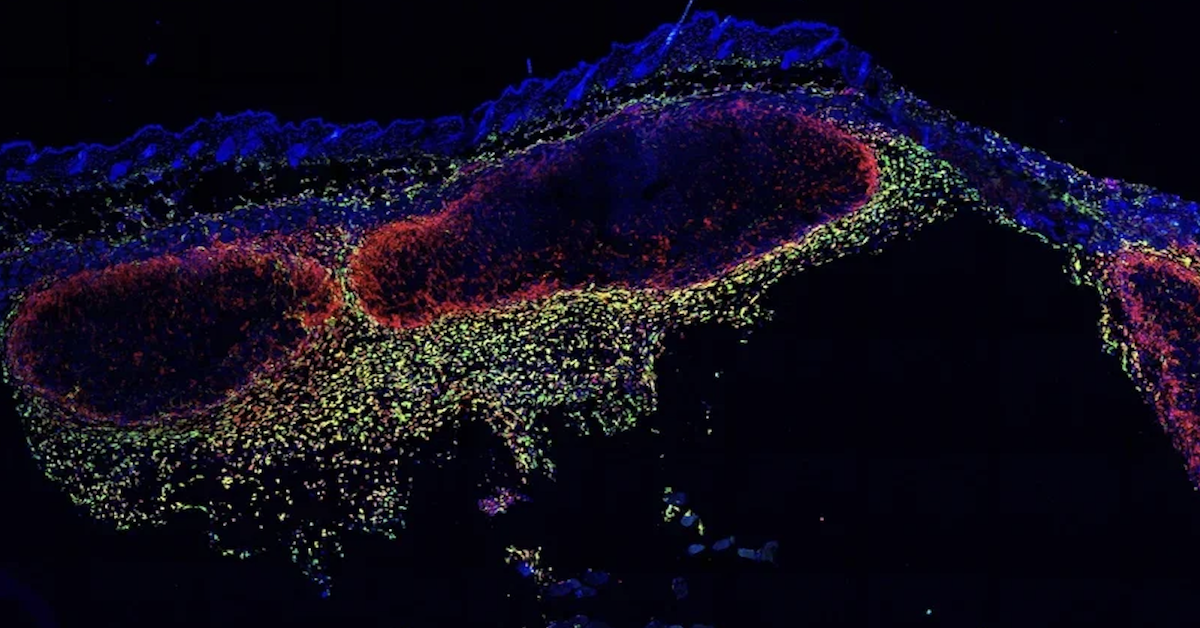
Inside a melanoma tumour, immune cells once known mainly for cleaning up cellular debris have been filmed doing something far more active: attacking and engulfing live cancer cells. In Darlinghurst, the discovery is giving researchers a clearer view of how the body may naturally hold melanoma back.
Darlinghurst Scientists Capture A Hidden Immune Response
Under powerful imaging, melanoma cells appeared in pink while immune cells gathered around them in green and yellow. The footage showed a rarely seen biological encounter: macrophages moving against live cancer cells, surrounding them and engulfing them.
The discovery was made by scientists Dr Yuki Keith and Professor Tri Phan at the Garvan Institute of Medical Research and UNSW Sydney, who captured macrophage immune cells attacking live melanoma cells in real time. The findings, published in the Journal of Experimental Medicine on 22 May 2026, reveal a previously overlooked group of immune cells that may help restrain tumour growth.
Macrophages have long been known for clearing away dead cells and debris. In this research, however, a specific group known as CD169-positive macrophages appeared to take a more active role. Positioned along the edges of melanoma tumours, they were observed consuming live cancer cells and helping slow tumour growth.
A Closer View of Melanoma’s Edge
The research focused on the tumour margins, where cancer cells meet the surrounding immune environment. Macrophages can make up as much as 30 per cent of the cells inside a melanoma tumour, yet their role in cancer has not always been clear.
Rather than treating all macrophages as the same, the team identified one subpopulation marked by the CD169 protein. When these CD169-positive macrophages were specifically depleted, tumours grew larger. That result indicated that this group was helping contain the melanoma.
Using intravital two-photon microscopy, an advanced method for watching biological processes inside living organisms, researchers observed the CD169-positive macrophages physically engulfing live melanoma cells in mice.
The team also examined human tissue to test the relevance of what had been captured on camera. The same macrophages were found in healthy human skin and were enriched around the margins of human melanoma tumours. Melanoma biopsy samples were provided and analysed by Melanoma Institute Australia.

Photo Credit: Garvan Institute of Medical Research
Why The Discovery Could Matter for Treatment
The Darlinghurst research does not represent a new treatment, but it points to a possible pathway for future cancer research.
Immunotherapy has changed treatment for advanced melanoma, but it does not work for every patient. Immune checkpoint blockade therapy depends heavily on T cells finding and destroying cancer cells, yet only about half of patients respond.
One barrier is the immune “cold tumour”, where T cells are effectively kept out of the tumour. The newly observed macrophages may help researchers understand another part of the immune response because their attack appeared to happen independently of T cells and B cells.
Researchers suspect the macrophages may also help signal to the wider immune system after consuming cancer cells. The next stage of the work is to understand how CD169-positive macrophages communicate with T cells.
Future treatment research could involve finding ways to increase the number of these macrophages, make them more active, or improve their ability to mark cancer cells for destruction. The work may also have relevance beyond melanoma because macrophages are common in many solid tumours.
A Discovery With Human Stakes
Australia has one of the world’s highest melanoma burdens, with almost 20,000 people diagnosed each year and about 1300 deaths annually.
For Anne Gately, a 60-year-old mother of two, melanoma returned years after it was first removed from her back and later spread through her body. After receiving an immunotherapy drug, she was in remission within 97 days.
Her experience reflects why researchers are trying to improve the reach and effectiveness of immunotherapy, particularly for patients who do not respond to current options.
The discovery in Darlinghurst gives scientists a closer look at the body’s own defences at work. It shows that a group of immune cells once viewed largely as cleaners may also be active participants in restraining melanoma, offering a possible direction for future treatments that help the immune system respond more effectively.
Published 25-May-2026