




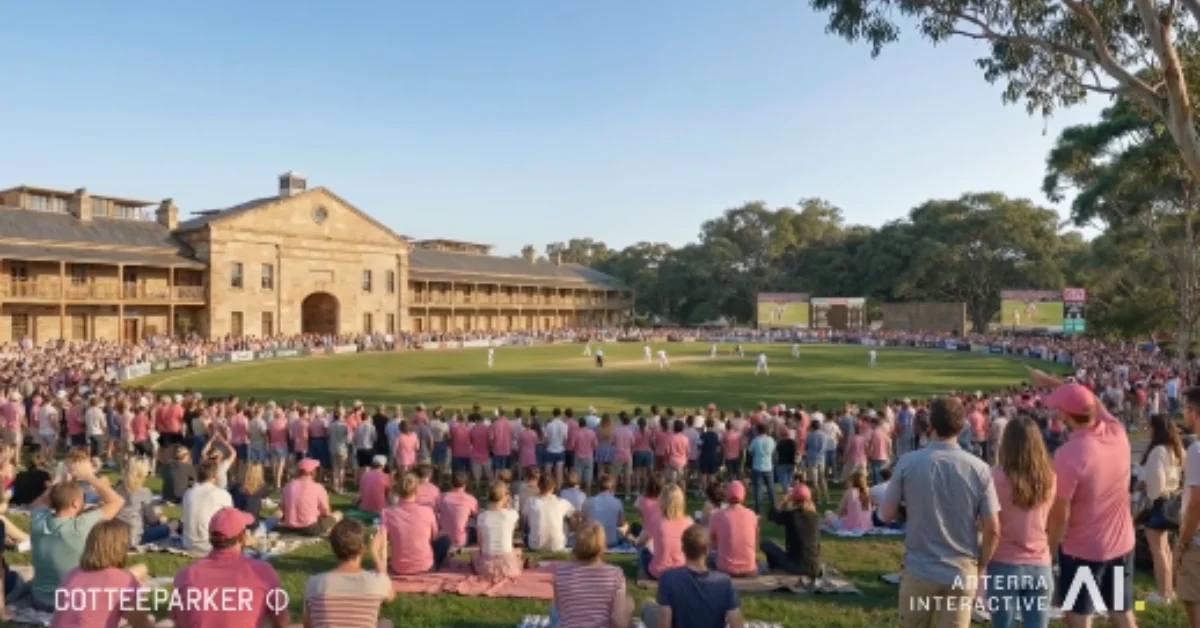
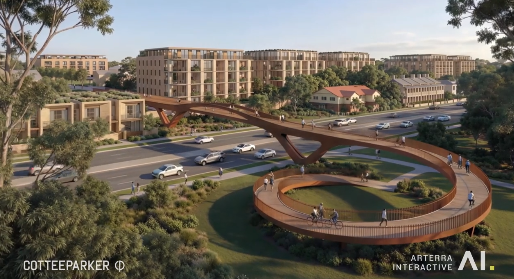
A bold new vision for Paddington’s Victoria Barracks has been made public, imagining the 20-hectare heritage site transformed into one of Sydney’s most significant public spaces, complete with a cricket-friendly parade ground, outdoor dining, shops within the historic sandstone buildings, and five-storey residential blocks alongside them.
Read: Who Should Own Victoria Barracks Sydney? Inside the Push for Schools, Housing, and Public Space
Cr Zann Maxwell commissioned the renderings, working with architectural visualisation firm Arterra Interactive and Cottee Parker Architects to bring the City of Sydney’s community-backed Guiding Principles for the site to life.
The images showed Sydneysiders picnicking and playing cricket on the parade ground. It is a scene Cr Maxwell himself acknowledges is almost impossible to experience today.
“If we get this right, Victoria Barracks can become Sydney’s next great public place,” Cr Maxwell shared on LinkedIn. “I worked with Arterra Interactive and Cottee Parker architects to bring the City of Sydney’s community-backed Guiding Principles for the site to life. They did beautiful work within a very tight timeframe and with limited design information.”
The Heritage That Nobody Gets to See
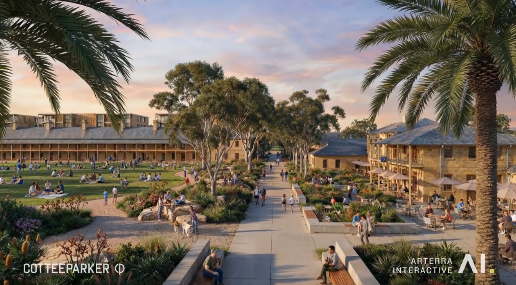
The Guiding Principles underpinning the concept cover conservation of the site’s heritage fabric, genuine public accessibility and ownership, and the integration of housing. Cr Maxwell has also floated the idea of consolidating Defence’s dispersed museum and heritage collections into a purpose-built military museum at the site.
According to Cr Maxwell, of the more than 130 museums and heritage displays maintained by Defence nationally, around 80 per cent are currently inaccessible to the public, with roughly 20 hectares of the Defence estate devoted to storing those collections, many relying on volunteers for their upkeep. A properly curated public museum at Victoria Barracks, he argues, could change all of that.
On housing, Cr Maxwell has argued that repurposing the barracks and addressing the broader housing crisis need not be mutually exclusive, saying both goals can be pursued together.
Opposition Crosses Party Lines
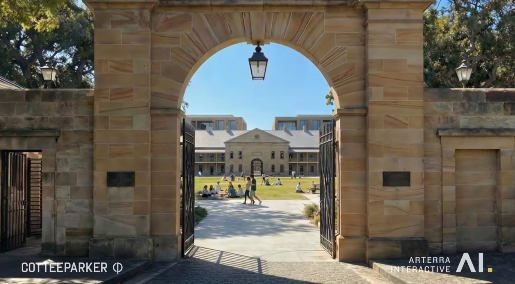
Resistance to the divestment plan has been growing steadily, crossing party lines and drawing in civic organisations. Three separate online petitions have been launched against the sale, and in March the National Trust called for the barracks to remain in Defence ownership.
Labor MLA for Coogee, Marjorie O’Neill, whose electorate is near the barracks, has been among the most vocal critics. She has argued that the decision to sell was made without properly consulting senior commanders and units based at the site, and that it overlooks what she describes as the barracks’ ongoing operational role in counter-terrorism, crisis response, and major public events.
She has also raised serious doubts about the proposed replacement at Defence Plaza in the city centre, describing it as not fit for purpose and flagging that bringing it up to the required security and operational standards could cost taxpayers hundreds of millions of dollars.
Cr Maxwell has acknowledged those concerns but maintains that keeping the base active would make meaningful public access almost impossible given security requirements. He says he is open to different models for the site’s future, provided any outcome is properly planned and delivers real public value.
Read: Surry Hills Village Gains NSW Architecture Awards Shortlist Recognition
For residents in Paddington, Surry Hills and the surrounding suburbs who have long walked past the barracks’ sandstone walls without ever seeing inside, the debate is becoming increasingly hard to ignore. Whether those gates ever open, and on whose terms, remains far from settled.
Published 29-May-2026